Updated 2026-10-15 · 7 min read
Salta and northwest Argentina: a five-day trip guide
Five days give you time for Salta city, the Cafayate wine route and Jujuy's Quebrada de Humahuaca. Fly from Buenos Aires in about two hours, then spend nights beyond Salta to make the long drives manageable.
In short
- Five days allow for Salta city, Cafayate and northern Jujuy; three days leave room for just one excursion.
- The flight from Buenos Aires to Salta takes about two hours, compared with roughly 20 hours by coach.
- Cafayate is around 190 km south of Salta, a three- to four-hour drive each way before viewpoint stops.
- A night in Cafayate and another in Tilcara or Purmamarca ease the long days on the road.
- Purmamarca is above 2,000 metres and Humahuaca near 3,000 metres, so the move north calls for a gentler pace.
A flight from Buenos Aires puts you in Salta in about two hours, but the places that draw many visitors to the northwest lie well beyond the city. Cafayate's wine country runs south and the Quebrada de Humahuaca runs north. Give the trip five days for both; with three, choose one direction and let the other wait.
Why the nights matter more than the mileage
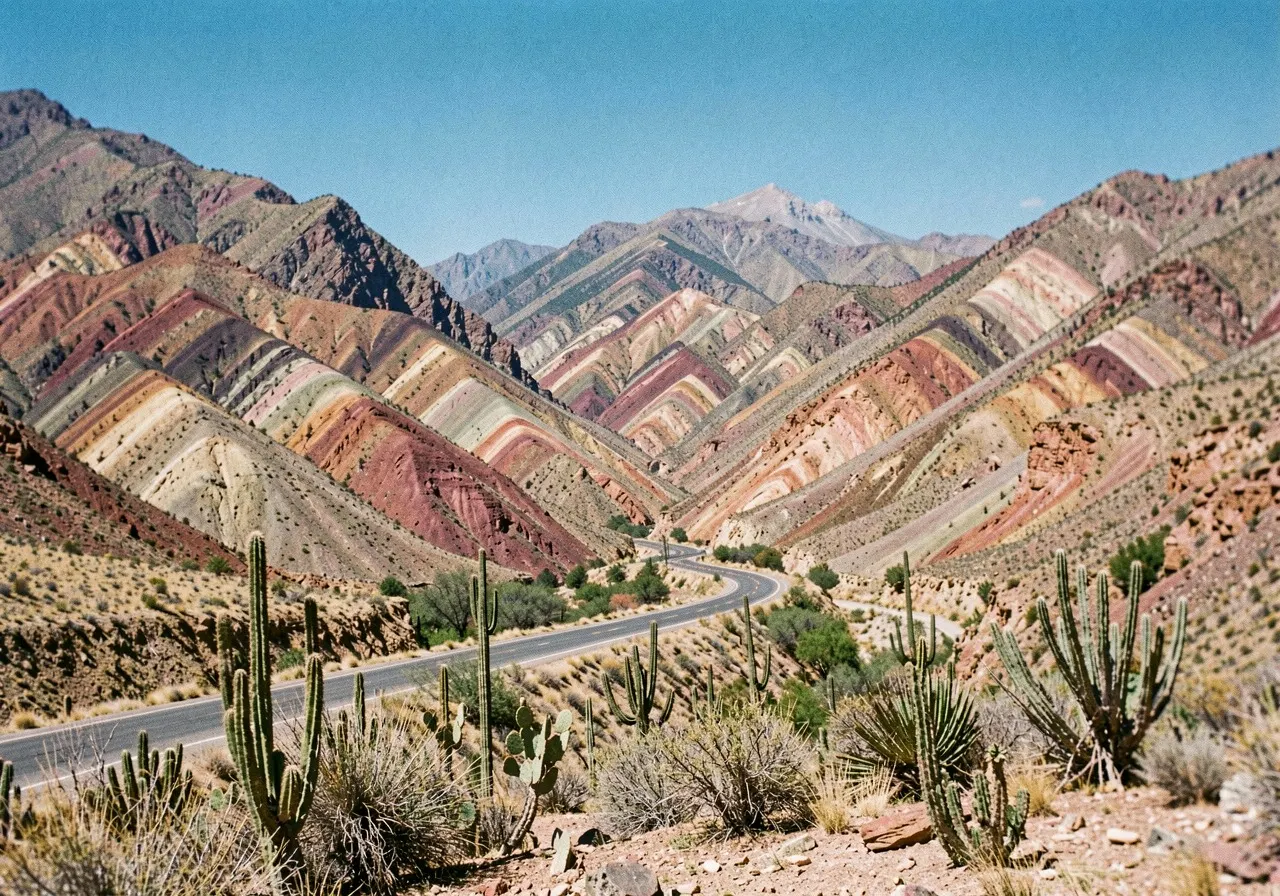
Salta makes a useful arrival point, with its own plazas, museums and food. Cafayate lies about 190 km to the south along Ruta Nacional 68, through the red-rock Quebrada de las Conchas. The Quebrada de Humahuaca is in Jujuy to the north. A return drive to Cafayate takes six to eight hours without allowing for much time among the vineyards; reaching Humahuaca beyond Purmamarca makes a northern overnight particularly welcome.
| Time available | Route | Overnight plan | Main compromise |
|---|---|---|---|
| Three days | Salta city plus Cafayate or Purmamarca and Tilcara | Two nights in Salta; consider replacing one with Cafayate or Tilcara | The other direction waits |
| Five days | Salta, Cafayate and northern Jujuy | Two nights in Salta, one in Cafayate, one in Tilcara or Purmamarca | Little time for long hikes |
| Seven days | Humahuaca and a slower wine or walking day as well | Two nights each in Salta, Cafayate and Jujuy | More accommodation changes |
With only two nights, nearby Córdoba involves less travel. For wine without the long canyon drive, a Mendoza wine weekend is another choice.
Arriving from Buenos Aires and setting a budget
Aerolíneas Argentinas and Flybondi sell direct flights to Salta, though fares and schedules vary by date. The flight takes about two hours; a coach from Retiro commonly takes around 20. Check whether your flight uses Aeroparque (AEP) or Ezeiza (EZE), which are separate Buenos Aires airports. Salta's Martín Miguel de Güemes airport is about 10 km south-west of the centre, with registered airport taxis, app cars where available and rental-car collection as onward options. Agree the fare before departure in an unmetered vehicle.
Private transport, organised excursions, wine tastings and peak-holiday flights can take the total well beyond a basic budget. If a terminal offers payment in pounds, compare that conversion with your card’s terms before accepting it.
Tastings, museum entry, airport transfers and a reserve are extra; a hire car would need an actual quote.
Salta first, then the road south
A first day in Salta gives the journey a gentler start. Plaza 9 de Julio holds the cathedral, the colonial Cabildo and the Museo de Arqueología de Alta Montaña, whose displays cover Andean archaeology and the Llullaillaco finds. The Iglesia San Francisco is another city stop; on a clear afternoon the Teleférico San Bernardo cable car gives a view from Cerro San Bernardo. Museum opening days and admission can vary. Salta's small, juicy empanadas salteñas, often eaten with lemon, also make a change from the larger Buenos Aires version.
On day two, Ruta Nacional 68 leads through the Quebrada de las Conchas towards Cafayate. The approximately 190 km takes three to four hours each way before stops at the canyon viewpoints, so a night in town leaves time to visit a winery without a tired return drive. Torrontés is the local aromatic white grape; El Esteco and Piattelli publish their own tour arrangements. A booked tasting works best with a non-drinking driver or a guided transfer.
Day three can begin slowly in Cafayate before the return to Salta in daylight. Facilities at roadside viewpoints are limited, making drinking water, sun protection and some cash useful. A same-day onward flight would put an avoidable deadline on that drive.
Turn north through Jujuy
Day four takes the journey via San Salvador de Jujuy to Purmamarca and its Cerro de los Siete Colores, then to Tilcara. Allow at least three hours from Salta to Purmamarca, depending on stops and route. The Pucará de Tilcara is a reconstructed pre-Hispanic fortified settlement rather than an untouched ruin. Sleeping in Tilcara or Purmamarca gives the towns more than a hurried stop on a return run to Salta.
On day five, Humahuaca is possible if the flight home is the following day; the town is close to 3,000 metres and adds road time. With a flight that evening, a shorter walk and an earlier return to Salta leave more room for delays. The journey feels different when the final mountain drive is allowed to be a drive, rather than treated as an airport connection.
The practical limits of road and altitude
A car allows stops at your own pace on the principal paved routes to Cafayate and through the Quebrada towns. Those roads differ from remote high-altitude tracks to salt flats and mountain passes: a standard hire vehicle may not be permitted there. Rental terms on insurance excess, additional drivers, punctures and permitted routes matter on a trip with this much driving. Intercity buses link the main towns; organised day tours can make a compact five-day schedule easier than matching bus departures and late returns. Long two-lane stretches are better driven in daylight.
Salta city is roughly 1,200 metres above sea level, Purmamarca above 2,000 and Humahuaca close to 3,000. After low-lying Buenos Aires, a gradual ascent, water, normal meals and a light first day at altitude help keep the pace sensible. Headache, nausea and dizziness may be altitude symptoms; worsening symptoms, especially breathlessness at rest or confusion, call for descent and medical help. Check that your travel insurance covers local treatment, the planned activities and altitude, and any medical evacuation you may need.
Dry winter days can become cold after sunset; summer rain may disrupt the roads. Layers are useful even when Buenos Aires is warm, and signed trail closures and local road reports matter after rain. At bus counters, ida y vuelta means return ticket, terminal means bus station and horario means timetable. For a holiday built around lakes and forests rather than long dry-country roads, the Bariloche family trip guide offers a different direction. Here, an overnight on each side of Salta is what turns the distances into time spent in the places themselves.
Questions
- How many days do you need in Salta and northwest Argentina?
- Five days let you see Salta city, Cafayate and northern Jujuy with nights away from Salta. Three days are better spent on the city and just one of those routes.
- Can you visit Cafayate as a day trip from Salta?
- Yes, though the drive on Ruta Nacional 68 takes about three to four hours each way before stops in the Quebrada de las Conchas. An overnight gives a winery visit more breathing room.
- Do you need a car for the Quebrada de Humahuaca?
- Buses connect the principal towns and guided trips leave Salta. A car gives more freedom to stop, but remote unpaved high-altitude routes require explicit permission from the hire firm.
- Can altitude affect a visit to Purmamarca or Humahuaca?
- Yes. Purmamarca is above 2,000 metres and Humahuaca near 3,000, a considerable rise from Buenos Aires; worsening symptoms call for descent and medical attention.
- Does a two-day weekend from Buenos Aires work for Salta?
- There is time for the city and perhaps one long excursion. Cafayate and northern Jujuy together need a longer break.
Sources
Related guides
- A Córdoba weekend from Buenos Aires: city streets and one sierras day
Two nights in Córdoba give you Saturday among the Jesuit buildings and Sunday for Alta Gracia or one sierras town. Here is how the journey, timings and costs fit together.
- San Antonio de Areco day trip from Buenos Aires
San Antonio de Areco is about 113 km north-west of Buenos Aires, with journey time dependent on the current road route or bus service. Spend the day in its historic centre and gaucho museum, or book an estancia for riding and an asado.
- A Mendoza wine weekend from Buenos Aires
Fly to Mendoza for two nights, choose one wine region for Saturday and leave Sunday free. Compare Maipú, Luján de Cuyo and Uco, transport and what to budget for.