Updated 2026-09-27 · 6 min read
Tigre day trip from Buenos Aires: train, Delta boat and lunch
The Mitre train reaches Tigre from Retiro in roughly 50–60 minutes. A short Delta circuit fits a half-day; an island lunch takes 6–8 hours and a planned return boat.
In short
- The Mitre train from Retiro to Tigre takes roughly 50–60 minutes each way, and Estación Fluvial is a short walk from the terminus.
- A 1–2-hour sightseeing circuit stays on the boat; a lancha colectiva takes passengers to a specific island jetty.
- An island lunch calls for roughly 6–8 hours including both train journeys and a confirmed return sailing.
- ARS 60,000 per adult was a suggested cash reserve for boat, simple lunch and incidentals in September 2026, not a quoted fare.
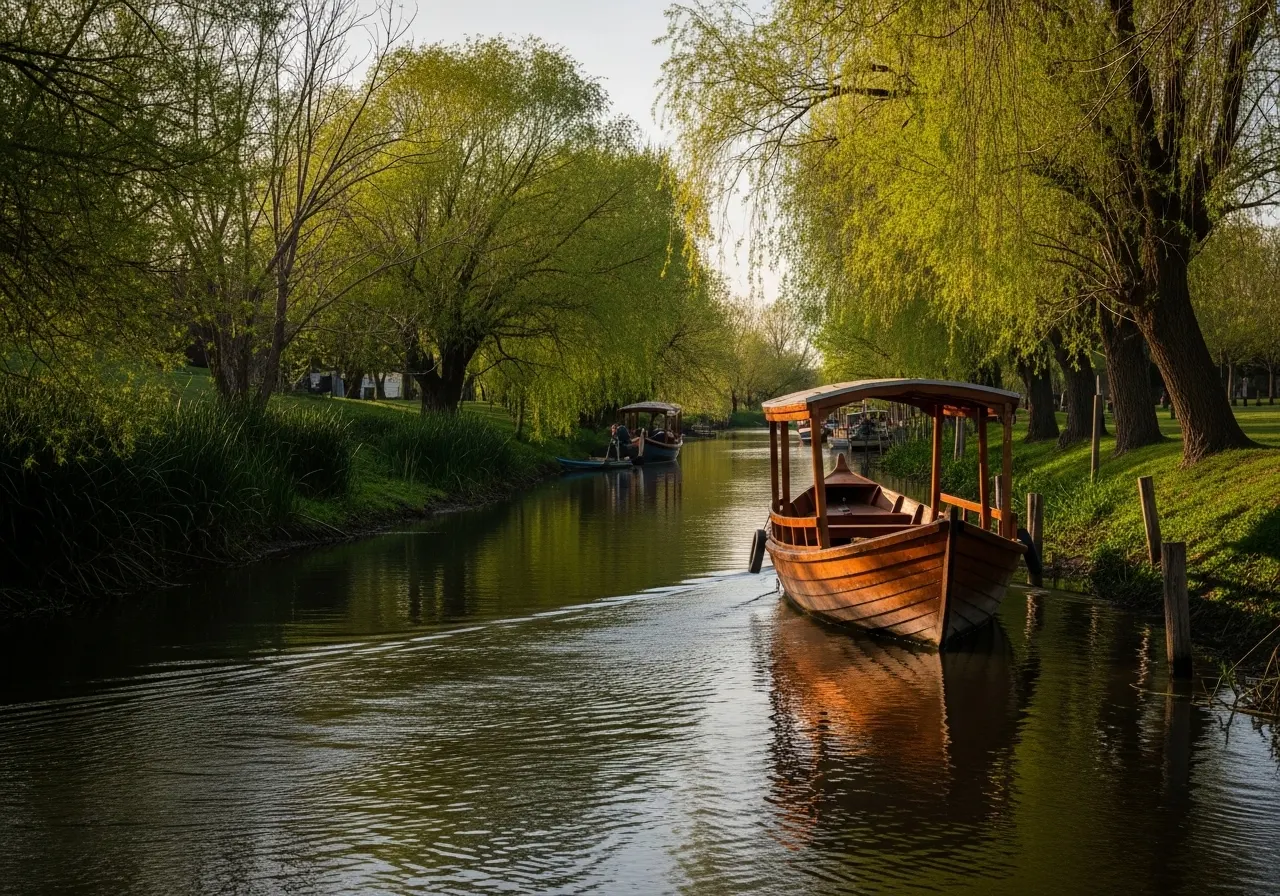
Tigre is close enough for a day out by train, but the Delta changes the shape of the trip. The Mitre line takes roughly 50–60 minutes from Retiro to Tigre; from the terminus, Estación Fluvial (the river station) is a short walk away. A 1–2-hour sightseeing circuit gets you onto the waterways without a landing. Lunch on an island means taking a lancha colectiva (public boat) to a named muelle (jetty) and allowing roughly 6–8 hours for the day, including the trains.
Town, boat circuit or island landing?
Tigre town has a market, riverside walk and museum within reach of the station. The Delta islands start with a boat ticket, and the kind of ticket matters: a sightseeing circuit returns with its passengers still aboard, while a public boat drops people at individual jetties. An island restaurant may be on one route and absent from another. Its jetty name, opening hours and the last return sailing determine whether lunch there fits the day.
| Outing | Time to allow | What it gives you | What sets the pace |
|---|---|---|---|
| Mitre train and Tigre town | 4–5 hours including trains | Market, riverside and perhaps a museum | Museum hours and return train |
| Train and short Delta circuit | 5–6 hours | Canal views without an island landing | Boat duration and departure point |
| Train, public boat and island lunch | 6–8 hours | A slower stay beside the water | Exact jetty, restaurant hours and last boat back |
| Car and town or boat | At least half a day | Space for more kit | Weekend traffic and parking near the river |
The straightforward rail journey is a Mitre train from Retiro marked Tigre, rather than another branch of the line. It takes a SUBE card, and Trenes Argentinos publishes service changes; engineering work can mean a bus replacement for part of the journey. Tren de la Costa is another option, running beside the river from Maipú in Olivos to Delta station near Tigre, rather than directly from Retiro. The Panamericana drive can take around 30–45 minutes without congestion, but sunny-weekend traffic makes that estimate unreliable. The Buenos Aires transport guide explains the suburban trains and SUBE.
A day that leaves time to get home
A departure from Retiro around 09:00 leaves room for the hour-long train ride and the walk to Estación Fluvial around 10:15. The counters there sell different kinds of Delta trips, so the label ‘Delta’ alone tells you little. Interisleña and Líneas Delta Argentino are among the public-boat operators, although routes change. The useful questions at the counter concern the operator, exact landing, outbound and final return times, return reservation and payment method. A charged SUBE, water, sunscreen and mosquito repellent are handy for the day; this domestic outing has no passport or border control.
For an island lunch, the restaurant or recreo (day-use venue) can give its exact muelle, opening hours and card policy. The Río Sarmiento channel is a common first-visit direction, with the glass-protected Museo Casa de Sarmiento as a landmark. A boat passing the museum does not necessarily let you visit it. A nearby public-boat stop may take roughly 30–40 minutes to reach, with the number of stops and water conditions affecting the journey.
The last sailing is a boundary rather than a target arrival time. Some island jetties require passengers to signal to the returning boat; the counter and outbound crew can explain how that works for a particular stop. A saved ticket and offline copy of the operator's instructions help when phone signal is weak. Once back on the mainland, spare time can go to Paseo Victorica, the riverside promenade, or Puerto de Frutos, a former fruit port now selling wickerwork, crafts and plants. Museo de Arte Tigre occupies the former Tigre Club at Paseo Victorica 972; its days and admission are relevant if the museum is the reason for the visit.
The train fare covers the rail journey, while the public boat is transport to a particular landing. There is no need for a guide to visit the town or use the regular boat service; the firm part of the plan is the trip back from the island.
What the day costs, and what cash is for
Boat fares vary by destination and service, so an undated ticket price would mislead. Trenes Argentinos provides the current rail fare, and the Estación Fluvial counter can quote the boat's return fare; a one-way quote covers only half the water journey. In September 2026, ARS 60,000 per adult (about US$39 at ARS 1,545/US$) was a practical cash reserve for a boat, simple lunch and incidentals, not a ticket price. A boat and meal that cost more require the posted amount; a short circuit and lunch in town offer another way to spend the day. Smaller notes help where island kitchens or day-use venues take cash only, or a card terminal or phone signal fails.
For two adults and a child leaving Retiro at 09:00, the same reserve would be ARS 180,000 for three (roughly US$116 in September 2026), plus train fares. It buys flexibility, not a promise of three tickets and meals at that price. A return public boat before noon and a restaurant served by its route would make an island lunch feasible. If the restaurant cannot establish its jetty and an afternoon return, a 1–2-hour circuit followed by lunch at Puerto de Frutos still gives them a Delta trip.
The waterways are working routes, with river traffic, changing currents and variable water quality. Swimming conditions depend on the specific place; kayaking is best arranged with an organised operator, a life jacket and a weather-appropriate route. Families with young children and people needing step-free access have an additional practical question about boarding, narrow jetties and toilets. During a storm or after heavy rain, Tigre's museum and market leave more flexibility than an island timetable.
The season changes the pace
September to November and March to May usually offer the most comfortable walking and boating weather. Summer afternoons are hot, with fierce mosquitoes towards dusk; repellent and long sleeves help. Winter still suits town and boat views, though swimming is a poor basis for the day. Sunny Sundays bring crowds to trains, markets and boat counters, making a weekday or an early start appealing, particularly when an island meal needs booking.
Three hours are better spent in Tigre town than on a public boat whose return is uncertain. For a walkable outing without boat arrangements, San Isidro is another choice; day trips from Buenos Aires has other full-day options. The pleasure of the island visit comes from having time to stay by the river, rather than watching the last boat time through lunch.
Questions
- How do I get to Tigre from Buenos Aires by train?
- Take the Mitre line from Retiro on a train marked Tigre; the trip takes roughly 50–60 minutes. It uses a SUBE card, and Estación Fluvial is a short walk from the Tigre terminus. Trenes Argentinos publishes service changes.
- Can I visit the Tigre Delta without a tour?
- Yes. Public boats from Estación Fluvial serve named island jetties, so the landing and return sailing need to match your destination. A sightseeing circuit is simpler if you want to stay on board.
- How long do you need for a Tigre day trip?
- Town and the return train take about 4–5 hours; allow 5–6 hours with a short Delta circuit or 6–8 hours for an island lunch. The public boat's return time matters more than the length of the outbound ride.
- Do Tigre Delta boats take credit cards?
- Payment varies by operator and ticket counter, and some small island venues take only cash pesos. The counter can give the current return fare and payment method before you board.
- Is Tigre worth visiting in winter?
- Yes, for the riverside, Puerto de Frutos and a short boat ride. Museum hours and boat departures shape a winter visit more than a plan for swimming or a long outdoor lunch.
Sources
Related guides
- Bariloche with children from Buenos Aires
Four nights in Bariloche give a family time for Circuito Chico, one boat or mountain day and a weather reserve. The flight from Buenos Aires takes roughly 2½ hours; for four people, a summer trip costs about US$2,000–3,400 on a September 2026 planning budget.
- Colonia Day Trip from Buenos Aires: Ferry, Costs and Walking Route
A morning ferry from Buenos Aires gives you a day in Colonia del Sacramento before an evening return. The crossing takes about 1–1¼ hours each way; allow for border controls and budget roughly US$60–150 per adult for a return ferry (September 2026).
- Day Trips from Buenos Aires: Trains, Delta, Countryside and Uruguay
Tigre is an easy train-and-boat day from Buenos Aires; La Plata brings fossils within reach by rail. Compare eight outings, from San Isidro to an estancia or a ferry to Uruguay, by travel time, family cost and the journey home.