Updated 2026-09-27 · 10 min read
A Mendoza wine weekend from Buenos Aires
Fly to Mendoza for two nights, choose one wine region for Saturday and leave Sunday free. Compare Maipú, Luján de Cuyo and Uco, transport and a September 2026 budget.
In short
- A direct Buenos Aires–Mendoza flight takes about two hours; the overnight coach takes roughly 12–14 hours.
- One Saturday is best spent in a single region: nearby Maipú or Luján de Cuyo, or the more distant Uco Valley.
- Two booked winery visits, a long lunch and a non-drinking driver leave more time for wine than a race between estates.
- Harvest in March–April can tighten bookings, and winter snow can disrupt a separate Andes excursion.
- A two-night fly-in trip with a shared room and driver has a September 2026 planning allowance of US$450–850 per person.
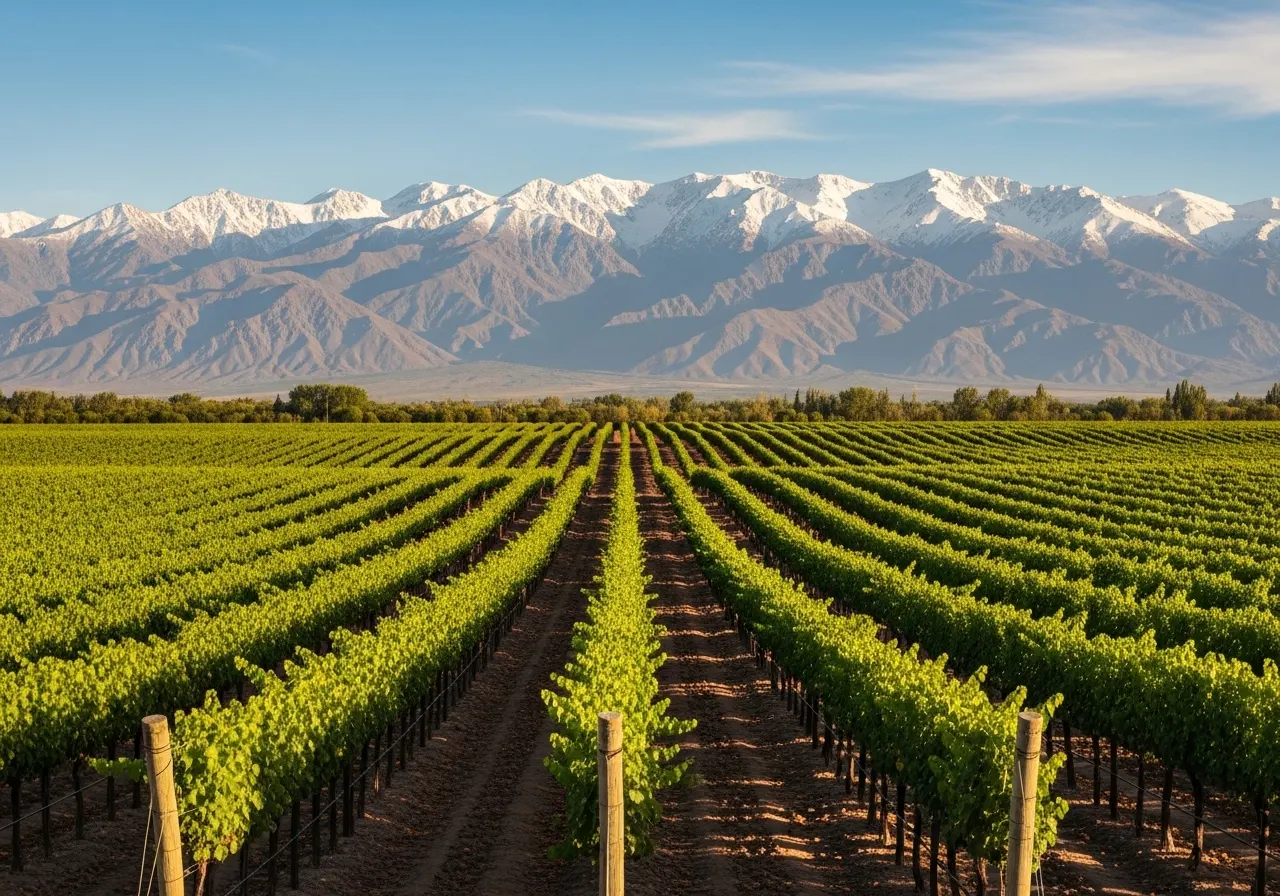
A Mendoza weekend from Buenos Aires gives you one full day among the wineries. Two nights make it possible to fly in on Friday, spend Saturday in a single wine region and return on Sunday evening without turning every tasting into a race against the clock. For two people sharing a room and driver, allow roughly US$450–850 each as a September 2026 planning budget, then price the flights, lunch and visits you actually want.
The region determines the day
Mendoza city is a useful base for dinner and an easy Sunday morning, but the vineyards are spread across the province. The airport, MDZ (Aeropuerto Internacional Gobernador Francisco Gabrielli, or El Plumerillo), is north of the centre. Travel times from central Mendoza are approximate one-way journeys by car; harvest traffic and the distance between two wineries in the same region can add time.
| Region | Drive from central Mendoza | A good Saturday there |
|---|---|---|
| Maipú | About 25–45 minutes | A shorter first wine day; Trapiche and other producers around Coquimbito are examples to research. Wineries are still too spread out for an improvised walk. |
| Luján de Cuyo | About 30–60 minutes | A Malbec cellar visit and reserved lunch, with Catena Zapata in Agrelo or Norton in Perdriel among the possibilities. Appointments at separate estates need coordinating. |
| Valle de Uco (Uco Valley) | About 90–120 minutes | A full day among high-altitude vineyards; Zuccardi Valle de Uco in Paraje Altamira and Salentein near Tunuyán are examples. The return drive rules out bolting it onto an evening flight. |
Uco spans Tupungato, Tunuyán and San Carlos, so an 'Uco' label on two reservations does not mean the wineries are close. Catena Zapata and Norton are in Luján, a separate outing. Luján works particularly well for a first Saturday with a cellar visit and lunch; Maipú is lighter on driving. Maipú bicycle circuits only make sense for someone who is not drinking.
A visita guiada is a guided visit and a degustación a tasting. Lunch is often a separate booking, and paired glasses may or may not be included. The particular slot determines whether an English-language tour is available. Malbec is the obvious red to try, but Cabernet Franc, Bonarda or an offered white can make two tastings more interesting; Torrontés is an Argentine aromatic white better known from regions farther north. The Buenos Aires wine guide offers context for those names back in the capital.
Getting there and choosing a base
Aerolíneas Argentinas, Flybondi and JetSMART connect Buenos Aires and Mendoza directly, with schedules and departure airports varying by date. The flight takes roughly two hours, before check-in, baggage and the journey to the airport. Aeroparque Jorge Newbery (AEP), beside the Río de la Plata in Palermo, is often simpler from central Buenos Aires than Ezeiza (EZE) to the south-west. The return may use a different airport. MDZ is typically 20–30 minutes by taxi or app car from central Mendoza, longer in traffic. A late arrival calls for an arranged licensed taxi, app pickup or accommodation transfer.
The coach from Retiro terminal to Mendoza's terminal takes about 12–14 hours overnight. A cama seat reclines sleeper-style and can save a hotel night, though the journey is still a long start to a winery day. Driving roughly 1,000 km each way on Ruta Nacional 7 consumes too much of a two-night trip. In the city, Plaza Independencia and the restaurants along Avenida Arístides Villanueva make convenient bases for Friday dinner and a Sunday walk. Arístides is in Quinta Sección, west of the centre; an accommodation listing saying only 'Mendoza' may be much farther away. Dinner often starts later than in Britain, with tables quiet at 20:00 and busy at 22:00. Saturday dinner can need a booking on a holiday weekend.
Give Saturday its own timetable
The winery reservations and driver shape the flights, rather than the other way round. March and April bring vendimia, the grape harvest, and hotel and winery availability can tighten around the festivities. In January and February, very hot afternoons favour earlier outdoor visits. An Argentine public holiday can also change availability. Two producer reservation pages can establish the actual tour and lunch slots before you commit to a short stay.
For each booking, the relevant details are group size, date, tour language, dietary needs, whether it includes a guided tasting or meal, the final price in ARS or US$, cancellation terms and arrival time. A standard tour and tasting can take 60–90 minutes; a multi-course lunch may take two to three hours. Famous wineries may have no Saturday walk-in space. An English website does not establish the language of your reserved session.
A dedicated non-drinking driver can connect two appointments, wait through lunch and return you to the hotel; a shared tour may be simpler for a solo visitor, with fixed stops and language. The itinerary needs the actual winery addresses, hotel pickup and return, waiting time, tolls and clarity on whether lunch is included. Drink-driving rules are strict and vary by jurisdiction, so neither a quiet road nor a bicycle after tasting is a useful workaround. A generic 'three wineries and lunch' tour may spend much of the day in transit: its named stops and inclusions tell you what you're paying for.
On Friday an afternoon or evening flight leaves time for dinner near Plaza Independencia or Arístides, without a costly tasting dependent on an on-time landing. For a Luján Saturday, leaving around 09:00–09:30 allows a morning visit, a booked lunch and a second stop nearby, with a late-afternoon return. Uco requires an earlier start and roughly two hours for the drive back. Water and food between pours make the long lunch part of the day rather than an interruption. On Sunday, Parque General San Martín, west of the centre, is a possible walk before an evening flight; a morning departure leaves little time for a second outing.
An Andes day needs a third night. Potrerillos and Uspallata are farther along Ruta 7, while Aconcagua Provincial Park needs yet more driving and separate access planning. The road to Villavicencio reserve is another route altogether. Mountain conditions are colder than the city and winter snow may affect roads; official Mendoza tourism information and local road reports matter for that separate day. If mountains are the main attraction, another Argentine weekend escape may suit better.
What the weekend costs
No single winery-ticket or return-airfare figure covers every date, tasting tier and booking currency. These September 2026 allowances are per person for a two-night fly-in trip sharing a hotel room and a Saturday driver between two. At the official reference of about ARS 1,545/US$, ARS 15,450 is roughly US$10, although a card's posted conversion may differ.
| Item | Planning allowance per person | Main variable |
|---|---|---|
| Return domestic flight | US$100–250 | Lead time, holiday and baggage |
| Two hotel nights, shared room | US$80–170 | Location and harvest dates |
| Saturday driver, shared by two | US$80–150 | Distance, waiting and passenger count |
| Two tastings and winery lunch | US$110–190 | Tasting tier and paired menu |
| City meals and transfers | US$80–90 | Airport trips, dinners and tips |
| Total | US$450–850 | Excludes bottles and mountain excursions |
For an illustrative Luján trip for two, return flights at US$160 each cost US$320, two nights in a shared room US$220 and a full-day car US$220. Tastings and lunch at US$140 each plus US$150 together for airport transfers and other meals bring the total to US$1,190 for two, or US$595 each, about ARS 919,275 each at the September 2026 reference rate. This is arithmetic for planning, not a supplier quote. A solo traveller pays more of the room and car costs unless using a shared tour; peak-harvest quotes can exceed this example.
A lunch's 'included wine' may be a fixed tasting flight rather than unlimited glasses. An itemised reservation makes space for tips, extra glasses and bottles without relying on old claims of £5 tastings or £30 return flights. Foreign cards generally received a rate close to the official peso rate after the April 2025 lifting of individual currency controls, but the amount at checkout is the one to use for a budget. Tipping in Argentina covers restaurant and driver etiquette. Bottles also affect baggage: check the airline's checked-luggage rules, while carry-on liquid limits still apply. Confirmations, pickup details and contact numbers are useful saved offline alongside a card and some pesos for small purchases.
Season changes the pace
Harvest runs roughly February to April, with the busiest festivities around late February or early March depending on the year. The following autumn weeks bring cooler walks and vineyard colour; September to November brings spring, sometimes with snow still in the Andes. Summer afternoons can exceed 35°C, making water, sunscreen, a hat and early outdoor slots useful. Winter is quieter for city and cellar visits, but a high-altitude drive after snowfall is a different proposition.
The distance between estates is the detail most likely to upset a UK-style plan to stroll from one cellar door to another. Two visits and a lunch in one region give the wine and its setting time to register. If you are thinking of living in Mendoza, read living outside Buenos Aires. If you only have a day free from Buenos Aires and would rather skip flights, the Buenos Aires day-trip guide has closer options; weekends in Buenos Aires offers ideas without a wine itinerary.
Buying wine land calls for a different visit from a tasting weekend. The estancia and rural-property guide sets out the water, agronomic and legal questions; browse rural properties on PlataStar with those questions in mind.
Questions
- Can you do a Mendoza wine weekend from Buenos Aires without a car?
- Yes. Fly in, stay centrally and book a shared winery tour or a private car with a non-drinking driver. An airport transfer is separate unless the booking explicitly includes one.
- Is Maipú, Luján de Cuyo or Uco Valley best for one day?
- Luján suits a first full day of Malbec and a winery lunch with less driving than Uco; Maipú is nearer for a lighter schedule. Give Uco the whole day and allow roughly 90–120 minutes each way from the city.
- How many wineries should I book in a day in Mendoza?
- Two substantial visits with a booked lunch between them usually fit comfortably in one region. A third depends on actual opening slots, distances and lunch length; popular estates need reservations.
- When is the best month for a Mendoza wine weekend?
- March and April offer harvest and autumn conditions, though harvest dates fill sooner. September to November is a spring alternative; summer can be very hot and winter mountain roads need weather checks.
- How much should two people budget for a Mendoza wine weekend?
- A September 2026 planning allowance is US$900–1,700 for two sharing a room and driver on a two-night fly-in trip. Flights, tastings, lunch and driver fees vary, particularly during harvest, so itemised current quotes will give the usable total.
Sources
Related guides
- A Córdoba weekend from Buenos Aires: city streets and one sierras day
Two nights in Córdoba give you Saturday among the Jesuit buildings and Sunday for Alta Gracia or one sierras town. Here is how the journey, timings and costs fit together.
- Bariloche with children from Buenos Aires
Four nights in Bariloche give a family time for Circuito Chico, one boat or mountain day and a weather reserve. The flight from Buenos Aires takes roughly 2½ hours; for four people, a summer trip costs about US$2,000–3,400 on a September 2026 planning budget.
- A Montevideo Weekend from Buenos Aires: Fares, Times and a Plan
The direct fast ferry takes about 2½ hours on the water, with tourist-class fares from about US$92 one way in September 2026. Here is what the slower routes save, what a two-night stay costs and how to spend the time in Montevideo.