Updated 2026-10-02 · 9 min read
Colonia Day Trip from Buenos Aires: Ferry, Costs and Walking Route
A morning ferry from Buenos Aires gives you a day in Colonia del Sacramento before an evening return. The crossing takes about 1–1¼ hours each way; allow for border controls and budget roughly US$60–150 per adult for a return ferry (September 2026).
In short
- The direct ferry takes about 1–1¼ hours each way, with at least an hour for check-in before each departure.
- Return adult ferry fares are roughly US$60–150 (September 2026), with the full-day schedule determining how much time you get in Colonia.
- Every traveller, including a baby, needs appropriate travel documents; British travellers should carry their passports.
- The UNESCO-listed Barrio Histórico is roughly ten minutes' walk from Colonia port.
- An Argentine border officer decides your admission on return; a day in Uruguay does not guarantee another 90 days.
Colonia del Sacramento is close enough to Buenos Aires for lunch and a walk through its old town, provided the boats leave you time between border checks. The direct ferry takes about 1–1¼ hours each way, but you should be at each terminal at least an hour before sailing, or earlier if your operator says so. A return ticket costs roughly US$60–150 per adult (September 2026). This is a day abroad, so your British passport matters as much as your ferry booking.
The return sailing sets the pace
Buquebus and Colonia Express run direct services. A morning outward boat and early-evening return leave room for the historic centre and lunch; a late departure paired with an early return can make the day feel like two queues with a meal between them. Compare the complete return price and the time actually available ashore, rather than the cheapest outward seat.
| Choice | Buenos Aires departure area | What matters when comparing | Suits |
|---|---|---|---|
| Buquebus | Dársena Norte, beside Puerto Madero and Retiro | Return times, luggage allowance and final price including taxes | Travellers coming from Retiro or central Puerto Madero |
| Colonia Express | Dársena Sur, south of Puerto Madero towards La Boca | Exact terminal, return times and final price | Anyone comparing lower fares |
| Overnight stay | Either operator, returning next day | Accommodation and two meals alongside the return fare | Sunset, an unhurried visit or an onward coach to Montevideo |
For planning, the US$60–150 return fare works out at approximately ARS 93,000–232,000 at ARS 1,545 per US$ (September 2026). It is a range, not a tariff: sailing, date, booking lead time, ticket conditions and passenger category all change the final amount; child fares may be lower. The operators' booking sites show the cost of both legs and whether baggage, changes or refunds are included. Argentine long weekends and school holidays can make late booking particularly awkward; the Argentine long-weekend calendar shows the dates.
Dársena Norte and Dársena Sur are separate terminals, a poor last-minute walk with luggage or children. The name on your booking confirmation is the one to use for a taxi or final public-transport leg, with extra time for Buenos Aires traffic. The Buenos Aires public transport guide can help with that last leg.
Two crossings mean two sets of documents and checks
A British passport holder normally needs no advance tourist visa for a short visit to Uruguay, but needs a valid passport and an Argentine status that allows re-entry. Every child needs their own passport. An Argentine DNI may matter for a resident travelling within Mercosur; a British traveller with both documents should carry both rather than assume the DNI will meet every requirement. The UK government's Uruguay entry guidance sets out passport-validity conditions.
Children who are Argentine or resident in Argentina may need an autorización de viaje to leave with one parent or another adult. The evidence depends on the child's status and companions; Migraciones can advise on current requirements. A parent travelling alone should have evidence of their relationship and any relevant custody arrangements, as a UK birth certificate by itself does not replace required exit permission. This is paperwork to settle before buying a non-refundable family ticket.
The operator's check-in deadline governs each departure. Allow at least 60 minutes at the Buenos Aires terminal, or longer if the booking specifies it, with the passport, booking reference and any required child authorisation to hand. Outbound Argentine and inbound Uruguayan controls are normally organised together at the departure terminal, though there may be separate desks and queues. On the way home, leave the old town with enough time to walk back and clear the reciprocal checks at Colonia, then make sure Argentine entry has been registered correctly on arrival. Uruguay and Buenos Aires share the same clock time. If a boat is cancelled or badly delayed, the operator at the terminal can explain the next sailing; another company's ticket cannot be assumed to transfer.
The old town is an easy walk from the port
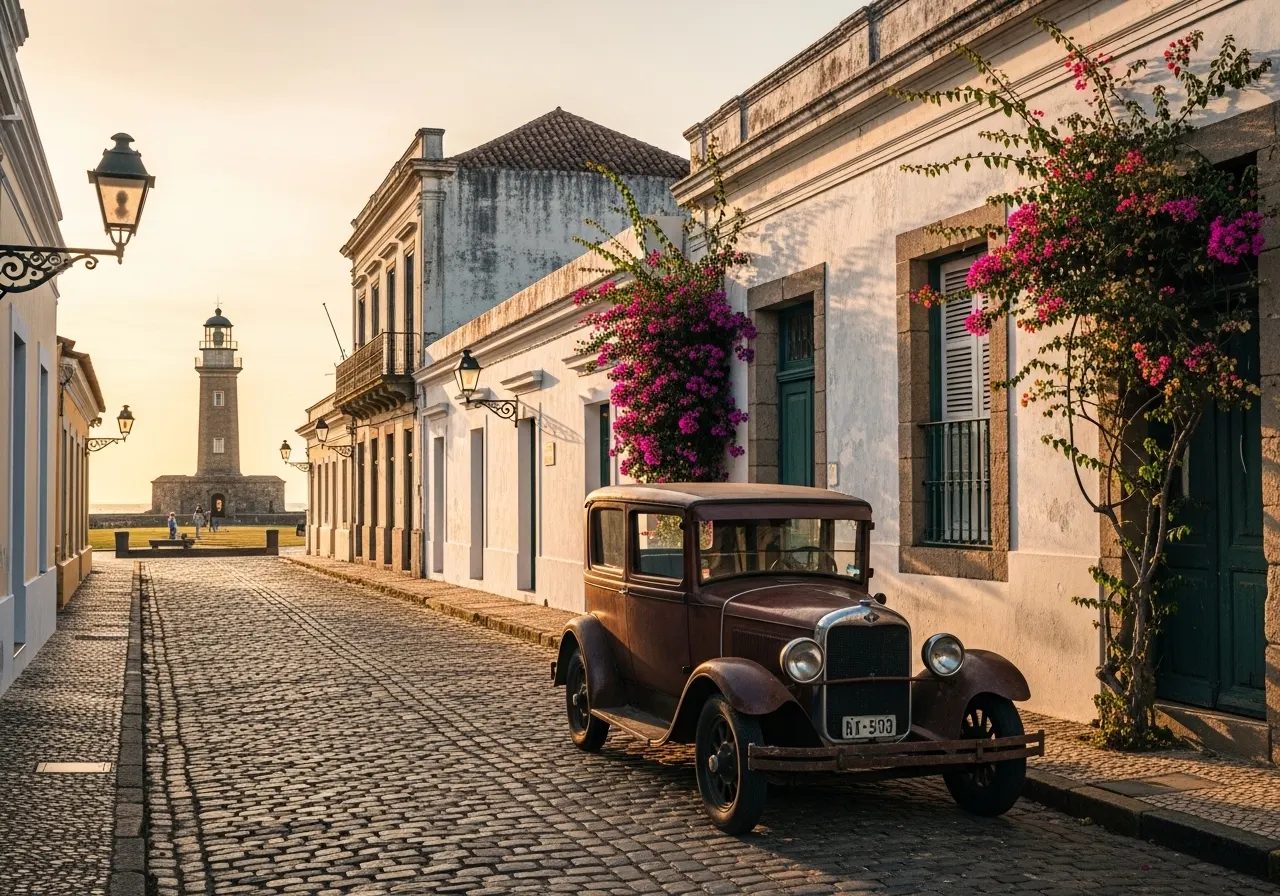
Colonia's port is roughly ten minutes on foot from the Barrio Histórico. The Portón de Campo, a reconstructed city gate and drawbridge, makes a natural entry into the old quarter. From there, Calle de los Suspiros leads across uneven stones towards Plaza Mayor and the Basílica del Santísimo Sacramento. The Faro offers a river view when open; opening hours, admission and climb access vary. The waterfront makes a pleasant place to finish before returning towards the ferry.
The Portuguese founded Colonia in 1680, and UNESCO listed its historic quarter in 1995. Its Portuguese and Spanish street patterns reward a slower look more than a long attractions checklist: the core streets take roughly an hour, while two or three hours allow for photos, a café and lunch. Cobbles can be slippery after rain, and the lighthouse steps and some lanes are difficult with a pushchair or limited mobility; paved routes and the plazas offer an easier visit. Summer brings exposed stretches of waterfront, while winter wind off the Río de la Plata can make a mild day feel cold.
Real de San Carlos and its restored early-twentieth-century bullring lie about 5 km north of the old town. A bike or local transport makes sense only when the timetable leaves several spare hours. Golf carts are unnecessary for the historic quarter. The bus terminal stands beside the ferry port, but the coach to Montevideo takes roughly 2½ hours: an overnight stay suits that onward journey better than a same-day Colonia return.
Lunch and the costs beyond the ticket
A chivito, a Uruguayan steak sandwich often served with ham, cheese and egg, fits a shorter lunch stop; Tannat is Uruguay's characteristic red wine if the day allows for a longer meal. Charco Bistró at the Charco hotel on the old-town waterfront is one sit-down option, and El Drugstore is another established central restaurant. Weekend service and tables can vary, so a café sandwich or picnic leaves more room around a tight return sailing.
Uruguay uses the Uruguayan peso (UYU) rather than the Argentine peso (ARS). Cards work at established restaurants and shops, with a little local cash useful for a stall or small service. A card terminal may offer to charge a UK card in pounds: that merchant conversion and your card's foreign-transaction fee are separate costs, and Argentine pesos may not be accepted at a fair rate. Mobile roaming can move to an international tariff on the crossing; saved tickets and an offline map are useful if your UK or Argentine SIM does not include Uruguay.
For two adults travelling on a Wednesday, US$90 return seats each would mean US$180 for ferries, about ARS 278,100 at the September 2026 planning rate. Allowing US$45 for two lunches and US$15 for drinks or a small admission gives US$240, about ARS 370,800, before taxis, card fees or disruption. Those food figures are an allowance, not quoted menu prices. At the top of the ferry range, the same two seats alone would cost US$300, about ARS 463,500. The sailing choice therefore changes the budget more than a modest difference in lunch prices.
A day in Uruguay is not a new Argentine visa
British passport holders can normally enter Argentina visa-free for 90 days, and Migraciones offers one formal 90-day extension for a fee under its rules. When you return from Colonia, an Argentine border officer decides the new admission. Repeated short exits while living in Argentina can attract scrutiny; a ferry ticket is not residence permission. Someone nearing the end of a permitted stay needs the appropriate extension or residence route, rather than a day trip planned around a promised reset. For residents counting towards naturalisation, DNU 366/2025 requires two continuous years of legal residence without any exit abroad. On that wording, even a same-day trip to Colonia is an exit. The Cámara Nacional Electoral declared the decree null in the Yang case on 30 June 2026; the Supreme Court has not ruled and lawyers disagree on the ruling's scope. Ask a lawyer which rule applies to your case. Our guide to citizenship by investment versus naturalising after two years explains the comparison.
If the child's authorisation is unresolved, your re-entry position is uncertain, the return boat leaves too little time ashore or bad weather threatens a time-critical return, the crossing may be better saved for another day. An overnight stay buys you sunset and quieter streets after the day boats leave. For river boats without an international border, there is Tigre; day trips from Buenos Aires compares other outings. Colonia rewards the traveller who budgets time for the terminals as carefully as for the old town.
Questions
- Can you do Colonia as a day trip from Buenos Aires?
- Yes. A morning direct ferry and early-evening return leave time for lunch and the old town, which is about ten minutes on foot from the port. The crossing takes 1–1¼ hours each way, plus check-in and border controls before both sailings.
- How much is the ferry to Colonia and back?
- Allow roughly US$60–150 per adult return, about ARS 93,000–232,000 at the September 2026 planning exchange rate. Check the complete return price with Buquebus and Colonia Express for your date and ticket conditions.
- Do British citizens need a passport or visa for Colonia?
- A valid British passport is needed for the international crossing, including for a child. A short tourist visit to Uruguay normally needs no advance visa for British visitors; check current Uruguay entry conditions and your Argentine re-entry position before booking.
- Does going to Colonia reset the Argentina 90-day tourist stay?
- A new 90-day admission is not automatic: the Argentine border officer decides when you return. Migraciones offers one formal 90-day visitor extension for a fee under its rules; frequent short trips can raise questions about living in Argentina.
- Do I need permission to take my child on the Colonia ferry?
- Argentine or Argentine-resident minors travelling with one parent or another adult may need Argentine exit authorisation. Each child also needs their own passport; Migraciones can confirm which permission applies to the child's status and travelling party.
Sources
Related guides
- Bariloche with children from Buenos Aires
Four nights in Bariloche give a family time for Circuito Chico, one boat or mountain day and a weather reserve. The flight from Buenos Aires takes roughly 2½ hours; for four people, a summer trip costs about US$2,000–3,400 on a September 2026 planning budget.
- A Montevideo Weekend from Buenos Aires: Fares, Times and a Plan
The direct fast ferry takes about 2½ hours on the water, with tourist-class fares from about US$92 one way in September 2026. Here is what the slower routes save, what a two-night stay costs and how to spend the time in Montevideo.
- A weekend in Mar del Plata from Buenos Aires
Mar del Plata is about 400 km from Buenos Aires, making it a good two-night beach break if you allow five to six hours each way by road. March is quieter; January calls for early bookings.