Updated 2026-09-27 · 7 min read
A weekend in Mar del Plata from Buenos Aires
Mar del Plata is about 400 km from Buenos Aires, making it a good two-night beach break if you allow five to six hours each way by road. March is quieter; January calls for early bookings.
In short
- Mar del Plata is roughly 400 km from Buenos Aires, so two nights make the journey worthwhile.
- A Friday bus and a room near Plaza Colón make for a straightforward car-free weekend.
- January fills up with domestic holidaymakers; March is quieter, though the sea may still be cool.
- Playa Bristol, Varese and Playa Grande offer different stretches of coast; the fishing port needs its own trip south.
- The Mar del Plata train leaves from Constitución and takes around six hours or more, subject to the current timetable.
Mar del Plata is close enough to Buenos Aires for a Friday-to-Sunday break, but far enough that a single beach day feels swallowed by the journey. The city is roughly 400 km away, with five to six hours each way by bus or car in ordinary conditions. A Friday bus and two nights around Plaza Colón leave Saturday for the seafront and Sunday for the fishing port before the trip home.
March is the easier choice if you want to walk the coast and find a room without the January crush. If the packed Argentine summer resort is the attraction, January delivers it, provided you book transport and accommodation early. Either way, this is an Atlantic city with a working port, busy avenues and weather that may have other plans for your beach day.
Pick a weekend to match the coast
January is the main school-holiday rush. February stays busy, particularly around Carnival, while March generally eases the pressure on rooms and beaches; later in March the weather can turn. November can bring spring sunshine for long walks, though swimming conditions are uncertain. In July, the shore is better suited to a walk between indoor stops than to sunbathing. The Servicio Meteorológico Nacional forecast and sea conditions are useful checks before departure.
Anyone fond of a British seaside promenade will recognise the appeal of coffee and fish beside the water even when it is too cold to swim. Mar del Plata, however, is a substantial city rather than a small resort. On its beaches, a balneario rents managed facilities such as a tent, parasol or chairs, while public-access sand remains an option. Prices may be charged by the day; lifeguards' flags govern swimming, and valuables are safer away from the sand when you go into the water.
Getting there and finding a base
The bus is usually the simplest way to make a two-night stay work without a car. Friday departures can sell out first in peak season, so the return journey is as important to pin down as the outward one. The alternatives offer flexibility, though the time on the ticket tells only part of the story.
| From Buenos Aires | Allow one way | What it suits | What to allow for |
|---|---|---|---|
| Long-distance bus from Retiro | Roughly 5–6 hours; longer in holiday traffic | A car-free two-night stay | Peak-season Friday seats sell out first |
| Train from Plaza Constitución | Roughly 6 hours or more; check the current service | A flexible, slower trip | Fewer departures and potentially a late arrival |
| Car via Ruta Provincial 2 | About 5–6 hours in clear traffic | Southern-beach and port detours, or family luggage | Tolls, parking and summer changeover queues |
The train is a mainline Trenes Argentinos service from Constitución. The Tren de la Costa runs towards Tigre, not Mar del Plata. Retiro and Constitución are separate Buenos Aires stations, and Mar del Plata's long-distance bus terminal is away from the beachfront, so a door-to-door journey also includes station transfers and a taxi or local bus to your room. A same-day return leaves little time at the shore.
Around Plaza Colón and the central waterfront, the beach, cafés and restaurants are within walking distance. La Perla is another waterfront base, north of Playa Bristol; Playa Grande lies further south and makes sense for a beach-led stay if you are happy to walk more or take taxis into the centre. January dates, school holidays and Friday nights can change room prices sharply. Drivers should ask about parking rather than assume a beachfront hotel provides it.
A long weekend changes availability even outside January; the public-holidays guide helps put dates in context. Compare return bus seats through the operators' ticket channels and train availability through Trenes Argentinos before reserving a room. The booking ID needs to travel with you, and an arrival after midnight may affect check-in, so accommodation terms, taxes, breakfast and cancellation conditions matter more than the headline rate. Keeping the return ticket available offline is useful when travelling. Cards work for many purchases, with some pesos handy for smaller ones; foreign cards generally receive a rate close to the official rate. For a dated budgeting conversion, the figures here use ARS 1,545 per US$ in September 2026. If driving, remember that traffic keeps right, unlike in the UK, and allow for queues leaving Buenos Aires and entering the resort.
Two days between the beach and the port
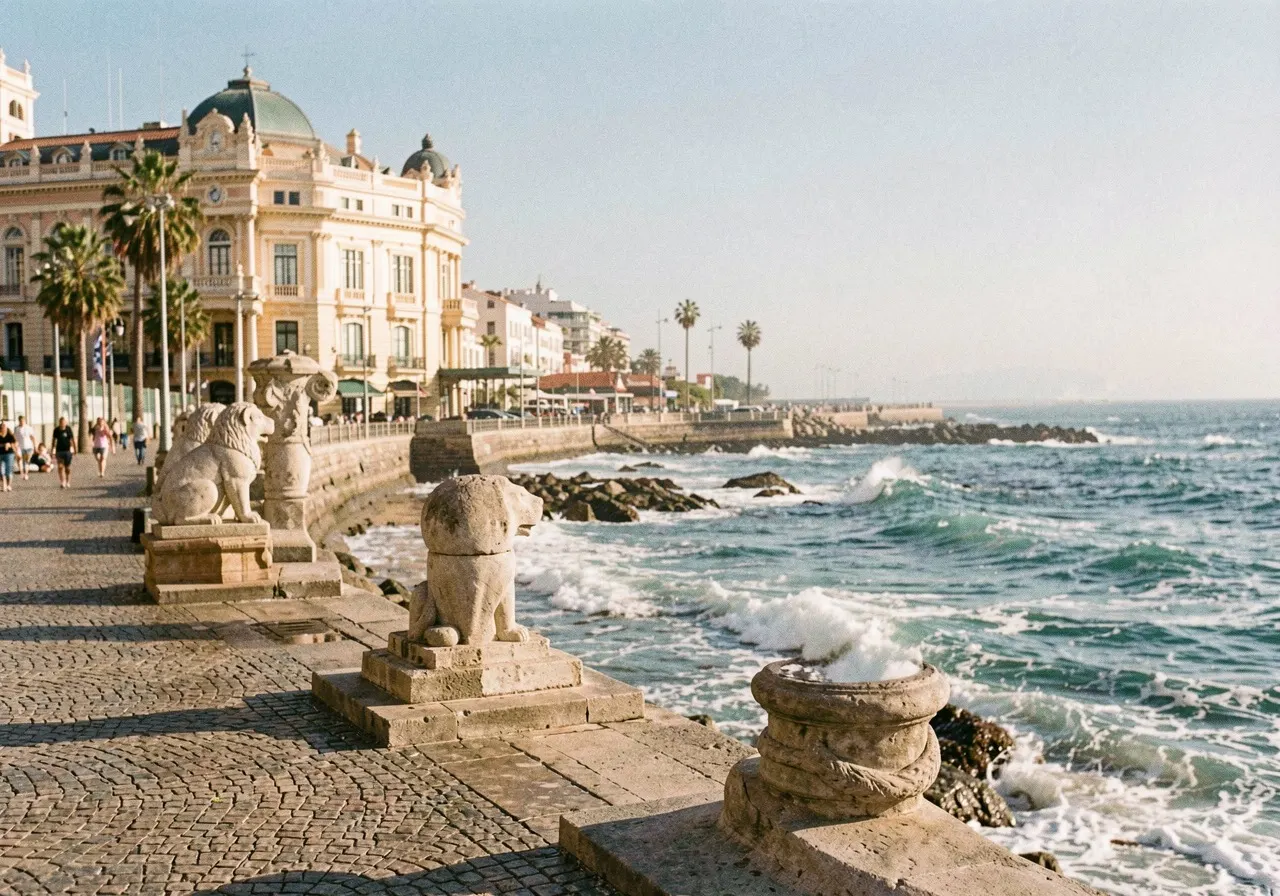
Saturday lends itself to a walk south from Playa Bristol, beside the landmark Casino Central, towards the Torreón del Monje and Varese. Bristol has the classic crowded resort view; Varese is south of the centre, with Playa Grande further along for a longer coastal walk. A paid balneario buys comfort, not admission to the sea. On a swimming day, a guarded stretch and the current local water conditions matter more than the apparent shelter of a beach from the promenade.
Wind or cloud gives the afternoon a different shape. Villa Victoria is a cultural venue associated with writer Victoria Ocampo; the Museo Municipal de Arte Decorativo Juan Carlos Castagnino occupies Villa Ortiz Basualdo on Avenida Colón. Municipal tourism and culture listings carry opening hours and exhibition access for the day. Either offers a reason to head inland when the shore is less inviting.
On Sunday the Puerto, Mar del Plata's fishing-port district, is a separate trip south by taxi or local transport rather than a continuation of the central promenade. Restaurant menus there offer merluza (hake), rabas (fried squid rings) and other seafood. Portions and prices matter when ordering a shared platter, and the return transfer needs to fit your bus departure. If Saturday has the better forecast, give it to the beach and leave an indoor visit for Sunday. Old references to the Mar del Plata Aquarium are unreliable as a current family-day plan. Nor should centolla (king crab), chiefly associated with the far south, be assumed to be a cheap local catch.
What two nights can cost
For two adults in March, a planning range rather than a quoted fare is US$40–80 per person for a return bus, US$55–110 per night for a double room and US$20–40 per person per day for simple food, drinks and local journeys. Take a middle example: two US$60 return tickets cost US$120, two US$80 room nights cost US$160, and meals and local travel at US$30 per person per day over two days cost US$120. The total is US$400 for the couple, about ARS 618,000 at ARS 1,545 per US$ (September 2026). Beach equipment and extra nights sit outside that figure; actual tickets and room rates depend on your dates.
A January room rate alongside a March bus fare gives a misleading budget, as does counting only Saturday night after a late Friday arrival. Transfers at each end, or tolls and parking for a driver, also belong in the calculation. A day that moves from beach to cafés or museums may cost differently from the one originally imagined.
With only Saturday free, nearer family day trips leave more of the day for being out. A cold-season break calls for a different balance, explored in winter escapes from Buenos Aires; for mountain scenery over a longer trip, there is the Bariloche family trip. Mar del Plata earns its two nights when the coast itself, including an afternoon without swimming, is the reason to go. If you are thinking of living on the coast, read living outside Buenos Aires.
Questions
- Can you visit Mar del Plata as a day trip from Buenos Aires?
- A return road journey can take ten to twelve hours before transfers and beach time. Two nights give you a full day on the coast; for one free day, a nearer destination is more relaxed.
- Which Buenos Aires station has the Mar del Plata train?
- The mainline service uses Plaza Constitución, rather than Retiro or the Tren de la Costa. Trenes Argentinos publishes the current timetable, seat availability and booking requirements.
- Is March a good month for Mar del Plata?
- March usually has fewer crowds and more room to walk the shore. Swimming weather and water temperature are uncertain, especially later in the month, so the city's museums and restaurants are useful parts of the plan.
- Are Mar del Plata beaches free to use?
- Public-access sand is available. Balnearios charge for managed extras such as tents, parasols and chairs; check the daily price if you want to rent one, and follow the lifeguards' instructions when swimming.
- Where is a convenient place to stay without a car?
- Around Plaza Colón and the central waterfront, you can walk to Playa Bristol, cafés and restaurants. The fishing port and beaches further south are a taxi or local-transport trip away.
Sources
Related guides
- Colonia Day Trip from Buenos Aires: Ferry, Costs and Walking Route
A morning ferry from Buenos Aires gives you a day in Colonia del Sacramento before an evening return. The crossing takes about 1–1¼ hours each way; allow for border controls and budget roughly US$60–150 per adult for a return ferry (September 2026).
- A Montevideo Weekend from Buenos Aires: Fares, Times and a Plan
The direct fast ferry takes about 2½ hours on the water, with tourist-class fares from about US$92 one way in September 2026. Here is what the slower routes save, what a two-night stay costs and how to spend the time in Montevideo.
- Salta and northwest Argentina: a five-day trip guide
Five days give you time for Salta city, the Cafayate wine route and Jujuy's Quebrada de Humahuaca. Fly from Buenos Aires in about two hours, then spend nights beyond Salta to make the long drives manageable.