Updated 2026-10-15 · 9 min read
Steak in Buenos Aires: Cuts, Parrillas and Asado Etiquette
For a first steak in Buenos Aires, bife de chorizo (sirloin) ordered jugoso (juicy, usually pink inside) is a dependable choice.
In short
- Bife de chorizo is sirloin, not sausage; ojo de bife is ribeye and entraña is a thinner, strongly flavoured skirt steak.
- Jugoso usually means pink inside, though describing the centre's colour makes the order clearer.
- Ask the serving weight and whether a large cut is suitable for sharing before adding starters or sides.
- At a home asado, the asador sets the pace; guests agree what to bring with the host.
- Use the current parrilla menu to check the cut, included sides, drinks and any cover charge before ordering.
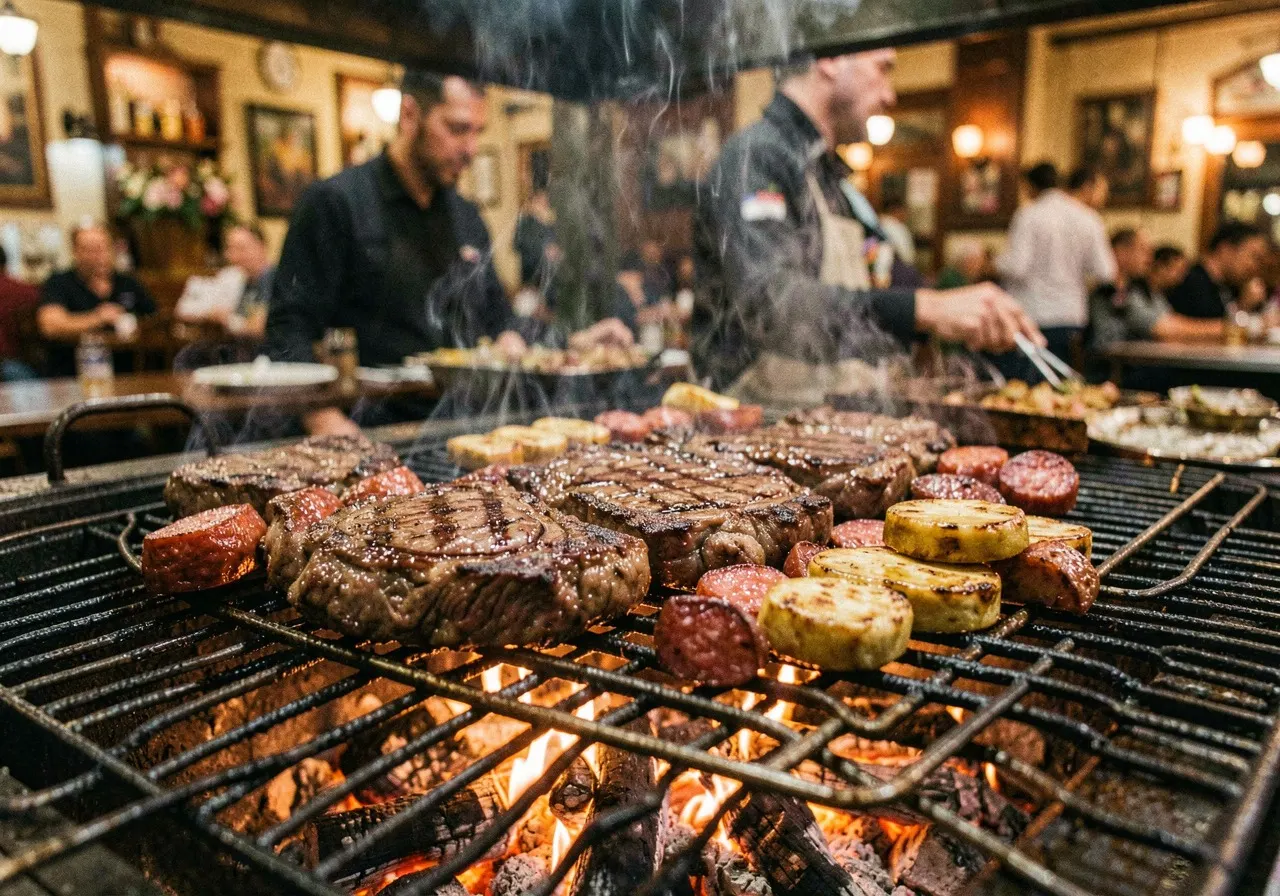
At a Buenos Aires parrilla (grill restaurant), bife de chorizo is the easy first steak: a thick sirloin with an edge of fat, despite the sausage-sounding name. Order it jugoso, usually pink inside, and describe the colour you want to the waiter. If a thinner cut with stronger beef flavour appeals more, try entraña (skirt).
The cut changes the meal
Argentine butchery does not map exactly onto British cuts, and asado can mean either a shared cookout or ribs on a menu. A familiar steak makes sense for a first visit, while a bone-in or slow-grilled cut is often better shared. Portion sizes vary: ¿Cuánto pesa la porción? asks how much a serving weighs, and ¿Es para compartir? asks whether it is for sharing.
| Menu term | Closest British reference | What arrives |
|---|---|---|
| Bife de chorizo | Sirloin | A thick individual steak with an outside fat edge |
| Ojo de bife, sometimes bife ancho | Ribeye | A richer, more marbled steak |
| Lomo | Fillet | Lean and soft, with a milder taste; often dearer |
| Entraña | Skirt | Thin, coarse-grained and quick to grill; slice across the grain |
| Vacío | Flank/bavette area, without an exact UK match | A broad, fat-layered cut that benefits from patient grilling |
| Tira de asado | Cross-cut beef short ribs | Fatty strips of meat and bone, often shared |
A menu may also call striploin bife angosto; names and serving sizes are not perfectly standardised. At a carnicería (butcher's shop), dos bifes gruesos, de unos tres centímetros gets you two thick steaks of about three centimetres without relying on a UK cut name.
A parrillada is a mixed grill, frequently starting with sausages and offal before the beef. Chorizo alone means fresh grill sausage rather than cured Spanish chorizo. Morcilla is a soft, hot blood sausage related to black pudding, mollejas are sweetbreads (usually thymus glands), and achuras is the collective term for offal. Someone hoping for one steak may find a mixed platter both larger and more adventurous than expected.
Tell the grill cook what pink means to you
A punto often translates as medium, but each parrilla has its own interpretation. Jugoso tends towards a pink or red centre, roughly British medium-rare; the same word produces different results in a thick bife and a thin entraña. Adding rosado por dentro (pink inside) gives the waiter a clearer description than an English doneness label.
| Phrase | Usual result | Colour clarification |
|---|---|---|
| Vuelta y vuelta | Very rare, briefly seared | Bien rojo por dentro (quite red inside) |
| Jugoso | Pink/red centre | Rosado por dentro (pink inside) |
| A punto | Usually medium | Un poco rosado, no seco (a little pink, not dry) |
| Bien cocido | Cooked through | Sin rosado (no pink) |
Un bife de chorizo jugoso, rosado por dentro, por favor is a complete order. A waiter can repeat the requested colour back, and an underdone steak can go back on the grill if necessary. An overcooked one cannot be uncooked.
What sits beside the steak, and on the bill
Grill dinners run later than a British pub supper; 9pm is an ordinary dinner time in Buenos Aires. Lunch may be easier to reserve at a famous parrilla. Hours and booking arrangements can change, particularly on Sundays and public holidays, and a large cut may be priced by weight rather than by portion. ¿Qué cortes tienen hoy y cuánto pesan? establishes both today's selection and the size.
A shared provoleta, a grilled disc of provolone, or a chorizo can be plenty before a large steak. Choripán, grilled sausage in bread, works as a meal or snack of its own. Papas fritas (chips), salad and grilled vegetables are often separate orders; La Cabrera is an example where small accompaniments may come with a steak, so the included sides matter. Chimichurri is a herb, garlic and vinegar sauce; salsa criolla is a tomato, onion and pepper relish. Both can accompany the beef.
Wine is optional: a Mendoza Malbec suits a fattier cut, while water or beer works just as well. Water comes con gas (sparkling) or sin gas (still); the Buenos Aires wine guide goes further into local bottles. Ask staff to explain any cubierto or service item before deciding on a separate propina (gratuity); the tipping guide offers practical questions to ask.
Water in place of wine changes the bill, and a destination steakhouse can change it still more.
A little cash remains useful for a terminal problem or a tip, since a card tip may not be available.
Four parrillas with different reasons to visit
The addresses below span a destination meal and a more straightforward neighbourhood grill, rather than ranking the best steak. Menus, availability, hours and booking channels change, so older online prices are a poor basis for a bill in an inflationary economy.
| Restaurant | Address and barrio | What distinguishes it |
|---|---|---|
| Don Julio | Guatemala, Palermo; confirm the entrance with the booking | Carefully selected beef and an extensive wine list; reserve ahead and budget well above a neighbourhood grill |
| La Cabrera | José A. Cabrera 5099, Palermo | Large steaks with small accompaniments; establish what is included |
| La Brigada | Estados Unidos 465, San Telmo | Traditional sit-down steakhouse; premium cuts can lift the bill |
| Parrilla Peña | Rodríguez Peña 682, Congreso | Straightforward neighbourhood-style grill, useful for comparing with Palermo destination prices |
Everyday grills exist across the city. For other kinds of meals, the Buenos Aires restaurant guide ranges beyond steakhouses. For an evening in San Telmo, a direct, well-lit route to dinner makes more sense than assuming every side street will be busy after dark.
An invitation to asado has its own rhythm
A home asado is a communal meal that may last for hours, often over a weekend lunch. The asador tends the coals and decides when food is ready: sausage, sweetbreads or smaller pieces may arrive before ribs and larger cuts. Bread, salad and conversation belong to the meal, rather than filling time before one plated main.
The host may have already worked out quantities, so ¿Qué llevo? (What shall I bring?) is more useful than turning up with unrequested raw meat. Wine, soft drinks, ice, salad or dessert may be welcome. ¿A qué hora llegamos? asks when to arrive, not when the steak is ready; a midday invitation calls for the agreed arrival time. Help with the table or clearing up is usually easier to offer than help with the coals.
Food needs are easiest to discuss when accepting the invitation. Some vegetarians avoid vegetables cooked on the meat grill, and coeliac guests need to discuss cross-contact at the grill and bread table. The vegetarian and vegan guide has alternatives and useful phrases.
If you host, a rough shopping figure is 400–500g of raw mixed bone-in meat and sausage per meat-eating adult when there are substantial sides. Boneless meat calls for less, as do children. For six adults at 450g each, about 2.7kg could mean 1.5kg of tira de asado, 700g of vacío and roughly 500g of chorizo; a butcher can adjust for appetite and the amount of bone. Raw and cooked meat need separate utensils, and the cuts need safe handling and thorough enough cooking. A grill on a balcony or terrace also depends on your building's rules; indoors is no place to light one.
The difference between a restaurant steak and a friend's asado is the pace. At the parrilla, you choose a cut and settle a bill; at home, the cook serves each round when it is ready, and the afternoon belongs to the people around the table.
Questions
- Which steak should I order first in Buenos Aires?
- Bife de chorizo is a thick sirloin steak and a familiar first choice, despite its name. Ojo de bife has more marbling; entraña is a thinner cut with stronger flavour.
- How do I ask for medium-rare steak in Argentina?
- Try jugoso, rosado por dentro (juicy, pink inside). A punto usually means medium, but doneness varies between grills.
- How much is a steak dinner in Buenos Aires?
- Destination grills cost more, and sides, drinks and cubierto can add to a steak's listed price. The current parrilla menu, portion size and included sides determine the meal price. Ask staff to explain any cubierto or service item before deciding on a separate tip.
- Is an asado the same thing as a parrilla?
- Asado describes a shared meal and a way of cooking over coals, and can also name ribs on a menu. Parrilla is the grill or the restaurant; at a home asado, the asador manages the cooking and food usually arrives in rounds.
- What should I bring to someone's asado?
- The host may want drinks, ice, salad or dessert, depending on what others are bringing. Asking beforehand leaves the asador free to plan the meat and quantities.
Sources
Related guides
- Opening a pub or café in Buenos Aires: check the premises first
Before buying the bar stools or signing a lease, find out whether the address can support your kitchen, hours and customers. A practical premises checklist for British owners.
- Tipping in Argentina: restaurant bills and everyday etiquette
At an Argentine restaurant, check service items on the bill before deciding on a separate tip. Taxis call for a round-up; delivery and hotel help usually merit a small peso amount. Cubierto is a cover charge, not a tip.
- Where to eat in Buenos Aires, by barrio and budget
Book Don Julio in Palermo for an occasion, try El Desnivel in San Telmo for a simpler grill, or stop at Güerrin for pizza after the theatre. These addresses and menu-checking tips help match dinner to the evening.