Fernet, Mate, and Malbec: The Drinks You Need to Understand
Three drinks define Argentine social life: mate for mornings, Malbec for dinner, and Fernet con Coca for the night. Here's the British expat's guide to all three.
 Rosie CarterFounding editor, Brits in Argentina · Palermo, Buenos Aires, Argentina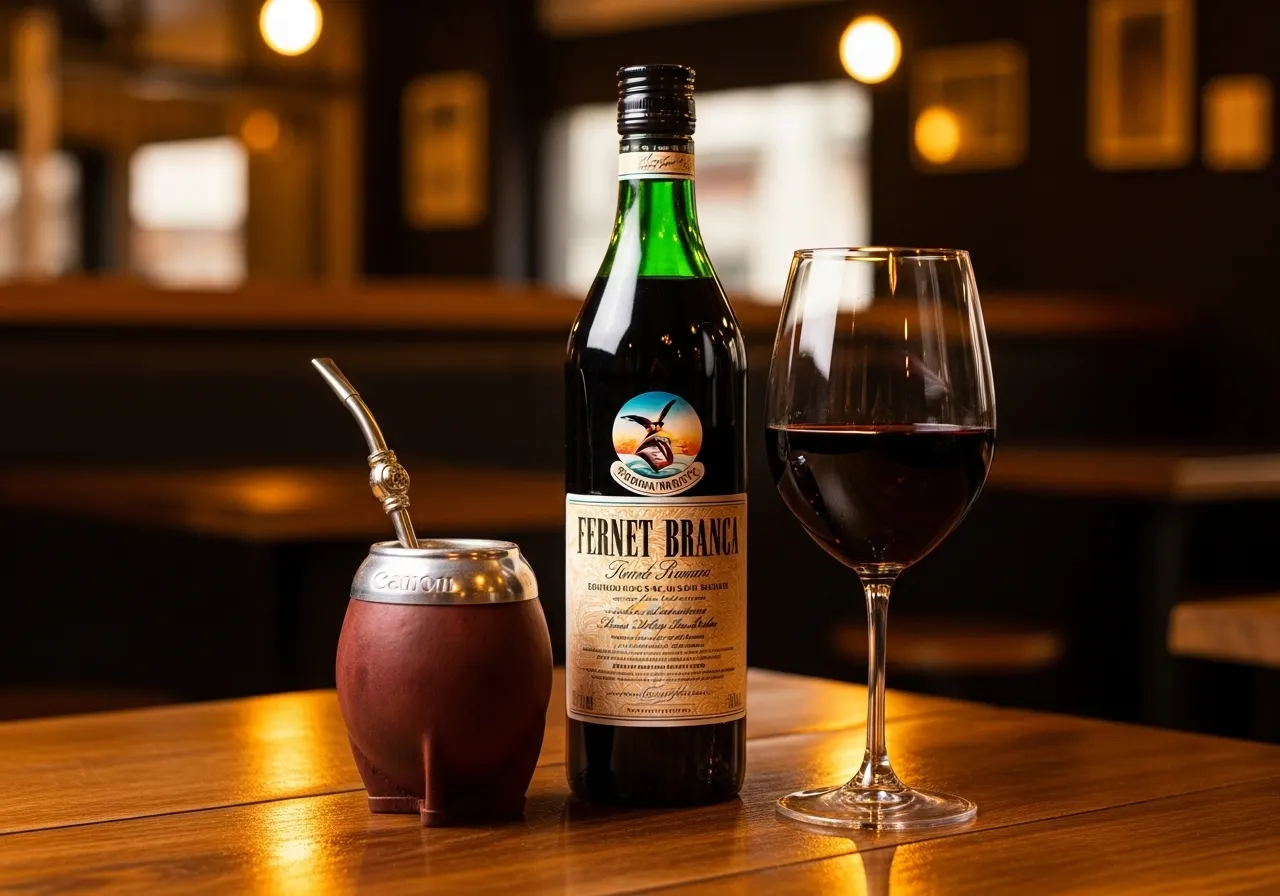
Fernet tastes like someone dissolved a mentholated cough sweet in Jägermeister. After your third glass you'll understand why 40 million people are obsessed with it.
Argentina has a drinking culture, but it's structured differently from the UK's. The pub-on-Friday binge doesn't really exist here. Instead, there's a daily rhythm of different drinks for different occasions, and understanding this rhythm is one of the more enjoyable parts of cultural integration.
Mate
For related context, see British Schools in Buenos Aires: A Parent's Guide.
You already know about mate if you've read anything about Argentina. The green tea, the gourd, the metal straw, the sharing. What you might not know is how omnipresent it is.
Mate is everywhere. Offices. Parks. Building sites. Bus stops. People carry their mate kit (gourd, thermos of hot water, bag of yerba) like Brits carry their phones. It's consumed in the morning, in the afternoon, at family gatherings, at work, alone, in groups. It's the closest thing Argentina has to a universal daily ritual.
The taste: Bitter and grassy. Earthy. Like green tea's more intense cousin. Most Brits don't love it immediately. Give it a few weeks. Some people add sugar (mate dulce) but in Buenos Aires, drinking it bitter (amargo) is the default. Admitting you prefer it sweet is like admitting you put ketchup on a steak — technically fine, but noted.
The etiquette (abbreviated): The cebador (person preparing) drinks first. The gourd goes around the circle. Drink all the water through the bombilla (straw). Don't touch the bombilla. Say "gracias" only when you've had enough. it means you're finished. These rules are real and observed.
Getting your own kit: You'll want one. Gourd + bombilla: ARS 5,000–15,000 (£3–10) at any kiosko or souvenir shop. Yerba mate (the tea): Taragüí and Rosamonte are the classic brands. Available everywhere.
Malbec (and Argentine Wine Generally)
This is the undisputed highlight of Argentine consumption for British expats. Argentine wine (particularly Malbec from Mendoza) is world-class, and the prices are absurd.
What you'll pay: A very good bottle of Malbec costs ARS 3,000–8,000 (£2–5) at a supermarket. The same quality in a UK wine shop would cost £12–25. A bottle at a restaurant costs ARS 5,000–15,000 (£3.30–10). In London, equivalent quality runs £25–50.
What to drink:
- Entry level: Alamos, Catena, Trapiche — the bottles you find in Tesco for £8–10 are £2–3 here
- Mid-range: Salentein, Zuccardi, Achaval Ferrer — serious wine, £5–10 at retail
- Splash out: Catena Zapata Malbec Argentino, Cobos, Achával Ferrer Finca Altamira — £15–30, and they'd cost £50–100+ in the UK
Beyond Malbec: Try the Bonarda (Argentina's other red. softer, fruitier), Torrontés (a floral white, excellent in summer), and blends from Uco Valley producers doing interesting things.
The key realisation: You will drink better wine, more frequently, at lower cost than at any other point in your life. This alone justifies the move for some people.
Fernet con Coca-Cola
Now the difficult one. Fernet Branca is an Italian amaro. a bitter, herbal digestif that tastes like a medicine cabinet had a fight with a monastery garden. In Italy, it's sipped after dinner. In Argentina, they mix it with Coca-Cola and drink it all night.
How to make it: Fill a tall glass with ice. Pour Fernet to roughly one-third of the glass. Top with Coca-Cola. Stir gently. The ratio is personal — some like it stronger, some weaker.
The taste: Bitter, mentholy, herbal, with the sweetness of Coca-Cola cutting through. Your first reaction will be confusion. Your second reaction might be revulsion. Your third reaction, after a full glass, will be "actually, that's quite good." By your fifth Fernet, you'll be ordering it automatically.
The culture: Fernet con Coca is the drink of Argentine nightlife. parties, boliches (clubs), pre-drinks at someone's flat. It's particularly associated with Córdoba (the central Argentine city that consumes more Fernet per capita than anywhere on earth), but it's universal across the country. Ordering a Fernet signals that you've settled in. It's an integration marker.
For sceptics: Fernet also works as a digestif on its own. a small shot after a heavy meal. The Italians had it right. If you can't handle the mixed drink, try it neat. It's less sweet and more logical.
The Daily Rhythm
Morning: mate (at home, at the office, in the park)
Afternoon merienda: coffee (cortado or café con leche)
Aperitivo (pre-dinner, 7-8pm): wine or a Campari soda
Dinner: wine. always wine with dinner
Night out: Fernet con Coca, or beer if you're at a casual bar
Weekend asado: start with wine, continue with wine, finish with wine
Nobody gets dramatically drunk at dinner. The drinking is steady, social, and integrated into meals and gatherings rather than concentrated into binge sessions. Coming from the UK's Friday-night culture, this feels grown-up and civilised. You'll adjust quickly and wonder why you ever did it differently.
Worth reading next
Frequently Asked Questions
What is Fernet and why does Argentina drink so much of it?
Fernet Branca is an Italian bitter herbal liqueur mixed with Coca-Cola as Argentina's national mixed drink. The taste is bitter, mentholy, and herbal — an acquired taste that most people warm to after a few tries. Argentina consumes more Fernet than any other country, particularly in Córdoba. It's the default nightlife drink and ordering one signals cultural integration.
How cheap is wine in Argentina?
Extraordinarily cheap by UK standards. A very good Malbec costs £2–5 at the supermarket (the same bottle would be £12–25 in the UK). Restaurant bottles run £3.30–10 for mid-range quality. Premium wines that would cost £50–100+ in London are £15–30 here. Most British expats cite this as one of the best things about living in Argentina.
Sources & Links
Further reading: legal & visa
For visa, residency, and paperwork questions, Lucero Legal offers practical guidance for UK citizens moving to Argentina.
You Might Also Like
Opening a Bank Account in Argentina as a British Expat
Argentine banking is one of the more frustrating parts of expat life. Here's how to navigate it without losing your mind.
Raising Teenagers in Buenos Aires: School, Social Life, and the Argentine Vibe
Teenagers in Buenos Aires typically go through a difficult first few months and then become the most enthusiastic ambassadors for the city you've ever met.

Apostille UK Documents for Argentina: The FCO Step-by-Step
The apostille is a £30 stamp that makes your UK document legal in Argentina. Without it, Migraciones will reject your application.