Updated 2026-09-27 · 5 min read
After-school activities in Buenos Aires: real options and prices
Buenos Aires has free city sports and arts classes, while neighbourhood clubs charge membership and often a separate class fee. Here are the 2026 prices, enrolment windows and details that make a weekly activity workable.
In short
- Buenos Aires City offers free polideportivo sports classes and arts workshops at more than 30 cultural centres.
- The free Colonias Deportivas de Verano ran from 5 to 30 January 2026 for ages four to 12, with meals included.
- An August 2026 survey put average neighbourhood-club membership at about ARS 23,000 a month, with class fees often separate.
- Club Atlético de San Isidro's 2026 children's classes cost ARS 30,886 to ARS 43,152 a month, plus membership.
- Places, school shifts and the trip home often decide which activity a child can keep attending.
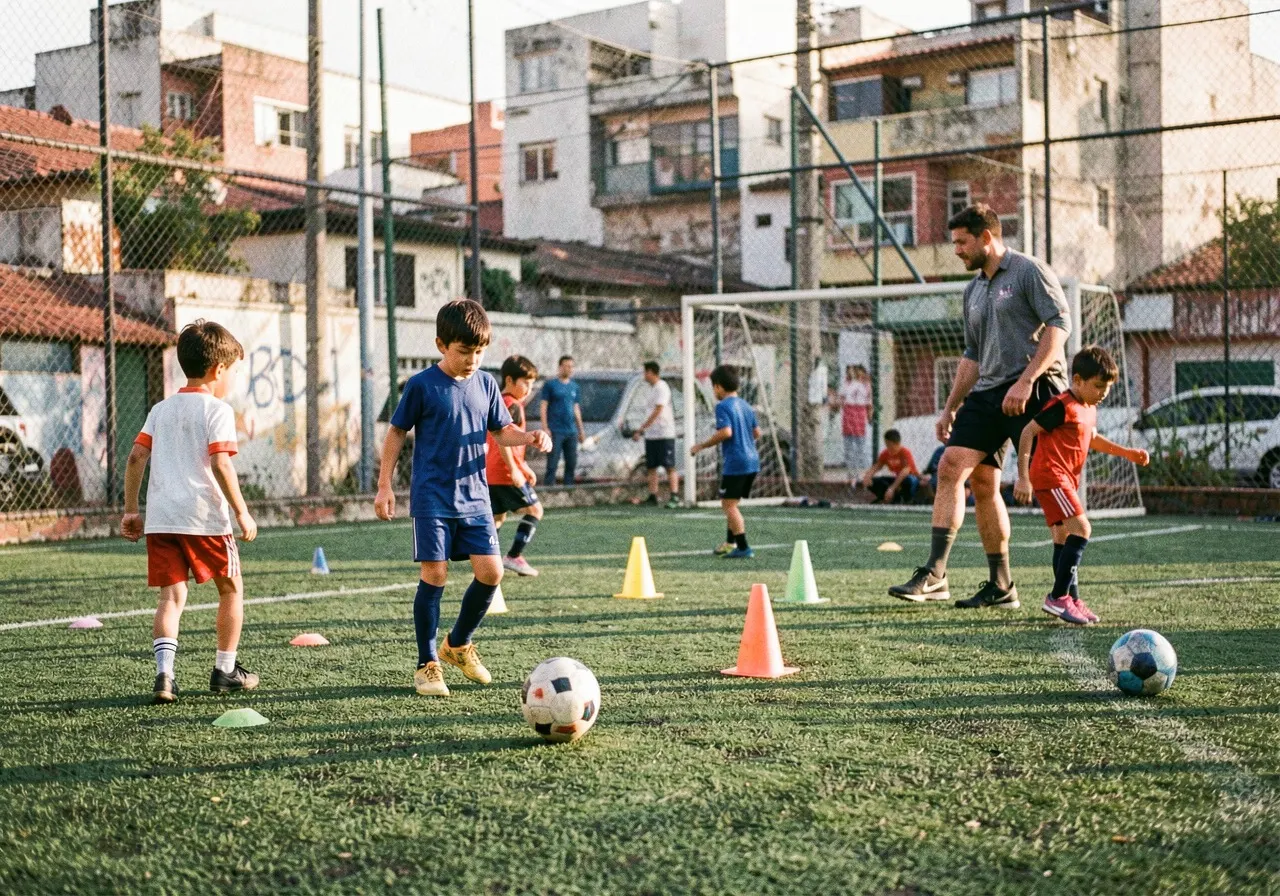
For a child newly arrived in Buenos Aires, an after-school activity can offer familiar faces and an easier way into Spanish. The city's polideportivos (public sports centres) and cultural centres have free classes. A club de barrio (neighbourhood sports and social club) adds a regular group, but charges membership and often a separate class fee. The best choice usually depends on when school finishes and whether the child can get to the same place each week.
Free classes and the summer programme
Buenos Aires City books its sports activities at polideportivos and parks through an online registration portal, with capacity set by venue and term. Football, basketball, swimming, hockey and fitness classes include options at Parque Sarmiento (Av. R. Balbín 4750) and Polideportivo Colegiales (Freire 234). They let a child try a sport before the family pays a club registration fee.
For the 2026 summer holidays, the free Colonias Deportivas de Verano ran Monday to Friday from 5 to 30 January, 9:00 to 16:00, for children aged four to 12. Fourteen venues included Parque Manuel Belgrano, Parque Roca and Polideportivo Patricios; breakfast, lunch and an afternoon snack were included. Registration opened online in early November for the following summer, and popular venues filled in days. Those dates describe the 2026 programme, rather than a standing January timetable.
The Programa Cultural en Barrios offers free year-long music, dance, theatre, visual art and folklore workshops at more than 30 centros culturales, including CC Belgrano R, CC La Usina and CC Nicolás Olivari. Each centre has its own once-a-year online enrolment form; the 2026 workshop lists were published in March after places had filled. City education's complementary Escuelas de Música teach ages four to 13, while Conservatorio Piazzolla offers free extension courses for older students. A cultural workshop may ask families to supply materials.
What membership buys, and what the class costs
An August 2026 survey put the average monthly club de barrio membership at about ARS 23,000 (about US$15), with a range from ARS 2,000 to more than ARS 80,000. Membership alone may not cover the class, kit or registration. Club Atlético de San Isidro's published 2026 escuelita (children's training group) prices show why the separate lines on a quote matter.
| Option | Published cost | Other costs |
|---|---|---|
| City polideportivo sports or Programa Cultural en Barrios workshop | Free | Reserve a place; workshops may request materials |
| Club San Isidro escuelitas, 2026 | Hockey ARS 30,886; tennis ARS 39,757; fútbol, taekwondo and gymnastics ARS 43,152 per month | Sports membership from ARS 43,810 a month for ages five to eight |
| Club de barrio, August 2026 survey | About ARS 23,000 monthly membership on average; ARS 2,000 to over ARS 80,000 | Class, registration and kit may be separate |
| Scouts group | Varies; one Buenos Aires group charged ARS 14,000 (about US$9) for its first 2026 instalment | Shirt and camps extra |
Dollar approximations use about ARS 1,520 per US dollar in September 2026. Clubs collect fees in pesos and may raise them several times a year. A full written quote separates matrícula (registration), cuota social (membership) and arancel (class fee); that gives a family a useful comparison with a free city class nearby.
Getting a place and finding the right group
Small groups can fill well before a child arrives for a trial. Club Atlético de San Isidro's 2026 escuelita had 15 places per age category, took children from age four and prioritised those enrolled in 2025. Atención al Socio kept the waiting list, and three consecutive absences meant losing a place. City Colonias registration opened in November for January; cultural-centre enrolment happened once a year. These are different windows, so an appealing activity might require a wait rather than an immediate sign-up.
A local escuelita de fútbol trains children by age group rather than as a league team. Large clubs also have franchise schools across the city, away from their stadiums. One official River Plate school's 2026 form listed ARS 35,000 registration plus ARS 30,000 to ARS 45,000 per month, a useful comparison with the neighbourhood club's full quote. At a trial, a parent can see the age mix, ask whether girls and boys train together and learn what kit the first sessions require. A child with little Spanish can join an escuelita; knowing what they understand helps the coach include them.
Swimming is often at a club pool or polideportivo. Some pools and hockey clubs ask for an apto físico (medical fitness clearance) signed by a doctor, while many football escuelitas use a health form; the English-speaking doctors list can help with an appointment. Scouts Argentina lists local groups on its website. Saturday meetings and camps several times a year make a trial Saturday especially useful for judging the group's language and pace. For older children, a club may also offer some independence; the teenagers' guide covers travel and evenings out.
The week has to fit the school shift
Buenos Aires schools run morning, afternoon or full-day shifts. An external activity may start before a child on the afternoon shift has finished school, so the exact dismissal time from the school office matters as much as the advertised class hour. School-gate Spanish can help with that conversation.
Enrolment forms commonly ask for the child's DNI or passport details, parent contacts and relevant medical information. At a trial, the instructor's ratio and response when a child misses an instruction in Spanish are more revealing than a timetable. Collection rules also matter: the organiser needs to know who may pick up the child and what happens if training ends before a parent gets back from work. A nearby activity a child attends every week may give the family more than a cheaper class across town at rush hour.
Questions
- How much do children's after-school activities cost in Buenos Aires?
- City sports and cultural workshops are free. Neighbourhood-club membership averaged about ARS 23,000 (about US$15) monthly in an August 2026 survey, while Club Atlético de San Isidro listed ARS 30,886 to ARS 43,152 monthly for its 2026 escuelitas, plus membership.
- Which free activities can children join?
- Polideportivo sports and Programa Cultural en Barrios workshops are free, subject to available places. The free 2026 Colonias Deportivas de Verano served four- to 12-year-olds from 5 to 30 January at 14 venues, with meals included.
- Can a child who speaks little Spanish join a football escuelita?
- Yes, an age-group escuelita can be a gentler introduction than a competitive league team. A trial lets the child meet the coach and lets the coach know how much Spanish the child understands.
- Do children need a medical certificate for sport?
- Some pools and hockey clubs require a doctor's apto físico before the first session; many football escuelitas ask for a health form instead. The organiser's enrolment instructions say which applies.
- Why do places run out so quickly?
- Group sizes are limited and returning children may have priority. Club Atlético de San Isidro's 2026 escuelita capped categories at 15 and kept a waiting list; the city's January Colonias also filled popular venues after November registration opened.
- What does a big-club football school cost?
- One official River Plate school's 2026 enrolment form listed ARS 35,000 registration and ARS 30,000 to ARS 45,000 a month. A barrio club may have a different class fee and a separate membership charge, so the total is the useful comparison.
Sources
- Club Atlético de San Isidro: tariffs— Published 2026 escuelita fees and membership quotas used in the price table
- Club Atlético de San Isidro: escuelita de fútbol— 2026 enrolment rules: 15 places per category, waiting list, absence policy, ages
- Ccomusoc: club de barrio quotas— August 2026 survey: average ARS 23,000 monthly quota, range and number of CABA clubs
- Buenos Aires Ciudad: Programa Cultural en Barrios— Free workshops, disciplines, once-a-year online registration per cultural centre
- Caballito Urbano: Colonias Deportivas de Verano 2026— Dates, ages, hours, meals and the 14 named venues for the free 2026 summer camps
Related guides
- Starting Argentine school mid-year: the 2026 Buenos Aires calendar
Buenos Aires City nursery and primary began on 25 February 2026, secondary on 2 March, and classes end on 18 December. For a British child arriving in July, August is a possible start in an existing class if a suitable place is available.
- Teenagers in Buenos Aires: Activities, Costs and Going Out
A registered SUBE Subte trip is ARS 1,753 in September 2026 and a general 2D cinema seat runs roughly ARS 12,000–20,000. A regular club, school or park activity can give a teenager the same people to see each week.
- Raising Kids in Argentina: Buenos Aires Family Life
Family life in Buenos Aires begins with the school journey, a local plaza and a paediatrician. City primary began on 25 February in 2026, secondary on 2 March, with a two-week July break.