Updated 2026-10-15 · 7 min read
Childcare in Buenos Aires: Nurseries and Nannies for British Families
Private nursery fees and nanny costs in Buenos Aires depend on the school, the hours and ARCA's rules for domestic workers. Ask for current fee schedules and check ARCA's wage floors.
In short
- Check ARCA's casas particulares rules for whether and how a regular childcare arrangement at home must be registered.
- Check the education law for the age from which preschool is compulsory; nursery attendance before then is optional.
A nursery place gives a child a room of peers and a school-day timetable; a nanny can cover the hours a family actually works.
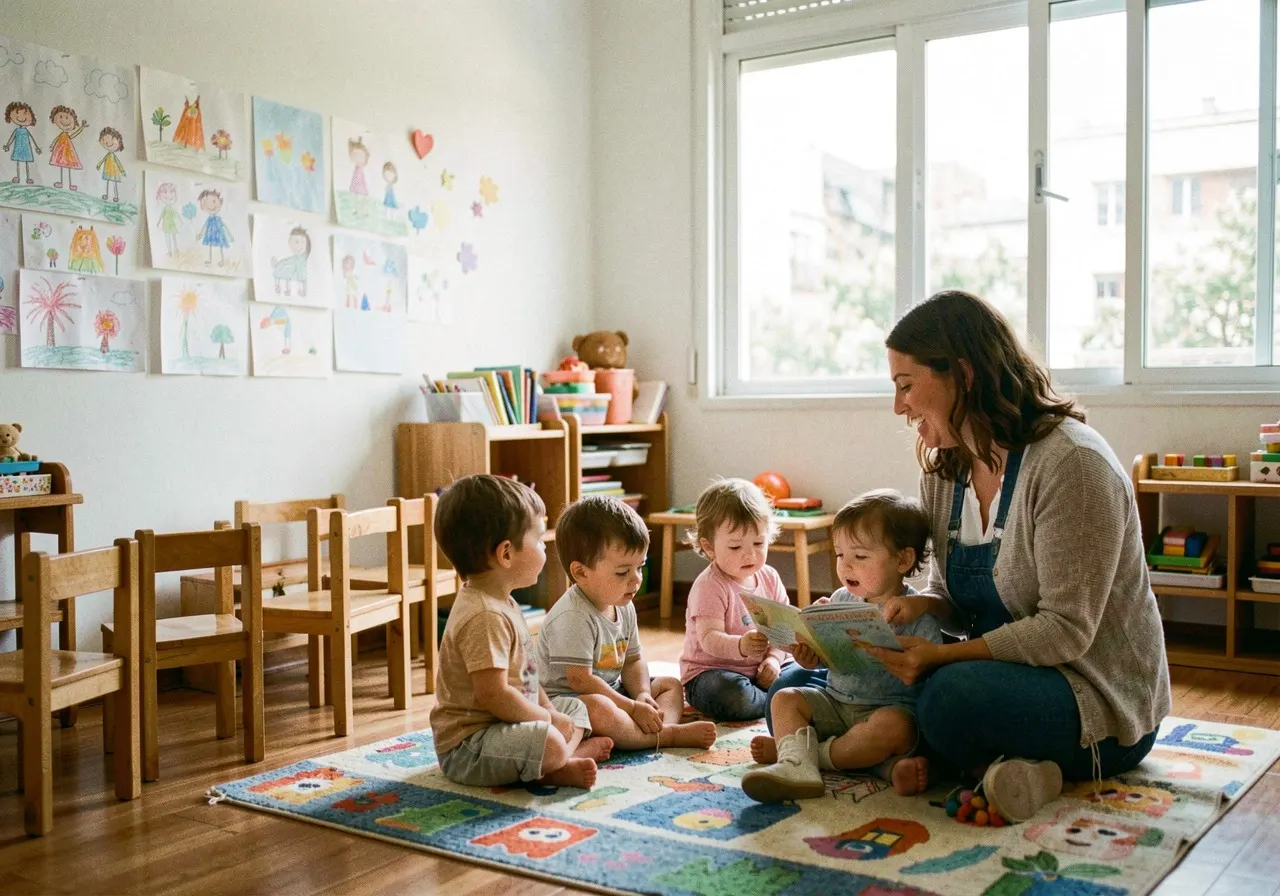
A jardín maternal takes babies and toddlers, while a jardín de infantes covers ages three to five. Check the education law for the age from which preschool (sala de 4 and sala de 5) is compulsory; younger children's attendance is optional. A British family also needs to allow for an Argentine school year running roughly March to December rather than a September start.
The hours behind a nursery place
Some maternales take very young babies, but the centre needs an infant room and places there tend to be limited. In the city, ask the education authority how places in public jardines are allocated. State-run education is free under Ley 26.206 (article 11), though a public room's age band, available shift and daily hours determine how well it fits a working day. Private schools offer another timetable, usually with enrolment and extras added to the monthly fee.
| Arrangement | Suits | Main constraint |
|---|---|---|
| Public jardín | Families able to follow the city allocation and school calendar | Places and infant rooms vary by centre |
| Private jardín maternal | Babies and toddlers in a group routine | Enrolment, meals and materials cost extra |
| Private jardín de infantes | Three- to five-year-olds with preschool peers | Maternal and older rooms may have different fee schedules |
| Live-out nanny | Babies, siblings or parents working beyond nursery hours | The family arranges sick-day and holiday cover |
Seeing the room your child would join
A school's stated 8:00-16:00 day may begin with short settling-in days during the first fortnight, known as adaptación. The practical question is how the youngest children in that particular room are received, fed and put down to sleep. A visit during a live session also reveals adult-to-child numbers and how staff handle handovers, fever, medicines and allergies. Bilingual centres in Palermo and Belgrano vary in the hours actually staffed in English; a Spanish-speaking room can also give a child a direct introduction to local life.
For enrolment, the centre may ask for the child's passport or DNI, vaccination record, emergency contacts and its own medical form. The full price sheet should show the age room, matrícula, meals, nappies, materials, uniform and any late collection charges, so the monthly tuition does not become a misleading household budget. Salas are labelled for the age a child reaches in the school year; the centre can identify the room that corresponds to the child's birthday.
Hiring a nanny and becoming an employer
A niñera can be a better fit for an infant, siblings on different schedules or parents whose work runs past pick-up. Recommendations from school parent groups, neighbours and the building's encargado, or caretaker, provide leads. Interviews, a paid trial at home and a discussion of infant first aid, ages previously cared for, travel time and illness cover help turn a recommendation into a working arrangement.
Ley 26.844, the domestic staff regime, covers work in private homes however many hours a day or days a week are worked (article 1), and its article 2 includes personal assistance to members of the family. Check ARCA's casas particulares guidance for whether and how an employer registers a particular childcare arrangement; a cash payment or a UK-style contract does not by itself settle which Argentine rules apply.
Aguinaldo (sueldo anual complementario), the half-year bonus, is half the highest monthly pay earned in each half-year ending in June and December under Ley 26.844.
Choosing between a nursery and a nanny
A nursery and a nanny differ in the day each can cover and in the contingency a family must arrange for holidays or illness. For a fair price comparison, put the nursery's written fee sheet, including matrícula, meals and materials, next to a nanny's wage and ARCA contributions for the same hours. For older children's timetables, see British schools in Buenos Aires; starting Argentine school mid-year addresses a move between terms, and children's healthcare covers paediatric care.
Questions
- How much is nursery in Buenos Aires per month?
- Nursery fees are set by each school; ask for the current fee schedule, plus matrícula, materials and meals.
- What does a nanny cost per month in Argentina?
- Check ARCA for the current wage floor for childcare workers (asistencia y cuidado de personas). Add the wage, the half-year bonus and ARCA contributions to get a monthly working cost; check ARCA's current tables.
- Do I need to register a nanny who works part-time?
- Ley 26.844 applies to work in private homes however few hours are worked, so part-time work is not automatically outside the regime. Check ARCA's casas particulares rules for whether and how the arrangement must be registered and insured.
- Can a baby start nursery at 45 days old?
- Some jardines maternales admit very young babies, where an infant room has places. The room's actual youngest intake and adaptación timetable will determine a feasible start.
- Is preschool compulsory in Argentina?
- Check the education law for the age from which preschool is compulsory. Attendance earlier is optional; a public place is allocated through the city's registration process rather than by choosing a particular room or shift.
- Are there bilingual nurseries in Palermo and Belgrano?
- Yes. Some bilingual nurseries offer a full day for ages three to five; ask each for its current fee. The hours staffed in English vary by centre.
Sources
- Colegio Armonía: fees and timetables— School page for its fees and timetables; check it for current figures.
- Colegio Santa Magdalena Sofía Barat: maternal fees— Operator or venue page; check it for current prices.
- Buenos Aires City: consulta de aranceles— City page on school fees for grant-aided schools; check the current rules.
- ARCA: casas particulares contributions— ARCA's table of health-fund, pension and ART contributions by weekly hours; check the current table.
- Argentina.gob.ar: Ley 26.844, casas particulares— Special regime for domestic workers, including the sueldo anual complementario
Related guides
- British Schools in Buenos Aires: Admissions, Calendars and Daily Life
Fees at St Andrew's, Northlands and St George's are set by each school and change during the year; ask each school for its current schedule, plus enrolment, lunch and transport.
- After-school activities in Buenos Aires: options and enrolment
Buenos Aires has city sports and arts programmes, while neighbourhood clubs charge membership and often a separate class fee. Here are the enrolment details to check and what to ask each club.
- Private Health Insurance for Families in Buenos Aires
Family health cover in Buenos Aires: how prepaga plans are priced by age band, what to ask about the legal minimum and how to compare written quotes.