Updated 2026-09-27 · 7 min read
Winter Escapes from Buenos Aires: Snow, Sun or Warm Sea
A June–August break from Buenos Aires can mean skiing in Bariloche, dry sunny days around Salta, milder Iguazú falls or a swim in northeast Brazil. The right trip depends as much on onward travel and July school dates as on the flight.
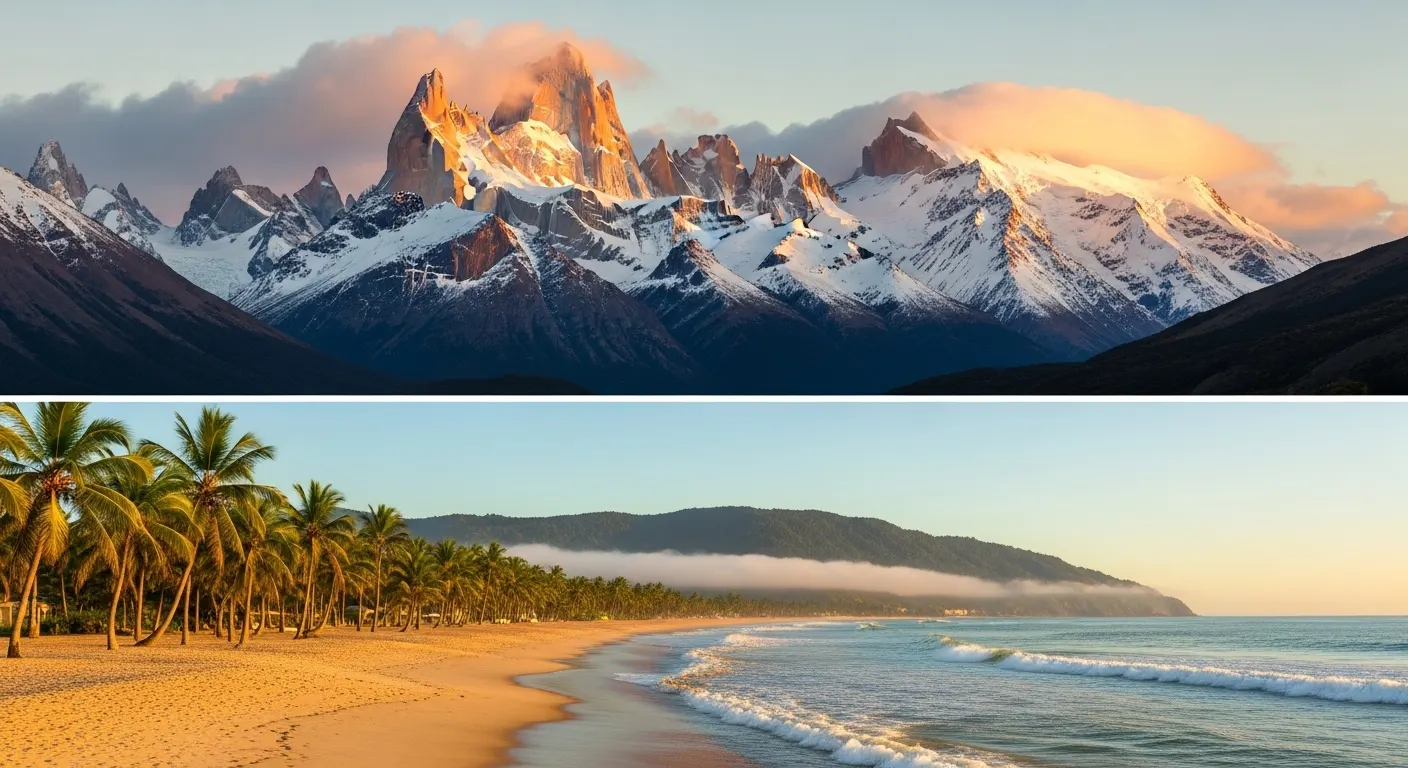
In short
- Bariloche is the straightforward ski flight, but snowfall and wind determine when Cerro Catedral's lifts run.
- Salta's sunny July afternoons come with cold nights; Iguazú offers warmer days and less summer heat.
- Florianópolis has a cool July sea, while northeast Brazil is a better prospect for swimming.
- Buenos Aires City's 2026 winter school break ran from 20 to 31 July; future calendars and provincial dates differ.
- A two-hour flight still needs airport and road-transfer time, particularly for a mountain or falls trip.
A Buenos Aires winter can be a damp 5–15°C, mild on paper yet chilly indoors and short on daylight. A few days away can mean snow at Bariloche, dry sun in Salta or warmer air at Iguazú. If the point is to swim in the sea, travel farther north to Brazil's northeast coast. Salta or Iguazú can work in three nights; skiing is better with four to six, and a Brazilian beach trip deserves a week.
How far the change of weather takes you
Argentina spans several winter climates. Southern Patagonia is colder than the capital; Mendoza can have sun by day and frost at night. The July temperatures below describe typical conditions rather than a forecast, so the Servicio Meteorológico Nacional (national weather service) is useful close to departure. Flight times exclude time getting to the airport and the onward journey.
| Destination | Journey from Buenos Aires, excluding airport time | Typical July conditions | Time to allow |
|---|---|---|---|
| Bariloche, Río Negro | About 2h15 by air, then 30–45 minutes into town | Around 6°C; snow higher up, though not necessarily in town | 4–6 nights for skiing |
| San Martín de los Andes, Neuquén | Roughly 2 hours by air to Chapelco, then a road transfer | Cold days and snow on the slopes | 4–6 nights; fewer flights than Bariloche |
| Salta city and Jujuy | About 2 hours by air to Salta; longer onward journey for Jujuy | Around 20°C in Salta by day, near freezing at night | 3–5 nights; higher stops are colder |
| Puerto Iguazú, Misiones | About 2 hours by air, then roughly 30 minutes to town | Around 22°C and still humid | 3 nights; falls rather than beaches |
| Mendoza city | About 1h50 by air | Around 15°C, frosty nights | 2–3 nights for food and wine |
| Rio de Janeiro, Brazil | Roughly 3 hours nonstop where scheduled | Around 25°C; sea cooler than the air | 4 nights or more; check swimming conditions |
| Fortaleza, northeast Brazil | Usually a connection or longer seasonal route | Around 27–30°C | About a week; routing varies |
The flight is just one part of the break. From Palermo, Aeroparque Jorge Newbery (AEP) takes time to reach; Ministro Pistarini/Ezeiza (EZE) is a much longer transfer. Two apparently similar fares can mean very different return journeys, especially if school starts the next morning.
For snow, allow time on the mountain
Cerro Catedral, around 19 km from Bariloche town, is a practical first ski destination for a family flying from the capital. The season usually runs roughly mid-June to September, but snowfall and wind decide which lifts and runs open. July and August offer better odds than June; the July school holiday also brings queues and higher costs. Pass prices change by age and date: US$70–120 per adult day, or about ARS 108,000–185,000 at ARS 1,545 per US$, is a September 2026 planning range, not a live 2027 tariff. Dated resort prices for passes, lessons and rentals matter more than that estimate when buying flights.
Chapelco near San Martín de los Andes offers a quieter town, with fewer flights. Las Leñas in Mendoza province suits experienced skiers, but reaching it from Mendoza city takes another five to six hours by road. Cerro Castor lies about 26 km from Ushuaia, after a flight of roughly 3½ hours from Buenos Aires. For a child new to skiing, lessons, equipment hire and suitable clothing need room in the budget alongside the pass; the Bariloche family trip guide has ideas for days off the slopes.
Consider two adults and a ten-year-old spending four nights in Bariloche with two ski days. An illustrative allowance is US$900 for three return flights and baggage, US$640 for four nights at US$160, US$480 for six person-days on the lifts at an assumed US$80 average, and US$360 for lessons, child access, equipment and transfers. That totals US$2,380, about ARS 3,677,000 at the September 2026 reference rate, before food or any extra ski hire. It is a planning calculation, not a bookable quote; the child's age band and dated hire prices will change the real total.
For dry sun, choose the north or the falls
Salta's dry winter gives the city sunny afternoons and cold evenings. A day in its centre pairs well with a separate full day in the Quebrada de Humahuaca, the mountain valley in Jujuy. Cafayate's vineyards are three to four hours by road to the south; seeing both Jujuy and Cafayate in a two-night break would leave most of the time to driving. Allow four or five nights for both, with warm layers for evenings and high-altitude stops. The Salta and northwest Argentina guide covers a longer road itinerary.
Iguazú feels warmer and less oppressively hot than in summer. The Argentine falls merit at least one full day, with the Garganta del Diablo (Devil's Throat) walkway and other circuits subject to water levels and park access. The Brazilian viewpoint takes another day and a border crossing: a British passport and Brazil's current entry conditions matter before buying that ticket. The Iguazú Falls trip guide explains park logistics. Córdoba's sierras (hill country) offer another dry-weather break; Mendoza's city wineries suit a bright, cold weekend rather than a warm-weather escape.
For swimming, look north of Florianópolis
Rio's winter air is pleasant at around 25°C, though its sea is around 22°C in July and beaches can be windy. Farther south, Florianópolis has water around 18°C, more inviting for coastal walks than for a swimming holiday. Fortaleza and other northeast Brazilian coastal towns have sea temperatures closer to 26°C. Rainfall differs: Salvador and Maceió can be wet earlier in winter, and routes may involve connections. The FCDO's Brazil entry advice and the airline's document requirements are relevant for a British passport holder crossing the border.
July dates and the full cost of leaving town
Buenos Aires City's school winter break ran 20–31 July in 2026. Provinces have different calendars and future city dates need the official school calendar; travelling outside that fortnight, perhaps in late August, can change both the feel and price of the trip. Flights from Aerolíneas Argentinas and other operating airlines should be compared using both AEP and EZE. Checked bags, ski gear and ground transfers can alter an attractive headline fare. Hotels may include heating, breakfast or a slope shuttle, while resort and park entry must be priced separately; ticket categories can differ for residents and foreign visitors, so a resident's DNI (Argentine national identity document) matters.
The weather at either end of the journey deserves a place in the bag: cold, wet Buenos Aires on departure and Salta sun by afternoon can still lead to a wintry Salta evening. For skiing, current snow reports and beginner-lift status give a better picture than a photograph of last July. Mountain weather or a cancelled flight can consume a precious ski day, which makes an extra night more useful than squeezing the trip into a weekend.
A change of place need not require a flight. The direct Buquebus ferry takes about 2¼ hours to Montevideo, where winter feels much like Buenos Aires; go for food and walking, rather than warmth. Tigre is about an hour by train from Retiro, and San Antonio de Areco around 1½ hours by car. Day trips from Buenos Aires cover these closer breaks; winter in Buenos Aires addresses the damp rooms, short days and heating questions that a weekend away cannot solve.
Questions
- Where can I go for winter sun from Buenos Aires without leaving Argentina?
- Salta and Jujuy have dry, sunny days, with Salta around 20°C in the afternoon but cold at night and at altitude. Iguazú is warmer at roughly 22°C by day in July and suits a three-night visit to the falls.
- Can you ski near Buenos Aires in July?
- The nearest practical ski break involves flying: Bariloche is about 2¼ hours away by air, with an onward road journey to Cerro Catedral. July is a core ski month, but snowfall and weather still decide which lifts run.
- Is Florianópolis warm enough for a July beach holiday?
- Its sea is around 18°C in July, though the coast is pleasant for walking. Northeast Brazil offers water closer to 26°C; compare each city's rainfall and flight route as well.
- When should I book a winter trip during Buenos Aires school holidays?
- Compare flights and accommodation several months ahead for July. Buenos Aires City's 2026 break was 20–31 July, but another year's calendar and provincial school dates may differ.
- Is a two-night trip to Salta enough to see Jujuy and Cafayate?
- They lie in opposite directions and each takes a long road day from Salta. Four or five nights give both places room without turning the holiday into almost constant travel.
Sources
Related guides
- Buenos Aires Winter: A British Resident’s Practical Guide
Winter in Buenos Aires runs from June to August, with July afternoons often around 13–15°C and mornings around 5–8°C. The difference between an enjoyable season and a chilly one is often the heating in your flat.
- Iguazú Falls from Buenos Aires: days, both sides and 2026 costs
Allow three nights to see Iguazú from Argentina and Brazil. From 1 June 2026, Argentina's park charges foreign adults ARS 60,000 (about US$39); Brazil charges R$134, and British tourists need no Brazilian visa.
- Raising Kids in Argentina: Buenos Aires Family Life
Family life in Buenos Aires begins with the school journey, a local plaza and a paediatrician. City primary began on 25 February in 2026, secondary on 2 March, with a two-week July break.