Updated 2026-10-15 · 6 min read
How to volunteer in Buenos Aires as an English speaker
Basic Spanish is enough to enquire about a supervised food-sorting or logistics shift in Buenos Aires. Community-facing work generally calls for more Spanish; the useful first enquiry asks about the actual role, induction and meeting point.
In short
- Supervised food sorting or logistics may suit someone with basic Spanish, while community work generally needs more.
- Banco de Alimentos, TECHO and local Cruz Roja branches offer different kinds of work, subject to current availability and induction.
- English conversation works best within a hosted programme that has asked for it.
- The meeting point may be in the province rather than central Buenos Aires, so travel can shape the commitment.
- A direct enquiry lets you ask the organisation about any programme, training or material charges before joining.
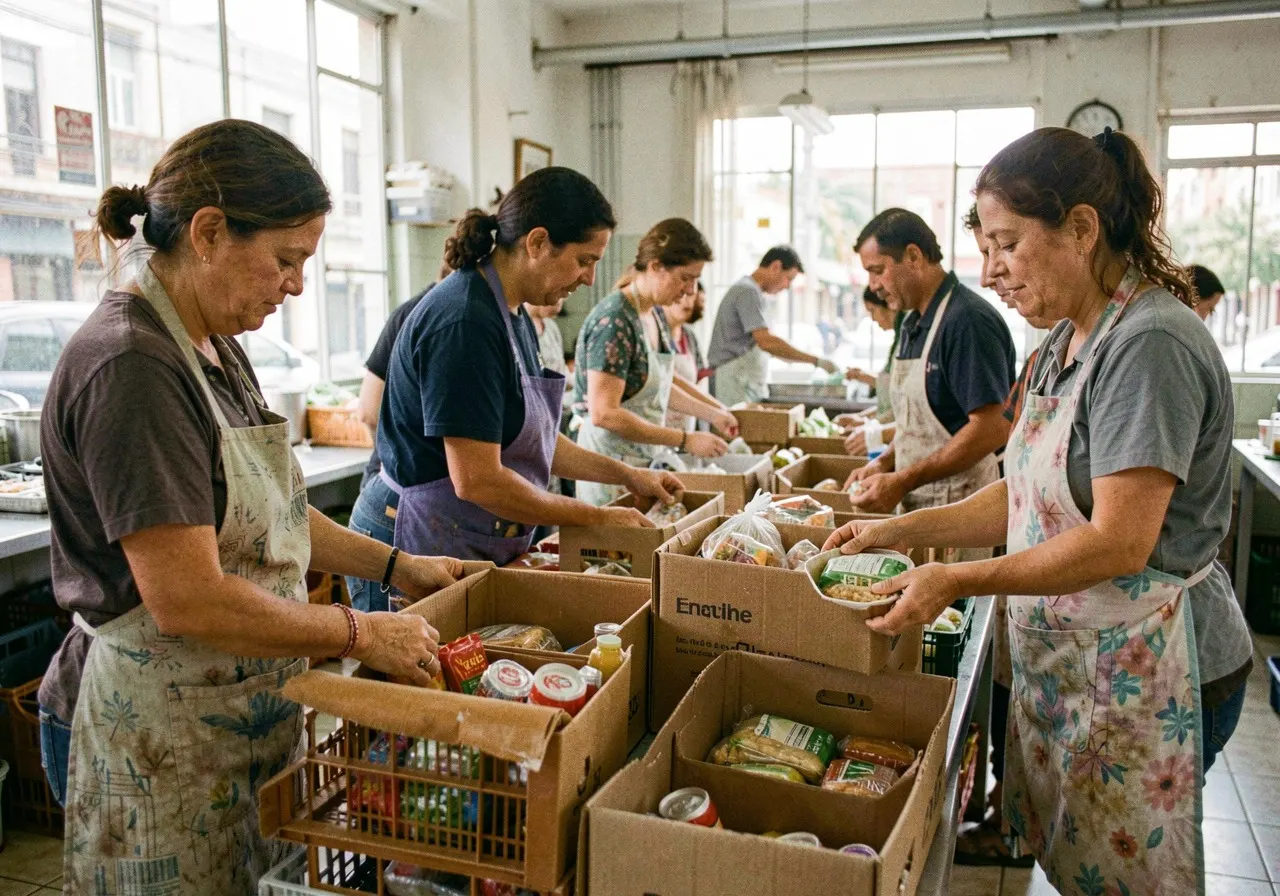
A newcomer with basic Spanish can still be useful to a Buenos Aires volunteer team. Supervised sorting and logistics are a more plausible first shift than teaching English or working alone with people who need support. The first conversation with an organisation is about what it actually needs, where the work happens and who will show you the ropes.
Where a first shift might be
Banco de Alimentos Buenos Aires redistributes food, so sorting, packing and warehouse logistics are sensible tasks to ask about. TECHO Argentina works on housing and community development, with team projects and logistics as well as work with residents. A local Cruz Roja Argentina (Argentine Red Cross) branch may have community activities or logistical work. All three have official sites with contact routes, but a named organisation is a place to enquire, not a promise of a vacancy.
The nature of the shift determines how much Spanish helps. Basic instructions may be manageable on a supervised warehouse team, particularly if an English-speaking coordinator is available; planning with TECHO or working with residents calls for more. Cruz Roja's branch activities depend on the local programme, while emergency and clinical tasks require training. A TECHO project needs its own induction and safety briefing, rather than an independent visit to a community site.
Location matters just as much as the role. Buenos Aires may mean Ciudad Autónoma de Buenos Aires (CABA) or the surrounding province. An organisation's headquarters, a warehouse and a changing project site can be three different places; a northern-suburbs shift is a substantial journey from Palermo. The volunteer or contacto (contact) section of each organisation's site is a better starting point than arriving unannounced.
From an enquiry to a repeat commitment
An organisation can do more with a realistic offer of time than with an open-ended promise. Someone who can reliably give a two- to four-hour block weekly for six weeks could propose that schedule, while someone with less predictable time might ask about a one-off organised campaign. Neither pattern is a universal NGO minimum. The first message can give a neighbourhood, WhatsApp number, availability, Spanish level, relevant experience and the type of team task the person can manage. For example: Hola, vivo en Buenos Aires. Hablo inglés y español básico. ¿Hay oportunidades de voluntariado supervisado los sábados? ¿Dónde sería la inducción? (Hello, I live in Buenos Aires. I speak English and basic Spanish. Are there supervised Saturday volunteering opportunities? Where would induction be?) A passport scan can wait until an authorised coordinator explains any identification requirement.
Before the first shift, the coordinator should be able to identify the meeting point by street and barrio (neighbourhood), its start and finish time, travel directions and cancellation contact. The duties and any physical requirements matter too, as do arrangements for gloves or other protective equipment, meals, donations and transport. Screening depends on the work: a host may have child-protection rules for contact with minors, confidentiality rules for personal data or training for food, tools and first-aid equipment. Ask the host whether it accepts a UK DBS certificate and which local checks and supervision it requires. Ask the organisation and the person for permission before taking or publishing photographs, following the host’s safeguarding process.
The first shift is a chance to learn the team's routine, including how to say when an instruction is unclear. After a couple of shifts it becomes easier to agree a repeat schedule, or to tell the coordinator promptly that the journey or role will not work. Direct enquiries do not normally need a placement agency. Some programmes do have training, insurance or material costs, in which case a written breakdown and the organisation's stated payment channel distinguish those costs from a voluntary donation or a payment to an individual's account.
When English is useful
A school or neighbourhood cultural centre may already run an English-conversation session and want another adult to join it. The host can explain the learners' age range, the session's purpose and who supervises it. Children need the host's safeguarding arrangements; a short adult conversation exercise may suit a volunteer without a teaching qualification. British nationality by itself does not create a teaching post. Food handling, translation or administration might instead be what a particular group needs, and some roles call for professional qualifications.
In most city organisations the group chat, instructions and conversations with residents will be in Spanish. ¿Me lo repetís, por favor? (Could you repeat that, please?), ¿Dónde dejo esto? (Where do I put this?) and No entendí la instrucción (I did not understand the instruction) are useful on a team shift, especially when Porteño speech is fast. Learning Spanish in Buenos Aires opens up more roles over time. If the attraction is reciprocal conversation rather than service work, a language exchange fits that aim better.
The journey is part of the commitment
A volunteer shift has an ordinary travel and food budget, even when the work itself is unpaid. Routes, fare changes and a possible taxi all affect the cost. For anyone fitting shifts around work or childcare, the journey to the actual site can matter more than the hours on site.
A British resident in Palermo with Saturday mornings free could ask Banco de Alimentos about a supervised sorting shift and the warehouse address, then work out whether that journey is sustainable. If it is too long, a nearer Cruz Roja branch may have a programme that suits, depending on its current schedule. For a first visit, an agreed meeting point and the coordinator's number make the journey straightforward; Buenos Aires public transport helps with the route. An unsolicited bag of food may not be stock the organisation can process, and a community project is not a backdrop for visitor photographs.
Volunteering gives a way to join an existing team's work. Paid duties or substantial benefits raise a different employment question, particularly for a short-term visitor; teaching English in Buenos Aires is more relevant to someone seeking paid work. And if the aim is chiefly to meet people, making friends in Buenos Aires offers ways to do that without promising a service shift.
Questions
- Can I volunteer in Buenos Aires if I only speak English?
- A supervised sorting or logistics team may be able to brief an English speaker, although instructions are often in Spanish. The coordinator can say whether that support is available on a particular shift.
- Where can I find English-speaking volunteer opportunities in Buenos Aires?
- Banco de Alimentos, TECHO and local Cruz Roja branches are places to enquire about current roles and language support. A school or cultural centre can say whether its existing English-conversation programme needs volunteers.
- Do volunteers in Buenos Aires need a police check?
- Requirements depend on the organisation and duties, especially where children or vulnerable people are involved. The host decides which local checks, identification, induction and supervision apply; ask whether the host accepts your UK DBS certificate.
- Is volunteering in Buenos Aires free?
- A direct enquiry generally avoids an intermediary placement fee, but travel and meals still cost money. An organised programme may charge for training or materials and should explain those costs in writing.
- How many hours a week should I offer?
- One reliable two- to four-hour weekly block over six weeks is an example of an offer, not a set minimum. A one-off campaign may suit a shorter stay; the actual address and journey determine what is sustainable.
Sources
Related guides
- Argentine Culture and Customs: A British Resident's Guide
A Buenos Aires invitation often begins with individual greetings and ends long after dinner. Here is how shared mate, later meals, restaurant bills and local Spanish work in everyday company.
- English book clubs in Buenos Aires: where readers actually meet
English-language readers in Buenos Aires can join Museo Casa Sarmiento's Thursday short-story club, a bilingual Las Argies café meeting or a smaller reading circle. Check each organiser for current fees and schedules.
- Language exchange in Buenos Aires: find a partner and keep talking
In Buenos Aires, a language exchange can be a free, one-to-one English-Spanish conversation or a group event with its own entry terms. Tandem and HelloTalk help you meet a partner; Mundo Lingo and Meetup list events. Agree on 30 minutes in each language and budget for your own drink.