Updated 2026-09-27 · 6 min read
Language exchange in Buenos Aires: find a partner and keep talking
In Buenos Aires, a language exchange can be a free, one-to-one English-Spanish conversation or a group event with its own entry terms. Tandem and HelloTalk help you meet a partner; Mundo Lingo and Meetup list events. Agree on 30 minutes in each language and budget for your own drink.
In short
- A one-to-one exchange has no teaching fee; each person usually pays for their own drink.
- Tandem and HelloTalk let you talk to a prospective partner before meeting in person.
- Mundo Lingo and Meetup list group events, whose venues and entry terms can change.
- Thirty minutes in each language gives both people a reason to return.
- A local partner can help you hear and practise Argentine vos forms.
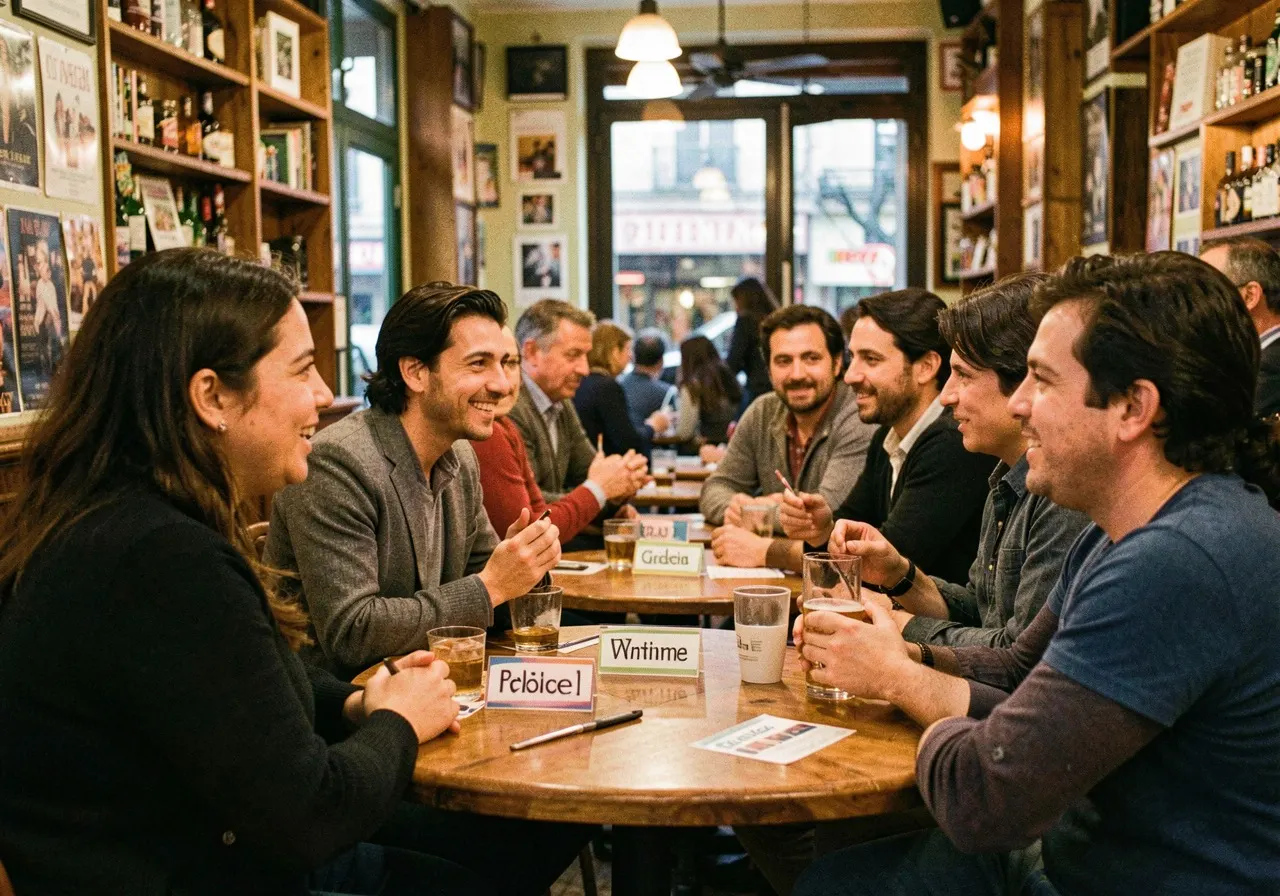
The first language-exchange hour in Buenos Aires can slip entirely into English if your Spanish feels hesitant and your partner is keen to practise. A simple agreement changes that: 30 minutes of English, then 30 minutes of Spanish. The conversation swap itself is free, although each person pays for their own drink and some organised events may charge entry.
A partner or a roomful of people
An intercambio is an exchange of conversation, rather than a lesson with a curriculum or prepared grammar exercises. Someone who can introduce themselves and ask a few questions can take part, even with beginner Spanish. If forming a basic sentence still feels out of reach, Spanish classes and study options offer a taught starting point; an exchange becomes more useful once both people can contribute.
| Format | Where to start | What it costs | Best for | Watch for |
|---|---|---|---|---|
| One-to-one in person | Tandem or HelloTalk; search for Buenos Aires partners | No exchange fee; buy your own drink | Repeat conversations and detailed feedback | A match who wants only English, or treats the app as dating |
| Group conversation | Mundo Lingo's own listings or a current Meetup listing | Event terms differ; read the listing | Meeting several people before arranging a regular partner | Crowded rooms with little Spanish speaking time |
| Voice-message exchange | Tandem or HelloTalk | Basic messaging without an exchange fee; optional paid features | Shift workers or beginners who need time to compose sentences | Staying with texts and never speaking aloud |
A group event is easier to enter alone, while a regular one-to-one meeting gives you time to move past the same introductions. Organisers set their own matching, registration, entry and minimum-age terms. Their current listing is the place to find the date and venue: an old social-media post may describe a night that has moved. Palermo and San Telmo are useful central areas to suggest to a partner, but the actual address matters more than a familiar neighbourhood name.
From a profile to a first meeting
On Tandem or HelloTalk, a profile that names British English, your Spanish level and a couple of interests gives another learner something to answer. One possible first message is: ‘Hola, vivo en Buenos Aires y quiero practicar español argentino. Puedo ayudarte con inglés británico. ¿Hacemos 30 minutos en cada idioma?’ Three individual messages are more useful than a mass invitation. Keep your home and employer's addresses and your phone number off a public profile.
A voice note or ten-minute app call can establish whether you want the same kind of practice. A partner preparing for IELTS might want exam feedback while you want an ordinary conversation; a small exam-practice segment can work if both agree. Otherwise, another match may suit each of you better. For an in-person first meeting, a staffed café near a Subte (underground) station in daylight gives you an easy place to find one another. Plaza Armenia in Palermo Soho, at Armenia and Costa Rica, and Plaza Dorrego in San Telmo, at Defensa and Humberto 1°, are clear outdoor landmarks; a nearby café still needs to be open and quiet enough to talk. Share the venue through the app rather than a residential address, and each pay for your own drink.
An agreed one-hour finish makes the first meeting feel manageable. In-app messaging, a public venue and telling someone your plan are sensible precautions; keep your valuables close. There is no reason to send a passport copy or pay a stranger a ‘registration’ charge to meet for coffee. At a group event, the organiser can explain how people pair up and whether registration or entry costs anything. A ten-minute Spanish conversation with an Argentine attendee may tell you more about the event than a whole evening spent in English. For the social side beyond speaking practice, making friends in Buenos Aires has other ideas.
What makes the Spanish half useful
A timer makes the language change ordinary rather than awkward: ‘Ahora, ¿pasamos al español?’ means ‘Shall we switch to Spanish now?’ Within each half, five minutes for feedback leaves 25 minutes of conversation. A partner who repeatedly keeps the hour in English may simply be the wrong exchange partner. A weekly hour with someone reliable also lets you move beyond introductions, whereas meeting five new people every week can mean starting over each time.
Everyday situations give a beginner somewhere to go: ordering a café cortado (espresso with a little milk), asking a neighbour about a delivery or organising a weekend plan. Three questions, one story and two phrases from the previous week are plenty to bring to a session. ‘¿Qué hacés este fin de semana?’ means ‘What are you doing this weekend?’ In Argentine Spanish, the informal vos takes hacés where a textbook using tú would teach haces; the Porteño Spanish phrase guide explains more forms you will hear locally. A translation app helps with individual words, but a translated conversation leaves little speaking practice.
Correction works best when both people know what they want. Errors that block meaning can be corrected as they happen, with smaller points left until the final five minutes of each half. Notes on a couple of useful phrases are easier to revisit than a transcript; recording the other person's voice needs their permission. In the English half, ‘apartment’ rather than ‘flat’ is a choice of audience, not a mistake just because you speak British English. Saying your corrected Spanish phrases aloud before the next session helps them stick.
The cost of making it a weekly habit
Consider a British newcomer in Palermo arranging four weekly meetings in September 2026. She messages three local learners, checks one match by voice note and meets near Plaza Armenia. Each hour contains 25 minutes in English, 25 in Spanish and five minutes of feedback for each language. If she sets herself a limit of ARS 12,000 per drink or snack, four sessions cost at most ARS 48,000 in refreshments, about US$31 at the September 2026 reference rate of ARS 1,545 per US$. That limit is her own budget, not a published café price; a free public meeting spot in suitable weather can cost less. Comparing her first and last voice notes after four weeks gives her a way to hear whether her Spanish answers have grown longer.
Some exchange partners become friends, and others prefer to meet for conversation alone. A language-practice invitation is not an invitation to date. If the company you want is mainly British, British community clubs in Buenos Aires may feel more natural. For Argentine Spanish, the useful partnership is the one where both people leave with something they managed to say that they could not quite say the week before.
Questions
- Where can I find a language exchange in Buenos Aires?
- Tandem and HelloTalk are starting points for an individual partner. Mundo Lingo and Meetup list group events; the organiser's current listing gives the venue, date and entry terms.
- Is language exchange in Buenos Aires free?
- A direct conversation swap has no teaching fee. You pay for your own café order, and an organised event may have entry or registration terms.
- Can I join with beginner Spanish?
- Yes, if you can introduce yourself and ask a few simple questions. An exchange is conversation practice; taught lessons are a better starting point if you cannot yet form a basic sentence.
- How should we divide English and Spanish conversation time?
- For a one-hour meeting, 30 minutes per language is a fair starting point. Each half can include five minutes of feedback, and a timer makes switching feel routine.
- Should I learn Spanish from Spain or Argentina for an exchange in Buenos Aires?
- Practise the Spanish you hear locally, especially informal vos forms such as hacés alongside standard Spanish. A partner can help you hear the difference if your course taught tú first.
Sources
Related guides
- English book clubs in Buenos Aires: where readers actually meet
English-language readers in Buenos Aires can join Museo Casa Sarmiento's Thursday short-story club, a bilingual Las Argies café meeting or a smaller reading circle. Published 2026 fees and schedules make it easier to choose a group that fits.
- Christmas in Argentina when you're used to Britain
Christmas in Buenos Aires gathers around a late dinner on 24 December and a midnight toast. A British-style lunch can have its own place on the quieter 25th, provided the food is already at home.
- Making friends in Buenos Aires: find somewhere to return to
The easiest introductions in Buenos Aires happen at recurring places: a free language exchange, a tango class or a five-a-side game. Returning often enough to recognise people is how an evening out becomes a social circle.