Transport in Buenos Aires for British Expats
How British expats actually get around Buenos Aires — the SUBE card, the Subte, buses, Uber and Cabify, taxis, bikes, and whether you really need a car in this city.
 Rosie CarterFounding editor, Brits in Argentina · Palermo, Buenos Aires, Argentina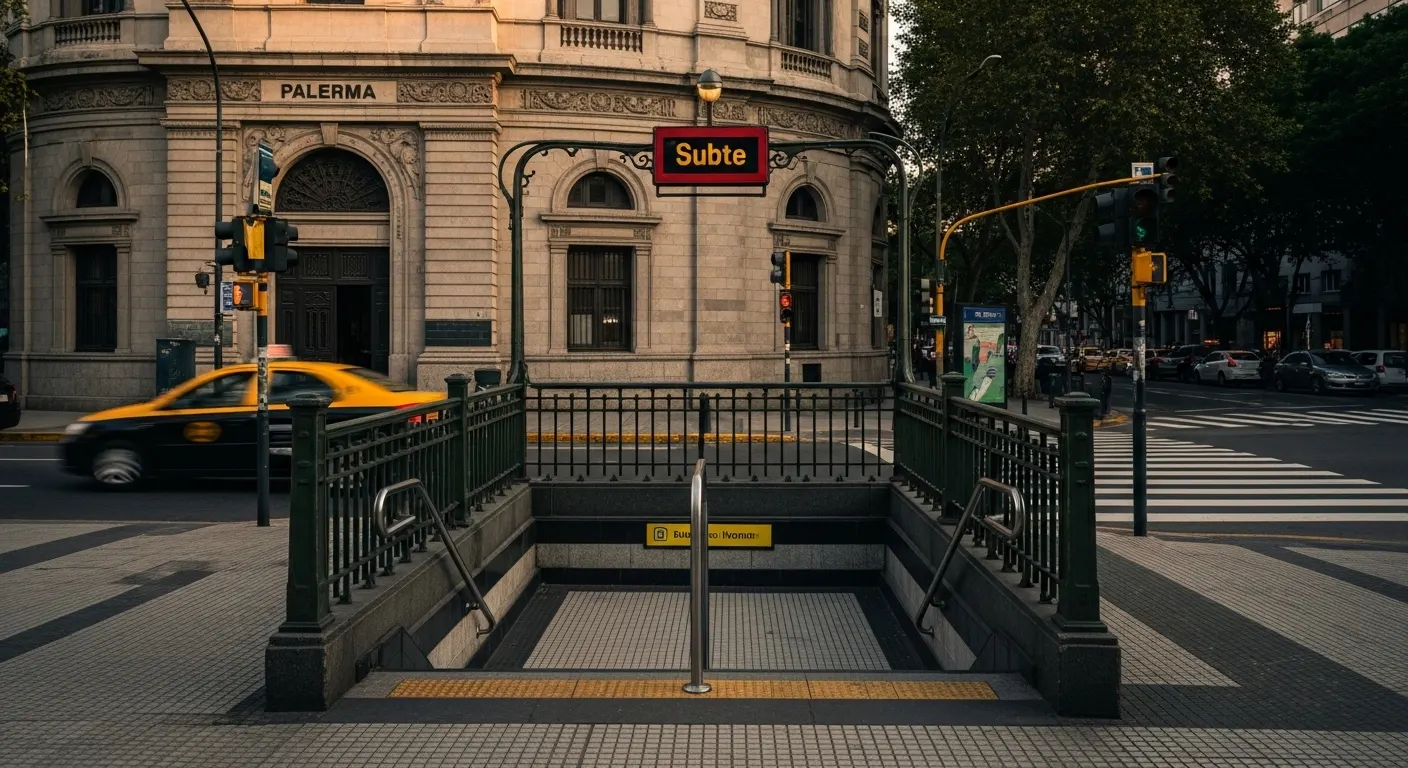
After a year here you stop calculating fares. The whole monthly transport budget is a single café in London.
Buenos Aires has the best urban transport network in South America. It also has a confused logic that takes a fortnight to learn. Once you have a SUBE card and an idea of which Subte line passes near your flat, you will not need a car, you will not pay for taxis often, and your monthly transport spend will be less than your weekly Uber budget in London.
Step One: Get a SUBE Card
The SUBE (Sistema Único de Boleto Electrónico) is the contactless card that pays for the Subte (metro), the colectivos (city buses), the suburban trains, and a chunk of the longer-distance buses too. Without it, you cannot travel on public transport in Buenos Aires — single tickets do not exist.
- Where to get it: Subte stations (most issue them at the ticket office), official kioscos showing the SUBE logo, or order online and have it posted (slow).
- Cost: ARS 1,500-2,000 for the card itself. You then top it up at any kiosko or Subte station, or via the Mercado Pago app.
- One card per person: including children. Free for under-4s, half-price for under-12s with a registered Tarjeta SUBE Niño.
- Register the card to your CUIT/CUIL via the SUBE app within the first week. Registered cards qualify for the Tarifa Social discount if your income falls under the threshold (most expats are over it but worth checking).
The Subte (Metro)
Six lines (A, B, C, D, E, H) covering most of the central and northern barrios. Single ride: ARS 700-1,000. Trains run every 3-6 minutes during the day, longer at night.
Practical notes for British arrivals:
- The system runs roughly 05:30 to 23:00, slightly later on weekends. There is no night Subte (yet — under permanent debate).
- The trains can be brutally crowded during rush hour (08:00-09:30 and 18:00-19:30 on weekdays). The carriages are not air-conditioned in the older lines. Avoid these hours if you can.
- The D line is the most useful for Brits — it runs from the centre (Catedral) up through Palermo (Plaza Italia, Palermo, Bulnes) to Belgrano (José Hernández, Juramento, Congreso de Tucumán). If you live near it you can get to almost everywhere.
- The A line is the oldest in South America (opened 1913) and worth riding for the heritage even if you do not need to.
The Colectivos (Buses)
There are 200+ bus routes. They run 24 hours a day. They are the workhorse of the city and reach barrios the Subte does not.
The trick is the app. Use Cómo Llego (the official Buenos Aires city app) or Moovit. Both will tell you which bus to catch, where the stop is, and (in real time) when the bus is arriving. Without the app, the bus system is bewildering. With it, it is the best public bus network in any city I have lived in.
- Single ride: ARS 600-900 (slightly less than the Subte).
- Wave your hand to flag a bus — they will not stop unless you do.
- Tap your SUBE on entry and tell the driver your destination if it is a multi-zone route (most are not).
- The night buses run on shorter routes between roughly midnight and 05:00. They are the cheapest way home from a late dinner if you do not want a taxi.
Suburban Trains (Trenes)
Three networks (Mitre, San Martín, Sarmiento) running from the centre out to the suburbs and zona norte. Mitre is the relevant one for most Brits — it runs from Retiro out to Tigre via Belgrano R, Olivos (where most British schools are), and Vicente López.
Single ride: ARS 400-700 depending on distance. Use SUBE. Trains run every 10-15 minutes peak, every 30 minutes off-peak.
Uber, Cabify, and Taxis
Uber and Cabify both work fine in Buenos Aires. Both apps are used interchangeably by porteños. Uber is more reliable; Cabify is sometimes 10-15% cheaper. Default to Uber, fall back to Cabify if there is no driver.
A typical ride:
- Palermo to centre: ARS 5,000-8,000 (£3-5)
- Belgrano to Palermo: ARS 4,000-6,000 (£3-4)
- Ezeiza airport to Palermo: ARS 35,000-55,000 (£23-37) depending on traffic and time
Yellow-and-black taxis still operate. They are cash-only or card-on-meter, slightly cheaper than Uber, perfectly safe in central barrios. Hail one on the street; they have a "libre" sign in red when available. Avoid the airport taxi mafia — pre-book a remis or use the official airport-taxi desk.
Bikes and Ecobici
Buenos Aires has a serious bike network — 350km+ of dedicated bike lanes (bicisendas), most of them physically separated from traffic. The flagship achievement is Ecobici, the public bike-share scheme.
- Free for the first 30-45 minutes of each ride if you register and use a card or the app.
- 300+ stations across the central barrios.
- Register at baecobici.com.ar with your DNI or passport.
For longer rides or if you cycle daily, buying a basic bike is worth it. The streets are flat, the weather is mild, and the bicisendas connect most of the central barrios. Belgrano-to-Palermo by bike is 25 minutes door to door.
Do You Need a Car?
For most British expats living in central Buenos Aires (Palermo, Belgrano, Recoleta, Caballito, Villa Crespo): no. The public transport, Uber, and bike network covers 95% of needs. The remaining 5% (weekend trips out of town, occasional big shop) is cheaper to handle with a rented car than with the standing cost of ownership.
You should consider a car if:
- You live further out (Vicente López, San Isidro, Olivos) and commute into the city daily
- You have school-age children at British schools in zona norte and live in central Buenos Aires
- You do regular weekend trips outside the metro area
The combined monthly cost of car ownership in Buenos Aires (insurance, garage rental in your building, fuel, parking, maintenance) runs ARS 250,000-450,000/month (£170-300). Renting a car for a weekend is ARS 60,000-100,000/day (£40-67). The economic break-even is roughly 4-5 weekend rentals per month.
For more on practical settling-in topics, see what it really costs to live in Buenos Aires and the first week in Buenos Aires checklist.
Frequently Asked Questions
How do I pay for public transport in Buenos Aires?
With a SUBE card — the contactless card that works on the Subte, buses, suburban trains, and some longer-distance coaches. Get one from any Subte station ticket office or a SUBE-logo kiosko (ARS 1,500-2,000 for the card), then top up via kioscos, Mercado Pago, or the SUBE app. Single tickets are not sold; the SUBE is mandatory.
Do I need a car in Buenos Aires?
Generally no, if you live in central Buenos Aires (Palermo, Belgrano, Recoleta, Caballito). Public transport, Uber, and the bike network handle 95% of urban needs. Consider a car only if you commute from the suburbs, do daily school runs to zona norte from the centre, or take frequent weekend trips out of the metro area.
Is Uber legal in Buenos Aires?
Yes — Uber and Cabify both operate legally in Buenos Aires and are widely used by porteños. Uber is generally more reliable; Cabify is sometimes slightly cheaper. Both work with credit card, Mercado Pago, or cash.
Sources & Links
Further reading: legal & visa
For visa, residency, and paperwork questions, Lucero Legal offers practical guidance for UK citizens moving to Argentina.
You Might Also Like
UK Driving Licence in Argentina: Conversion, Rules, and Whether You Need a Car
You probably do not need a car in Buenos Aires. But if you live in the provinces or have children, the licence conversion is worth doing.
What It Really Costs to Live in Buenos Aires
Most Brits arrive thinking Argentina is half the cost of London. The honest answer is closer to a third — for housing and food. For everything imported, it is the same or worse.
Apostille UK Documents for Argentina: The FCO Step-by-Step
The apostille is a £30 stamp that makes your UK document legal in Argentina. Without it, Migraciones will reject your application.