Updated 2026-10-15 · 10 min read
Retire to Argentina from the UK: What Daily Life Costs
A pension can qualify you for Argentine residence at five times the minimum wage a month. Living comfortably, especially with private healthcare, takes a larger budget and a neighbourhood that works on an ordinary weekday.
In short
- Pensionado and rentista each require monthly income of five times the minimum wage.
- Build a retirement budget from current housing offers, your prescriptions and age-specific health-cover quotes. Compare each city on those same needs rather than assuming a fixed percentage saving.
- The UK State Pension is payable in Argentina, but GOV.UK does not name Argentina among the countries where the annual increase is paid.
- Ask the hospital about non-emergency eligibility and charges for your exact residence category and its jurisdiction; a DNI alone is not confirmation of coverage.
- A flat's journey to the doctor and the supermarket matters as much as its advertised rent.
A UK pension may get you residence in Argentina without quite paying for the retirement you imagined. Pensionado residence normally requires five times the Argentine minimum wage. Buenos Aires offers specialists and a week without a car; Mendoza and Córdoba need their own housing and medical quotes, but the medical and transport arrangements take more thought.
Choose the journey to care before the view
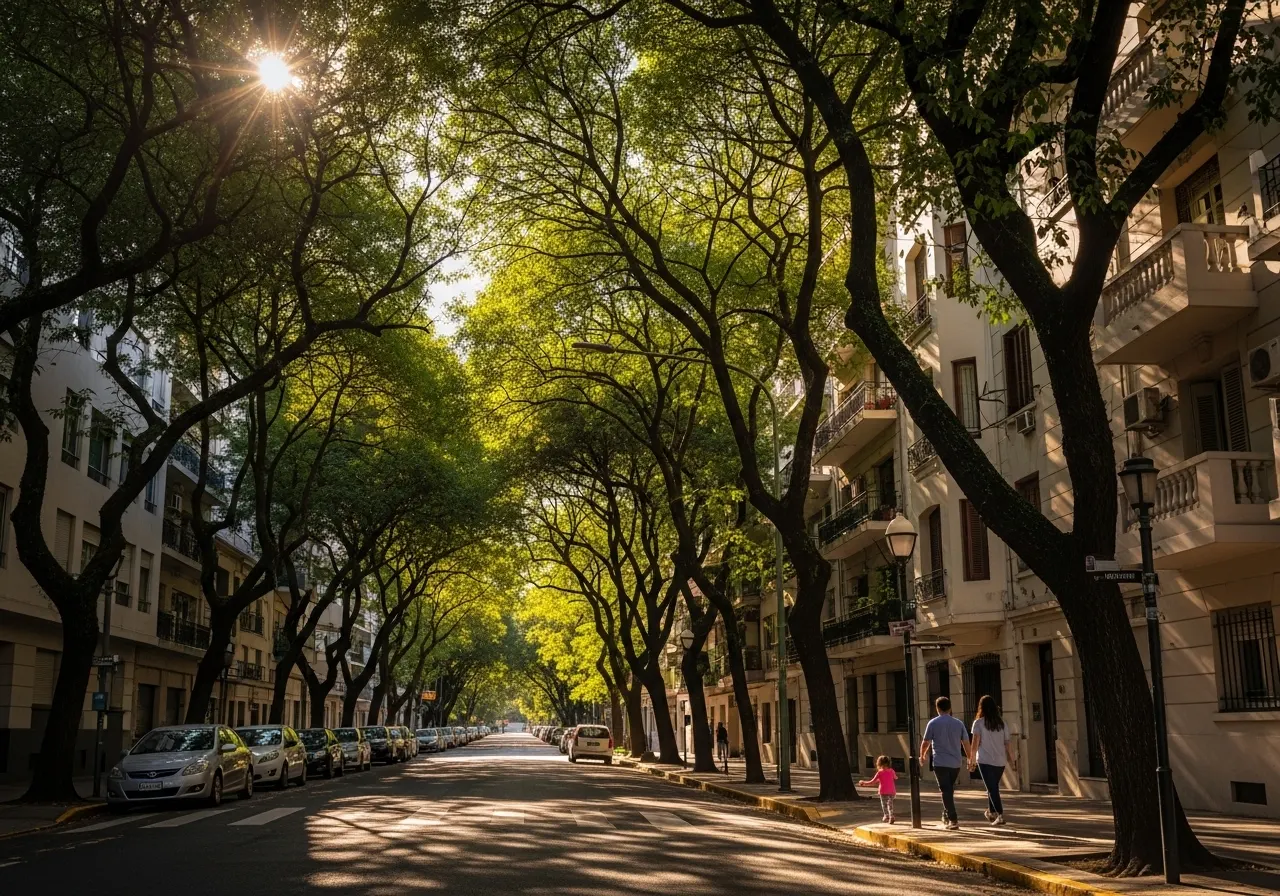
An appealing flat is less appealing if an ordinary appointment means a long trip in summer heat. In Buenos Aires, test the walk to a supermarket, pharmacy, bus stop and clinic from the actual front door. Pavements can be uneven and Subte (underground railway) stations have stairs; a lift on a station plan may not help with every transfer. A useful bus stop can matter more than proximity to a station.
| Base | What daily life offers | What to test | How to compare cost |
|---|---|---|---|
| Recoleta, Buenos Aires | Walkable blocks, museums and central medical appointments around Plaza Francia | Traffic and steps or small lifts in older buildings | Compare actual rent, healthcare and transport quotes |
| Belgrano, Buenos Aires | Shops on Avenida Cabildo, Barrancas de Belgrano park and Line D at Juramento | Noise on the exact block and busy shopping streets | Compare actual rent, healthcare and transport quotes |
| Palermo, Buenos Aires | Parks near the Botánico and many places to meet people | Distances across this large barrio to transport and the park | Compare actual rent, healthcare and transport quotes |
| San Isidro, Greater Buenos Aires | Quieter streets, riverside outings and rail to the city | Hills, the station walk and trips to central specialists | Compare actual rent and travel costs |
| Mendoza city | Parks, mountain excursions and a smaller-city rhythm | Dry summer heat and local specialist availability | Compare actual housing, healthcare and transport quotes |
| Córdoba city | City services and access to the sierras (hills) | Hot summers and less English-language support than central Buenos Aires | Compare actual housing, healthcare and transport quotes |
For a condition needing frequent treatment, the treating hospital is a better starting point than a favoured neighbourhood. Hospital Británico at Perdriel 74 in Barracas is one Buenos Aires option to investigate: the insurer's cartilla (provider directory) and the hospital's appointment availability will tell you whether your specialist works there under the plan you can buy. Living in the countryside or near mountains can still appeal, provided the journey to a larger hospital fits your routine.
A short rental gives you time to make those journeys before taking a longer lease. If you are thinking of buying rather than renting, read buying property as a British buyer first. You can browse longer-term rentals and visit in person; Belgrano and Recoleta offer closer neighbourhood comparisons. DNU 70/2023 repealed the 2020 rental law, leaving lease term, currency and rent adjustment frequency to the contract. The block and the building still matter more than a barrio's reputation, especially if steps are difficult.
What a settled month costs
Build a retirement budget from current housing offers, your prescriptions and age-specific health-cover quotes. Compare each city on those same needs rather than assuming a fixed percentage saving.
The rent also needs its building charges. Expensas are service charges, sometimes quoted separately; the contract should say who pays them and the utilities. The lift and the type of heating affect life as well as cost. Flights, glasses, dental work and a possible hospital excess deserve money of their own rather than whatever is left after rent. Private prepaid healthcare, called a prepaga, is a major separate expense, closer to Bupa than to the NHS. The useful quote is for your age, address and medical history.
Consider a couple aged 67 and 63 renting a central one-bedroom flat. The residence income rule is a separate test: they would compare their own monthly pension, at the exchange rate on filing day, with five times the SMVM.
Actual premiums, a cheaper flat or a larger pension draw could each change what they can afford. The residence income floor is a legal threshold, not a household spending target. Buenos Aires living costs gives a fuller local breakdown.
Ask the hospital about non-emergency eligibility and charges for your exact residence category and its jurisdiction; a DNI alone is not confirmation of coverage. In Buenos Aires the numbers are 107 for SAME ambulance, 911 for police and 100 for fire. Having your address, cross street, medication list and a Spanish description of a major condition on paper as well as on your phone makes those contacts more useful.
People wanting private care compare prepagas from OSDE, Swiss Medical, Galeno and Hospital Británico. The relevant quote names the premium at each person's age, terms for existing conditions, co-payments, any waiting periods, medicine discounts and the nearest emergency department. It also needs to include the specific plan on which your preferred doctor accepts patients. Those aged 65 or over should ask about age-based pricing and admission terms rather than extrapolating from an age-30 tariff. A UK GHIC or short-visit travel policy cannot stand in for a year of local care; day-to-day Buenos Aires healthcare explains the local services.
A trial appointment can reveal more than a glossy directory. Reception, pharmacy conversations and phone calls often happen in Spanish, even when a clinician can discuss a complex condition in English. A clinic can explain how follow-ups, digital prescriptions and test results work. UK prescriptions and generic medicine names help a local prescriber identify repeat treatment, since the same brand may not be on sale in Argentina.
Build a week beyond the flat
A SUBE card opens up buses, known as colectivos, and rail journeys; current fares appear on official transport channels and change over time. From Belgrano, a Mitre train towards Retiro or a bus to an appointment is a useful trial, including the return in peak traffic. The actual platform and bus stop matter if mobility is limited. Taxis and app-booked cars make late medical journeys easier, though regular use belongs in the monthly budget.
A weekly Spanish class or club activity gives the first month a shape outside errands. Dinner invitations may begin after 9 pm, while daytime cafés suit those happier with early evenings. British community and sports clubs can offer familiar company alongside neighbourhood walking groups, cultural workshops or volunteering; membership terms and accessibility vary. British community and clubs has starting points.
Smaller outings are a good test of whether your chosen base really works. The Museo Nacional de Bellas Artes at Avenida del Libertador 1473 in Recoleta makes a central trip, subject to its current opening hours. Tigre's riverside can be reached by train, although trying the journey without luggage first gives a fairer idea of a day with visitors. In Buenos Aires summer, early appointments and a working air conditioner help; Mendoza has dry heat, Córdoba hot summers and Bariloche colder winters with greater distance from some specialist services.
Residence paperwork and the income you bring from Britain
Pension income belongs in the pensionado category. Recurring rent from a UK property, dividends or interest can instead support rentista residence; Migraciones' rentista page excludes earnings from personal work, and a one-off property sale is not a recurring income stream. Both categories normally ask for five times the SMVM minimum wage. They normally grant one year of renewable temporary residence, and permanent residence is a separate application that requires established ties (arraigo). UK passport holders can visit visa-free for 90 days, but that tourist stay has different healthcare rights from residence.
Migraciones, the migration authority, needs evidence of the income stream, not simply a snapshot of a bank balance. Pension award letters or documents for recurring rent, dividends or interest go with matching payment statements. UK criminal-record evidence and any required civil certificates need an FCDO apostille and an Argentine sworn translation where required; obtaining them can take several weeks. Several payment records help where exchange rates bring income close to the threshold.
The current Migraciones category checklist and residence application channel set out the filing. Filing and fee payment are stages before issuance of the DNI, so proof of application and appointments is useful while waiting. Once residence is issued, providers and banks need the new details; renewal depends on continuing evidence of income.
Residence is not citizenship. Under DNU 366/2025, the ordinary naturalisation route requires two years of continuous legal residence without leaving the country and provides for filing with Migraciones. Read citizenship by investment versus naturalising after two years and seek advice before deciding, especially if you plan to fly home each summer. We recommend Lucero Legal for advice on the investment option before you commit funds.
UK administration continues after departure. HMRC normally needs notice, using P85 where appropriate; the statutory residence test determines UK tax residence. DWP needs your address and may send a life certificate, which should be returned as instructed. UK rental income has its own non-resident landlord rules. The UK-Argentina double taxation convention exists, but does not make every pension tax-free.
The State Pension is paid in Argentina yet receives no annual increase there, because GOV.UK pays increases only to people living in the EEA, Switzerland or a country with a qualifying UK agreement, and Argentina is not named. Private and workplace providers set their own arrangements for overseas payments and withdrawals. For time abroad from the 2026 to 2027 tax year onwards, GOV.UK says voluntary Class 2 National Insurance cannot be paid, while earlier tax years follow earlier rules and Class 3 eligibility depends on your record and the transitional rules on GOV.UK. A State Pension forecast and NI record show what you can count on before leaving. The comfortable retirement decision finally rests on the age-specific healthcare quote and the ordinary journey home from an appointment, rather than on clearing the visa minimum alone.
Questions
- Can I retire to Argentina on a UK State Pension alone?
- The full new State Pension is £241.30 a week in 2026/27, about £1,046 a month. Whether it reaches the pensionado income rule depends on the exchange rate on filing day: convert your own monthly pension and compare it with five times the SMVM. No annual increase is paid while you live in Argentina, because GOV.UK's lists of increase countries do not name it.
- Is Buenos Aires or Mendoza better for retirement?
- Buenos Aires offers broader specialist choice and an easier car-free week. Mendoza has a smaller-city rhythm and dry summer heat; the availability of care for an ongoing condition may settle the choice.
- Can UK rental income qualify me to live in Argentina after I retire?
- Recurring UK property rent can support rentista residence if it reaches five times the Argentine minimum wage (SMVM), compared at the exchange rate on filing day. Tenancy documents and regular payments establish the income stream; a sale or a bank balance alone does not.
- Do British retirees get free healthcare in Argentina?
- Ask the hospital about non-emergency eligibility and charges for your exact residence category and its jurisdiction; a DNI alone is not confirmation of coverage. A private prepaga can give access to a chosen network at an age-specific price.
- Do I need a car to retire in Buenos Aires?
- Belgrano, Recoleta and parts of Palermo can support life by foot, bus and rail. The decisive detail is the journey from a particular flat to shops and care, including steps and traffic; farther out, regular taxis and rail journeys add to the budget.
Sources
Related guides
- How to Send Money to Argentina from the UK and Spend It
Compare the pesos delivered by a GBP-to-ARS transfer to an eligible Argentine account with a Western Union cash-pickup quote. Before your local account works, a UK card charged in pesos and occasional cash collection can cover spending. The advertised exchange rate alone will not tell you what a bill costs.
- UK State Pension frozen in Argentina: what you receive
Your UK State Pension can be paid in Argentina, but GOV.UK does not list Argentina among the countries where the annual increase is paid. The full new pension is £241.30 a week in 2026/27, about £1,045.63 a month before tax and exchange costs.
- Argentine Spanish phrases for life in Buenos Aires
In Buenos Aires, vos tenés and ¿cómo andás? are everyday forms of address. A few polite questions will carry you further than a large slang vocabulary; che, dale and boludo become easier to judge once you can hear how people use them.