Updated 2026-09-27 · 7 min read
Puerto Madero neighbourhood guide: living by the docks
Puerto Madero offers modern flats, staffed buildings and waterfront walks, at a one-bedroom planning rent of US$1,200–2,000 a month before building charges. Its four docks offer different routes to shops and transport; no Subte station sits inside the barrio.
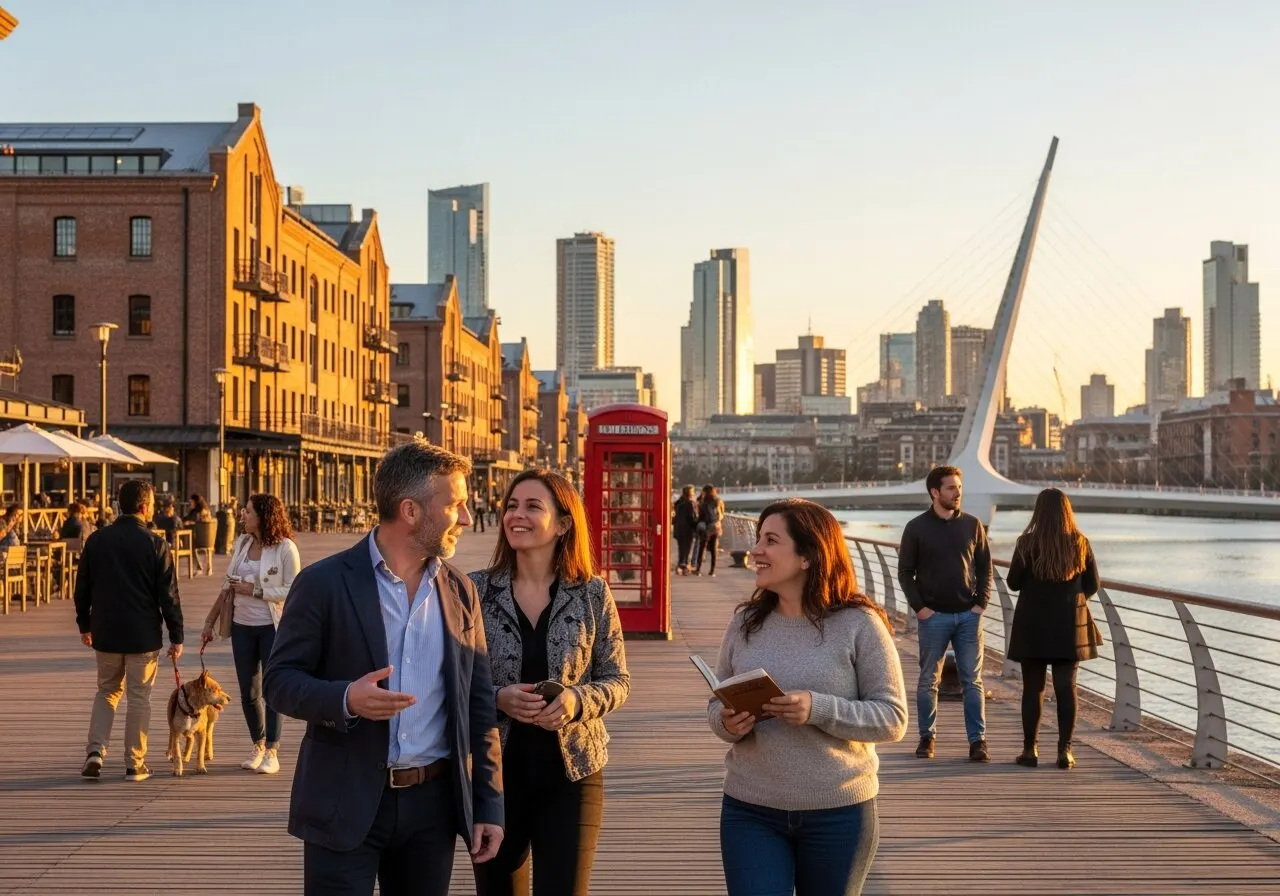
In short
- A one-bedroom planning rent is US$1,200–2,000 monthly in September 2026, before expensas and other costs.
- Puerto Madero has no Subte station; the bridge and walking route from a particular building matter more than its barrio label.
- Western dockside flats and eastern towers put shops and transport at different walking distances.
- The Costanera Sur ecological reserve has daytime access and can close after bad weather.
- A staffed lobby helps with building access, while phones and bags still need care on the street.
Puerto Madero makes an appealing home if you want a modern flat, a staffed entrance and the docks on your daily walk. A one-bedroom has an indicative rent of US$1,200–2,000 a month before expensas in September 2026. The trade-off is practical: there is no Subte (underground) station in the barrio, and the nearest ordinary errand can be across a bridge. The building address, rather than ‘Puerto Madero’ on a listing, tells you whether the arrangement suits your weekday.
The bridge decides which neighbourhood you live in
The redeveloped port lies east of the city centre. Avenida Alicia Moreau de Justo runs along its western edge; on the eastern side of the water, residential towers extend towards the Reserva Ecológica Costanera Sur. Four diques (docks) run north to south, numbered 4 to 1. A supermarket or bus stop can look close across the water until you account for the walk to a bridge.
| Dock | What it puts nearby | What a viewing needs to test |
|---|---|---|
| Dique 4, northern end | Retiro, Catalinas offices and central transport connections | Avenue traffic, noise and the walk over the nearest bridge |
| Dique 3, at Puente de la Mujer | The pedestrian bridge, dockside restaurants and central offices | Weekend visitors and activity on a water-facing promenade |
| Dique 2, central stretch | A waterfront walk away from the busiest northern bridge | Grocery distance, reserve-gate access and the nearest crossing |
| Dique 1, southern end | San Telmo and the southern approach to Costanera Sur | Northern Subte journey and the route home after dark |
These are walking zones rather than price bands. Floor, furnishing, tower facilities and which side of the dock a flat faces can matter more than its number. Puente de la Mujer crosses Dique 3; a short walk on both sides of any shortlisted building will show how often a bridge enters the routine.
A waterfront walk and an ordinary grocery run
The paved promenades make a straightforward running route. The ecological reserve offers a different outing on unpaved wetland paths among birds, with staffed gates and scheduled daytime access. Heavy rain or maintenance can close it, so the City of Buenos Aires opening notice matters before a visit. Costanera Sur's food stalls are a place to try choripán, a sausage sandwich, when they are open; prices and hours change.
The western docks have cafés and restaurants, particularly along Alicia Moreau de Justo. A weekly grocery shop or pharmacy trip can take you back into the centre, especially from an eastern tower. Coto has branches in central Buenos Aires, but the relevant branch and delivery radius depend on the exact address. Dockside dining and routine groceries deserve separate budgets; a waterside view does not put a supermarket beneath the flat.
Transport makes the bridge calculation more consequential. Leandro N. Alem, the line B terminal, is near the northern centre edge; Plaza de Mayo terminates line A farther south. Catalinas is on line E, not line B. Colectivos (local buses) use roads around the district rather than every residential block. A SUBE transport card covers these journeys, and a weekday trial commute will expose the real walk and connection. Cabify or a licensed taxi can help on a late return, with that fare included in the monthly routine. Buenos Aires public transport explains the lines and buses.
Rent and the building bill
The following older local asking-rent brackets are indicative September 2026 planning figures, not live quotes: a studio costs US$800–1,200 (about ARS 1.24–1.85 million) a month, a one-bedroom US$1,200–2,000 (ARS 1.85–3.09 million) and a two-bedroom US$2,000–3,500 (ARS 3.09–5.41 million). The conversions use about ARS 1,545 per US$ in September 2026; an actual contract may be payable in another currency. Since the 2023 rental-law repeal, the parties can agree the rent currency, term and adjustment frequency.
Expensas are monthly common-building charges. There is no reliable barrio-wide figure: lifts, a pool, gym, security and central services can make them a substantial second bill. For an illustration, a couple pays US$1,500 rent, about ARS 2,317,500 at the September 2026 reference rate, plus US$250 expensas. Add US$120 utilities and internet, US$600 food, US$100 local travel and US$200 eating out: the household spends US$2,770, around ARS 4.28 million monthly. This is a worked household, not a Puerto Madero price survey; higher charges or more taxis change it. It is also above the US$1,300–1,900 citywide single-person planning budget.
PlataPlace Puerto Madero rentals can help compare furnished flats, provided the comparison includes expensas and services as well as headline rent. The Buenos Aires cost-of-living guide covers spending beyond the barrio.
Let the viewing follow your weekday
An address is the starting point for a useful viewing. On a weekday at your usual departure time, walk from the building door to your office route, bus stop or actual Subte entrance using the bridge you would take. The return trip after dark matters too. From the same door, find a grocery shop, pharmacy, cash withdrawal and preferred exercise route.
Inside the actual unit, open the windows to gauge restaurant or road noise and check sunlight, mobile reception, water pressure, air conditioning and the lift. Shared amenities may have separate conditions, and scheduled works can alter the experience. Building staff can explain deliveries, guest access and bicycle storage. Before paying, the written quote should account for rent, deposit, expensas, utilities, internet, building fees, cleaning and any adjustment dates, with the payment currency clear.
A same-day trial errand from Recoleta or Palermo gives that route a useful comparison. A staffed entrance and visible patrols can make building access feel orderly, but a phone on a restaurant table or an unlocked bag on a quiet walk is still exposed to theft. In CABA, 911 is police, 107 is SAME ambulance and 100 is fire; Buenos Aires safety advice has further night-route guidance.
When the docks are the right trade-off
A daily trip to Belgrano or a northern school may make a good flat nearer that destination more valuable than a dock view. Recoleta or Palermo offer more small grocers, older cafés and transport choices on the street. Puerto Madero instead brings newer buildings, dockside space and a direct relationship with the old centre. Unlike Canary Wharf, it has no Tube-style station within the docks; its green escape is a reserve with closing gates. The wider Buenos Aires neighbourhood shortlist can put that choice alongside other districts. If the actual bridge, rent and journey all work, the waterfront becomes part of an ordinary day rather than just the view from a listing.
Questions
- Is Puerto Madero a good neighbourhood to live in Buenos Aires?
- It suits people who value modern, often staffed apartments and waterfront walks. The exact crossing to shops and transport matters if you use the Subte frequently or want everyday errands at your door.
- How much does a one-bedroom cost in Puerto Madero?
- The indicative September 2026 planning bracket is US$1,200–2,000 a month, about ARS 1.85–3.09 million at ARS 1,545 per US$. It is not a live quote; expensas, utilities, payment currency and adjustment terms affect the bill.
- Does Puerto Madero have a Subte station?
- There is no station inside the barrio. Leandro N. Alem serves line B, Plaza de Mayo line A and Catalinas line E on the city-centre side; walking time varies by building and bridge.
- Can I enter the Costanera Sur reserve at night?
- The ecological reserve has staffed gates and scheduled daytime access, with closures possible after bad weather. Check the City of Buenos Aires opening notice; the public dockside promenade is separate from the reserve.
- Is Puerto Madero safe for a British resident?
- Many buildings have staffed entrances and the waterfront has visible patrols, but theft is still possible in cafés or on a quiet return walk. Keep your phone and bag close, use a lit route home and call 911 for a police emergency in CABA.
Sources
Related guides
- Recoleta neighbourhood guide: everyday life in Buenos Aires
Recoleta is a walkable, relatively quiet central Buenos Aires barrio with museums, cafés and useful transport, but its attractive old buildings can have costly upkeep. It suits people who want culture and errands on foot more than late-night bars; budget above the city's roughly US$750 central one-bedroom benchmark (September 2026).
- Colegiales: where to live, rent and go
Colegiales has Mitre trains and nearby Subte D stops. Two-room flats were advertised at ARS 680,000 to 1,000,000 a month in April 2026, before expensas.
- Flores, Buenos Aires: transport, rent and daily life
Flores, Buenos Aires: two-room flats from about ARS 680,000 a month (August 2026), Subte A to Plaza de Mayo in 25 minutes, plus cheap clothing streets.