Updated 2026-09-27 · 5 min read
How to drink mate: a British newcomer's guide
In a shared mate round, drink the small pour through the bombilla and return the cup to the cebador. Say ‘gracias’ when you have finished; at home, use water at about 70 to 80°C. A 500 g pack of everyday yerba cost around ARS 2,100–2,800 in September 2026.
In short
- The cebador pours each serving and takes the cup back after you have drunk all the water; the same cup then goes to the next guest.
- ‘Gracias’ on returning the cup means you are finished for the round.
- Water at about 70 to 80°C keeps the yerba from tasting scorched and makes the first sip more comfortable.
- An everyday 500 g pack of yerba cost about ARS 2,100–2,800 in September 2026, while a steel or ceramic cup is an easy first choice.
- Mate contains caffeine, and you can choose a personal cup or mate cocido in a mug if you prefer not to share a straw.
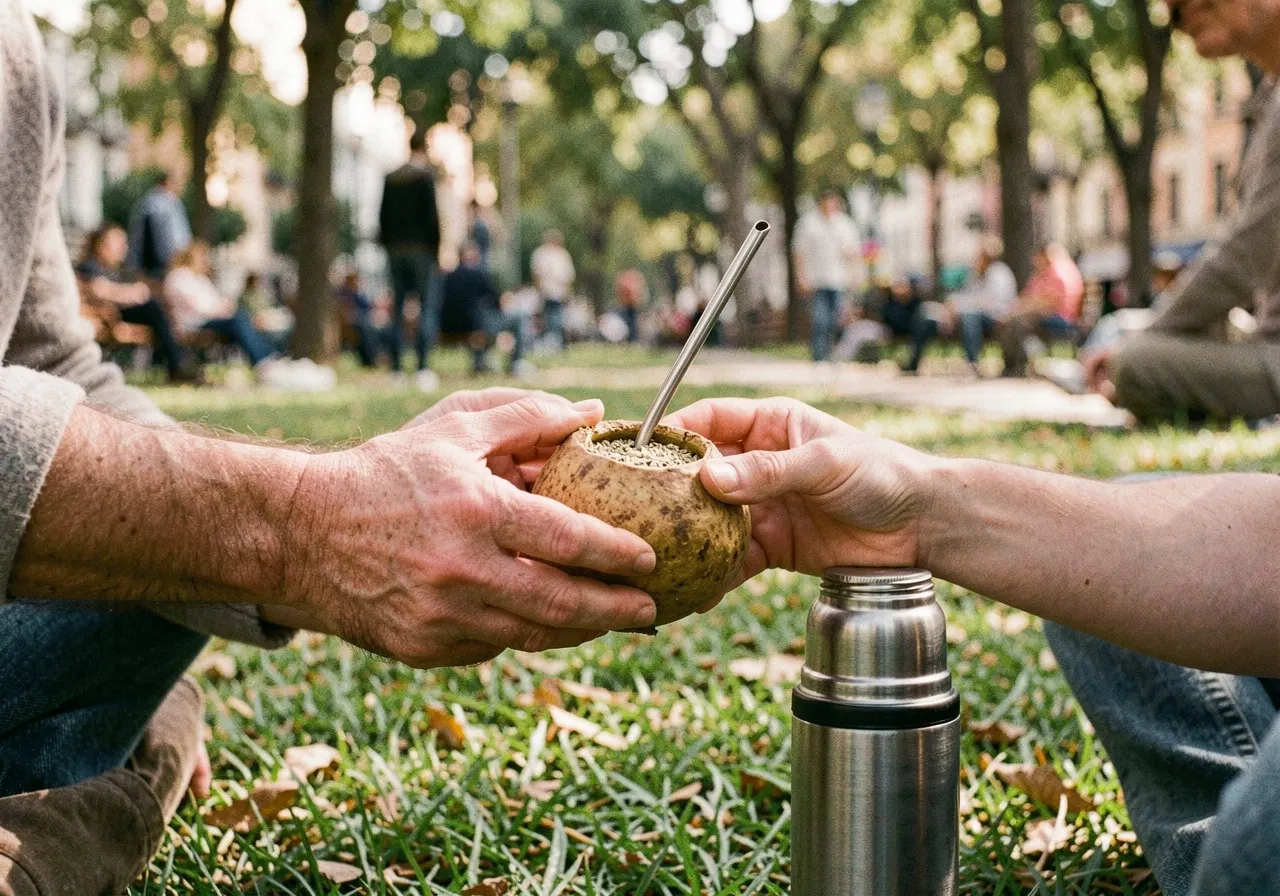
When someone offers you mate, the cup is yours for one small pour, then it goes back to the person holding the flask. Sip the water through the bombilla, the filtered metal straw, and hand the cup back when it is empty. Save ‘gracias’ for your last turn: in a mate round, it tells the person pouring that you have had enough.
This shared cup can feel unfamiliar to a newcomer used to making everyone their own tea. The cebador, the person pouring, controls the water and passes the gourd around in order. Yerba mate reaches more than 90% of Argentine households, according to INYM, so understanding that small ritual makes an ordinary invitation easier to accept. Declining politely or using your own cup is fine too.
Following the cup around the table
The cebador fills the cup, usually takes the first and bitterest pour, then offers a fresh pour to a guest. Each person drinks until the water is gone and returns the cup directly to the cebador, who refills it for the next person. The guest does not pass a half-full mate along the line or top it up from the termo (insulated flask). Several rounds come from the same leaves.
Once the bombilla has been placed, leave it where it is. Stirring with it loosens fine leaf and can block the filter. If the serving is too hot, ‘Está muy caliente’ explains why you are waiting a moment. If you say ‘gracias’ early by mistake, ‘Uno más, por favor’ asks for another turn. For someone who would rather avoid a shared straw, ‘Gracias, prefiero tomar en mi propio mate’ is a simple way to say so; the Porteño Spanish phrases guide has more everyday expressions.
Making a first mate at home
A first kit needs loose yerba, a cup, a bombilla and a termo. Yerba is sold in supermarkets; cups and straws are available in household or yerba shops. A kettle with a temperature setting makes the water easy to judge, though boiled water left to cool for a few minutes can also work. Aim for about 70 to 80°C: water straight from a rolling boil scorches the leaves, makes the drink harsh and risks a scald or a cracked cold gourd.
Fill the cup half to two-thirds with yerba. With a hand over the opening, tilt and gently shake it to move fine particles away from the place where the straw will sit, leaving the leaves banked to one side. A little lukewarm water in the hollow lets the yerba soak before the bombilla goes into that wet patch, filter end down. Pour hot water into the same hollow, drink the small serving and refill there rather than flooding all the leaves at once.
Eventually the flavour fades and the yerba is lavada, or washed out. The spent leaves go in the bin, since wet yerba can block a kitchen drain; rinse the bombilla and dry the cup fully afterwards. This is the same rhythm the cebador uses in a shared round, with the cup and flask remaining in one person's hands between pours.
Choosing yerba and a cup
Taragüí, Rosamonte, Amanda, Playadito and La Tranquera are familiar everyday brands on supermarket shelves. Con palo means the yerba includes stems and is a gentler starting point; sin palo is stronger and more bitter. ComparApp tracked 939 yerba products across 16 chains, so the shelf price varies. In September 2026 a 500 g pack of an everyday brand was about ARS 2,100–2,800, around ARS 2,500 or roughly US$1.50 as a first-kit estimate. Prices move with inflation; the per-500 g shelf comparison is more useful than assuming that figure still applies. Supermarkets in Argentina covers where to shop.
The first cup need not be a traditional calabaza (natural gourd), which seasons with use and needs careful drying. Steel or ceramic washes easily and needs no curing; a 150 to 250 ml cup works for an office or a first kit without the mould risk of a damp gourd. A standard metal-filter bombilla works with any cup, and a termo with a pour spout keeps water at drinking temperature for hours. A 500 g con palo pack, about ARS 2,500 in September 2026, is roughly a week of daily rounds; packs under 1 kg stay fresher.
The drink may come in a different form
| Name | What you get | How it arrives |
|---|---|---|
| Mate amargo | Unsweetened yerba and hot water | A gourd and bombilla, alone or in a shared round |
| Mate dulce | Yerba sweetened by the person pouring | The same round; guests leave the shared cup's sugar to the cebador |
| Mate cocido | Yerba brewed and strained, or made with a tea bag | An individual mug, much like tea |
| Tereré | Yerba with cold water, sometimes juice | A cold drink for hot afternoons |
Mate cocido is a familiar bridge for someone used to a British teabag. Mate itself belongs as readily at a desk or park as it does round a kitchen table, often in the morning or late afternoon. The conversation continues while one person pours. The leaves contain caffeine and a flask worked through a morning makes several caffeinated servings; early pours from fresh yerba are the strongest. A personal cup or an individual mate cocido offers another way to join the occasion if sharing a straw, pregnancy, medication or caffeine sensitivity changes what you want to drink. For coffee and café ordering, the Buenos Aires café guide covers the other side of the city's hot-drink habit.
Questions
- How do you drink mate for the first time?
- Take the cup from the cebador, drink the whole small pour through the bombilla and return it to that same person. The cebador refills it for the next guest; ‘gracias’ on your return means you want no more.
- What does ‘gracias’ mean during a mate round?
- It ends your turn in the round when you return the cup. If you said it too soon, ‘Uno más, por favor’ asks for another serving.
- How hot should the water be?
- About 70 to 80°C. Water from a rolling boil makes the yerba bitter and can scald on the first sip; a temperature-setting kettle or a few minutes of cooling helps.
- Do I have to share the straw?
- No. You can bring your own cup or have mate cocido in an individual mug. ‘Gracias, prefiero tomar en mi propio mate’ tells the person offering why you are passing on the shared cup.
- How much caffeine is in mate?
- Mate contains caffeine, though the amount varies with how much you drink and the strength of the leaves. A flask over a morning means several caffeinated servings, with the first pours from fresh leaves the strongest.
- Where do I buy yerba and a mate kit?
- Supermarkets sell yerba in 500 g and 1 kg packs; everyday 500 g packs were about ARS 2,100–2,800 in September 2026. Household and yerba shops sell cups and bombillas, and a steel cup needs no preparation before its first use.
Sources
- Instituto Nacional de la Yerba Mate (INYM)— Official institute for the yerba mate industry; yerba figures and the household reach of mate
- ComparApp: yerba mate prices— 939 yerba products compared across 16 supermarket chains, updated 25 September 2026
- MansosPrecios: yerba mate 500 g— 500 g pack priced across Coto, Carrefour and ChangoMás, from ARS 2,087, updated daily
- Carritofit: yerba mate price comparison— 500 g and 1 kg yerba prices across five chains, May 2026
- Yerba Amanda official shop— One of the widely distributed brands named in the article
Related guides
- Christmas in Argentina when you're used to Britain
Christmas in Buenos Aires gathers around a late dinner on 24 December and a midnight toast. A British-style lunch can have its own place on the quieter 25th, provided the food is already at home.
- Argentine Culture and Customs: A British Resident's Guide
A Buenos Aires invitation often begins with individual greetings and ends long after dinner. Here is how shared mate, later meals, restaurant bills and local Spanish work in everyday company.
- Gyms, yoga and running in Buenos Aires
A gym month in Buenos Aires costs around ARS 30,000–140,000 (US$20–90) in September 2026. SportClub asks for an apto médico; Megatlon CABA uses an annual self-declaration.