Updated 2026-10-15 · 5 min read
Caballito neighbourhood guide: everyday life in Buenos Aires
Caballito pairs two substantial parks with Subte A access. The city statistics institute put the Q1 2026 asking-rent benchmark for a standard 43 m² used flat at ARS 721,382 a month, roughly 10 per cent below Palermo.
In short
- Caballito's used two-room flats asked an average ARS 721,382 a month in the first quarter of 2026, roughly 10 per cent below Palermo on the same measure.
- Ask whether expensas are included in the quoted rent and how they are billed; request recent statements for the actual building.
- Acoyte, Primera Junta and Puan are the Caballito stops on Subte A, which runs east towards Congreso and Plaza de Mayo.
IDECBA's Q1 2026 rent figures below are monthly benchmarks for standard used flats: 30 m² for one ambiente, 43 m² for two and 70 m² for three. They use peso-denominated Argenprop listings. For each home, ask whether expensas (building charges) are included in the quoted rent and how they are billed.
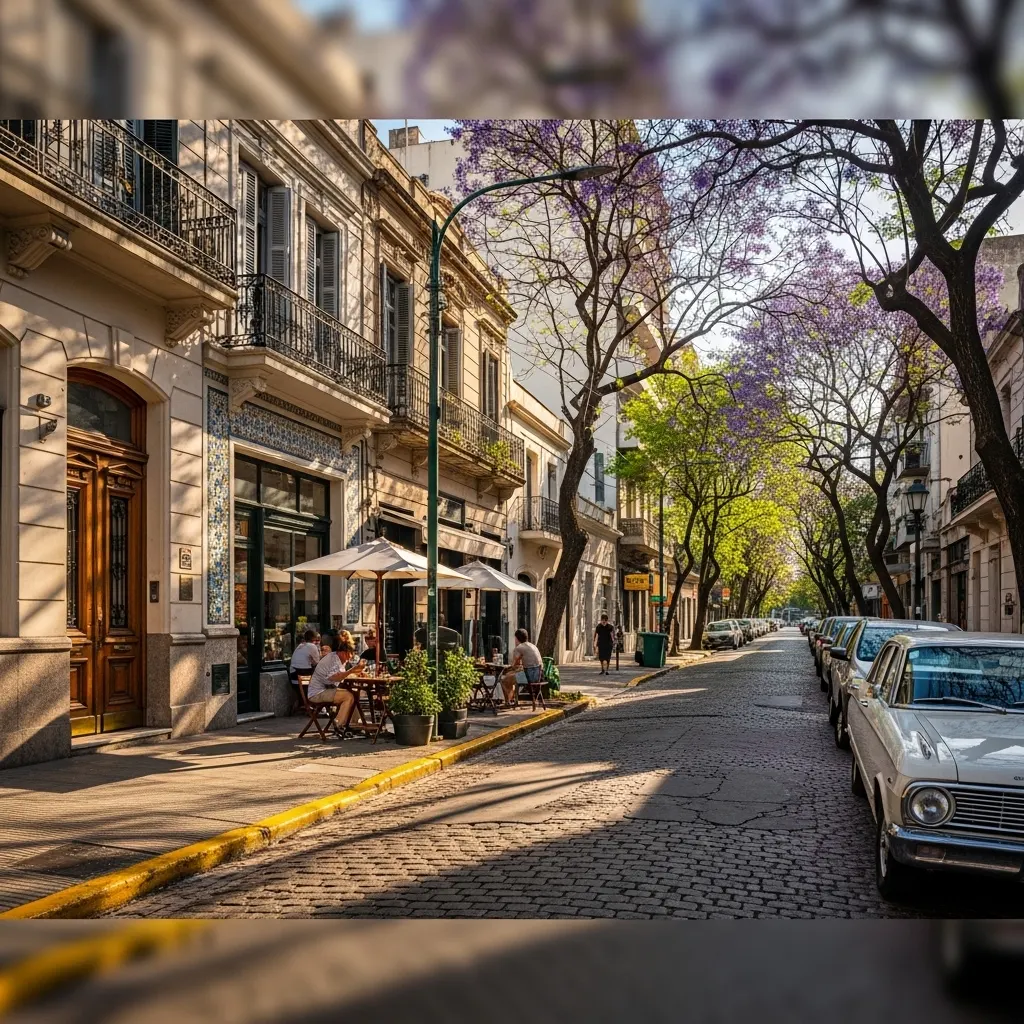
Caballito is a good choice if you want a residential Buenos Aires routine with room for park walks and a Subte ride into the centre. Around Acoyte and Avenida Rivadavia, shops and transport sit close together; near Parque Centenario, the park takes a larger place in the day. The distance between those two versions of Caballito is large enough to matter when choosing a flat.
The price difference from Palermo is real. In the first quarter of 2026, the city's statistics institute recorded an average asking rent of ARS 721,382 a month for a used two-room flat in Caballito, roughly 10 per cent below Palermo. For monthly building charges, or expensas, ask what the quote includes and how any charges are billed.
A barrio that changes as you cross it
Avenida Rivadavia runs east to west through Caballito, with Avenida Acoyte crossing it beside Parque Rivadavia. Caballito extends north of Rivadavia as well as south; the avenue is a spine, not a boundary. The area around Primera Junta lies further west along it, while Parque Centenario is further east around Avenida Díaz Vélez. A flat one or two blocks off a main avenue can feel markedly different from one facing its buses and traffic.
| Area | What draws people there | What changes the choice |
|---|---|---|
| Acoyte and Parque Rivadavia | Subte A, shops and the park together | Traffic on Acoyte and Rivadavia; even park-facing flats can be noisy |
| Primera Junta and Puan | A-line stops and residential streets | Rush-hour queues, road noise and the route home after dark |
| Parque Centenario side | A larger park for walks and weekend activity | The walk to the preferred A-line station and activity around the park |
| South towards Avenida Directorio | More residential blocks on some streets | The bus route and actual walking time to the A line |
Parks, shops and the neighbourhood rhythm
Parque Rivadavia, beside the avenue near Acoyte, fits easily into an errand run. Its book and collectors' stalls are a longstanding feature, although traders and opening times change. Parque Centenario is larger, with paths for a longer lap and more going on at weekends. For a household with a dog or young children, the useful distance is the walk to the nearest entrance at the hour they would normally go.
Rivadavia has supermarkets, but much everyday shopping happens a block or two away at a verdulería (greengrocer), carnicería (butcher) or panadería (bakery). Produce is sold by the kilo or medio kilo. A farmacia marked de turno is on the local duty rota when the usual pharmacy is closed; independent shops are more likely than chains to shut at lunchtime or on Sundays. Around Ferro Carril Oeste, neighbourhood restaurants and football culture add another rhythm to the streets, while Acoyte has the busier commercial stretches. The restaurants guide covers choices beyond Caballito.
How far the A line takes you
Subte A follows Rivadavia, stopping at Acoyte, Primera Junta and Puan before heading east towards Congreso and Plaza de Mayo. From Primera Junta, allow roughly 20 to 30 minutes on the train to central stops, plus the walk and wait; this is a planning allowance, not a timetable. Palermo usually means changing at the linked central stations to line D towards Plaza Italia. Depending on your block, a direct colectivo (city bus) may be easier.
A SUBE reloadable card works on the Subte and buses and can be topped up at participating outlets or through supported apps. Buses run later than the Subte, though their frequency varies sharply over the day. The public transport guide explains fares, SUBE and transfers. Anyone working from home also has reason to test mobile reception inside a prospective flat, alongside the advertised broadband speed.
The rent beyond the advertised number
DGEyC's first-quarter 2026 figure covers used two-room flats. Asking and agreed rents can differ, so treat the advertised price as a starting point.
Expensas vary widely by building; confirm whether they are included before adding them to a tower's quoted rent. The latest building-charge statement and utility bills therefore tell a more useful story than the advertised figure alone. For scale, our cost-of-living guide shows how to build a monthly budget around these rents. Search actual Caballito rentals on PlataPlace, where every listing shows its source and when it was last seen. Compare floor area, furnishing and contract length rather than the headline price alone; a furnished flat makes a different calculation for a stay of only a few months.
| Measure | Caballito | Palermo | Source and date |
|---|---|---|---|
| Used two-room flat, monthly asking rent | ARS 721,382 | ARS 804,543 | City statistics institute, first quarter 2026 |
DNU 70/2023 repealed the 2020 rental law. Lease length, currency and adjustment frequency are now agreed in the individual contract rather than fixed by that statute, so the terms of an appealing flat matter as much as its headline rent.
When the journey outweighs the saving
Someone spending most evenings in Palermo may find the trip home changes the appeal of a cheaper flat; the Palermo neighbourhood guide makes that comparison easier. A school run to a northern campus is another journey to measure at its actual hour. If either trip dominates the week, a walk around Caballito's parks on a Sunday says little about the daily routine.
Caballito works best when the particular building, station walk and nearby park fit together. A map can place a flat near green space while hiding a long route to the entrance, just as a barrio-wide rent average can hide a costly tower's expensas. For a wider comparison, which Buenos Aires neighbourhood is right for you sets Caballito alongside other barrios.
Questions
- Is Caballito a good neighbourhood to live in Buenos Aires?
- It suits people who want residential streets, two sizeable parks and a direct A-line trip towards the centre. The experience changes from one block to the next, especially beside the main avenues.
- Is Caballito cheaper than Palermo?
- On the first-quarter 2026 city measure, yes: average monthly asking rents for used two-room flats were ARS 721,382 in Caballito and ARS 804,543 in Palermo, a gap of roughly 10 per cent. Expensas, furnishing and the flat's condition affect an individual comparison.
- How much is rent in Caballito in 2026?
- The first-quarter city average was about ARS 721,382 a month for a used two-room flat. Ask whether expensas are included in the quote and how they are billed for the building.
- Can you get from Caballito to Palermo by Subte?
- Yes, by taking line A towards the centre and changing at linked stations to line D for Plaza Italia. A direct bus may be simpler from some Caballito blocks.
- Do you need Spanish to live in Caballito?
- Basic conversational Spanish helps with shopping, deliveries and conversations with the building administrator. English is less common in neighbourhood shops, so daily errands can provide practice while you learn.
Sources
- IDECBA: rental market, Q1 2026— City statistics institute: Q1 2026 asking rents by barrio, including Caballito (ARS 721,382 for two rooms) and Palermo (ARS 804,543).
Related guides
- Colegiales: where to live, rent and go
Colegiales has Mitre trains and nearby Subte D stops. The city statistics institute put the Q1 2026 asking-rent benchmark for a standard 43 m² used flat at ARS 778,504 a month; check expensas separately.
- Villa Crespo neighbourhood guide: living next to Palermo
Villa Crespo's Q1 2026 asking-rent benchmark for a standard 43 m² used flat was ARS 750,500 a month, roughly 7 per cent less than Palermo. The streets, transport and full rental cost.
- Living in Belgrano, Buenos Aires: Rents, Commutes and Everyday Life
Belgrano's Q1 2026 asking-rent benchmark was ARS 808,484 a month for a standard 43 m² used flat and ARS 1,254,310 for 70 m². The right part of the barrio depends on your commute.