Banking and Transferring Money as a British Expat in Buenos Aires
Which Argentine banks open accounts for foreigners, how the dollar-blue and dollar-MEP work, and the actually-useful ways British expats move money between the UK and Argentina.
 Rosie CarterFounding editor, Brits in Argentina · Palermo, Buenos Aires, Argentina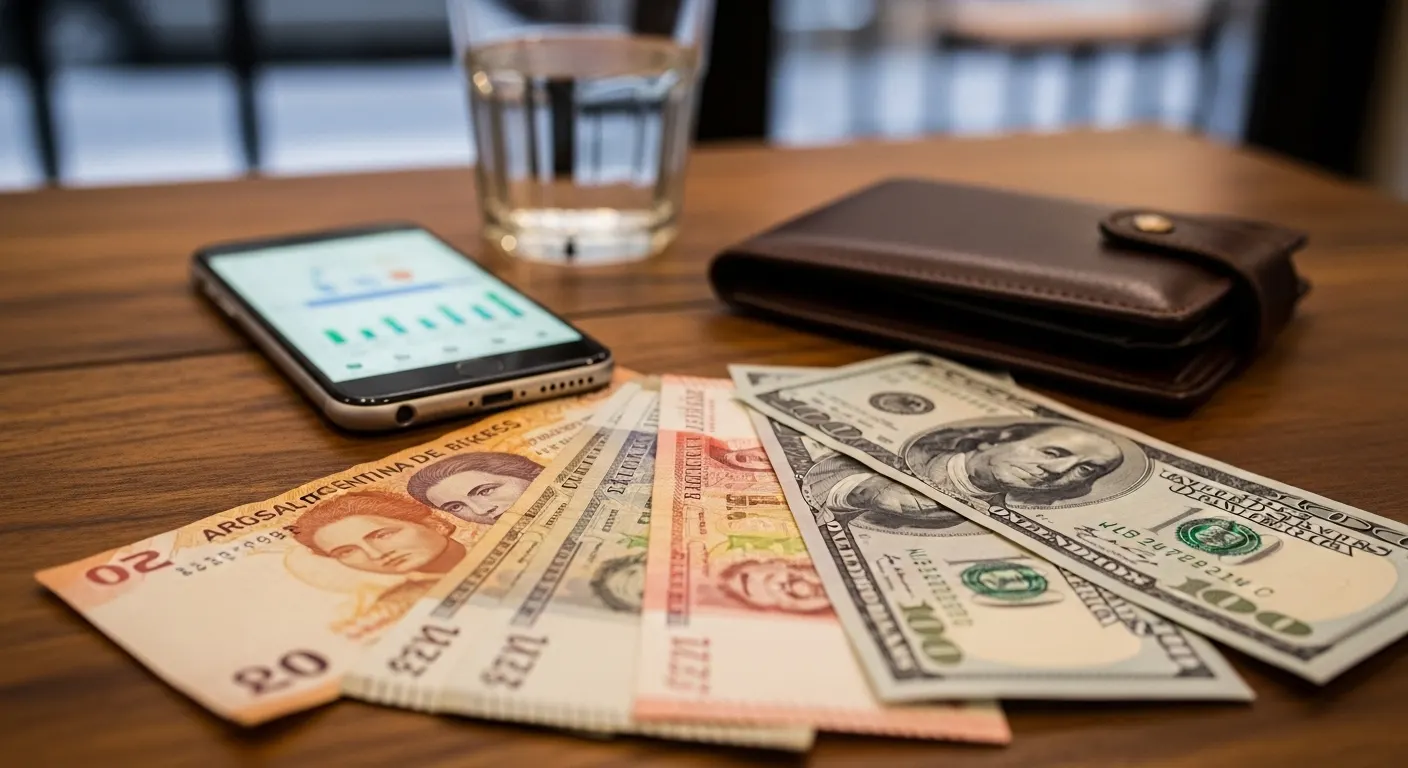
The single most expensive mistake British arrivals make is converting their UK money at the dollar oficial. The blue, the MEP, and the crypto rate are all roughly 30-40% better, and all of them are legal for residents.
Banking in Argentina is genuinely different from anywhere in Europe. There are multiple exchange rates, restricted access to dollars, and a set of workaround mechanisms that everyone uses and nobody writes about clearly. Once you understand the system it is workable, even pleasant. Until you do, you will lose 30% on every transaction.
The Three Exchange Rates You Need to Know
Forget the single number on Google. There are three relevant rates:
Dollar oficial (~ARS 1,000/USD as of early 2026). The official central bank rate. This is what gets applied if you spend on a UK debit card without preparation, or if you receive a foreign wire into a peso bank account with no instruction. It is the worst rate available to you. Avoid as a default.
Dollar MEP (~ARS 1,250/USD). The "Mercado Electrónico de Pagos" rate, accessed by buying a USD-denominated bond (typically AL30 or GD30) in pesos and selling it for dollars. Fully legal, fully transparent, no quotas. This is the rate Wise uses when you transfer GBP into Argentine pesos. It is the rate most online exchange platforms quote.
Dollar blue (~ARS 1,300/USD). The informal cash market. You take physical USD notes to a cueva (a discreet exchange office, often above a kiosko or below an apartment block), they hand you pesos at the blue rate. It is informal but legal for personal use. It is how most cash dollars get converted in Argentina.
The gap between oficial and blue is roughly 30%. That is the gap between paying fairly and being mugged. Set up your finances to default to MEP or blue, never to oficial.
Opening an Argentine Bank Account
You will need: DNI (or precaria for most banks), proof of address (a utility bill in your name or the lease), a CUIT or CUIL, and a small initial deposit. With those four documents you can open an account in most banks within 1-2 weeks.
Brubank (online-only, the fastest). Account opens in 24 hours via the app. Free. Comes with a Visa debit and a USD sub-account. Best for arrivals.
Galicia (large traditional bank). Reasonable Spanish-language app, USD account available, branch network in case you need to fix something in person. The default for most expats once they have settled.
Macro / Santander Río / ICBC — all reliable for expats with full DNI. Branch service quality varies enormously by location; ask for recommendations in the WhatsApp groups.
Avoid Banco Nación for personal accounts. It is the state bank, slow, and the queues will make you weep.
Open one ARS account and one USD account. The USD account lets you receive foreign wires in dollars without forced conversion to pesos.
Getting Money From the UK to Argentina
Five paths, ranked by my experience:
1. Wise (best for amounts under USD 10,000 / month). Send GBP from your UK bank to your Argentine peso account. Wise applies the dollar-MEP rate. The fees are small (~0.5%). Money arrives in 1-3 working days. This is what most British remote workers use.
2. Western Union / MoneyGram (cash collection). Send GBP via app, collect pesos in cash from any WU branch in Argentina. The rate is between MEP and blue depending on the day. Fees are higher than Wise. Useful if you have not yet opened an Argentine account.
3. Crypto (USDT/USDC via Binance, Lemon, or Belo). Buy stablecoin in pounds on a UK exchange, transfer to an Argentine wallet, sell for pesos. Rate is essentially blue. Two transactions, two sets of fees, but very fast and very large transactions are possible. Common among long-resident expats with crypto-friendly setups.
4. Cash dollars (declared on entry, exchanged in cuevas). Bring USD cash from the UK (declared at customs if over USD 10,000), exchange in a cueva at the blue rate. Best rate, oldest method. Not realistic for ongoing income; useful for moving lump sums or savings.
5. UK debit card at an Argentine ATM (worst). Applies the dollar oficial. You also pay a per-transaction ATM fee in pesos. Use only for emergency cash and only in small amounts.
For more on day-to-day costs, see what it really costs to live in Buenos Aires.
Mercado Pago: The Argentine Mobile Wallet
Install Mercado Pago in your first week. It is the dominant Argentine digital wallet and is accepted everywhere — taxis, restaurants, supermarkets, the verdulería on the corner, the babysitter, the cleaner. You link it to your Argentine bank account or top it up directly from a transfer. Most Argentines use it as their default payment method, and a surprising number of small businesses prefer it to cards (it has lower fees for them).
It also has a useful USD account feature ("dólar Mercado Pago") that holds USD at the MEP rate and lets you convert to pesos when you spend.
What About UK Bank Cards Day-to-Day
You can get away with using your UK Monzo / Starling / Revolut card for the first month. Long-term it is expensive. UK cards apply the dollar oficial when you tap. By month two you should have an Argentine peso card and a Mercado Pago account, and your UK card should be reserved for emergencies.
For the wider context on costs, see also working freelance and sorting your taxes in Buenos Aires and what it really costs to live in Buenos Aires.
Frequently Asked Questions
Can British expats open a bank account in Argentina?
Yes, with a DNI (or in some cases a precaria), a CUIT/CUIL, proof of address, and a small initial deposit. Brubank (online-only) is the fastest option for newer arrivals; Galicia and Santander Río are solid traditional choices once settled.
What is the cheapest way to send money from the UK to Argentina?
For amounts under USD 10,000/month, Wise is generally the cheapest — it applies the dollar-MEP rate (currently around 25-30% better than the official rate) with low fees. For lump-sum transfers, bringing cash USD declared at customs and exchanging at the blue rate in a cueva is the best rate but requires more legwork.
What is the difference between the dollar oficial, MEP, and blue in Argentina?
The oficial is the central bank's published rate, the worst available rate (currently ~ARS 1,000/USD). The MEP is the parallel rate accessed by buying and selling USD-denominated bonds, fully legal and accessible online (~ARS 1,250). The blue is the informal cash market rate (~ARS 1,300), used in cuevas and effectively the consumer benchmark.
Sources & Links
Further reading: legal & visa
For visa, residency, and paperwork questions, Lucero Legal offers practical guidance for UK citizens moving to Argentina.
You Might Also Like
Opening a Bank Account in Argentina as a British Expat
Argentine banking is one of the more frustrating parts of expat life. Here's how to navigate it without losing your mind.
Healthcare for Adults in Buenos Aires: Public, Private, and What Brits Should Know
Argentine healthcare has genuine strengths. Understanding how to access them makes a real difference when you actually need them.
Mobile Phone Plans in Argentina: What British Expats Need to Know
Getting connected in Buenos Aires is easier than it used to be. Here's the practical guide to mobile plans, from your first SIM to a full local contract.