Schools and Education for British Families in Buenos Aires
Choosing a school is often the most important decision British families make when settling in Buenos Aires. This guide covers the real options, costs and what other expat parents wish they'd known earlier.
 Rosie CarterFounding editor, Brits in Argentina · Palermo, Buenos Aires, Argentina
The school landscape for British families
Buenos Aires has a well-developed private school sector with several schools that offer bilingual or international education. The options range from established British-founded institutions to IB World Schools to more recent international schools.
The Argentine state school system is free, universally available and generally of reasonable quality. But for British families expecting English-medium education, private schools are the realistic path unless your child is fluent in Spanish.
Established British-founded schools
St Andrew's Scots School (Belgrano): Founded in 1838, St Andrew's is one of the oldest private schools in Argentina. It offers bilingual education from nursery through secondary and has a strong academic reputation. The community feel is warm — it's a place where British-Argentine families have sent their children for generations. Located in Belgrano, a popular neighbourhood for expat families.
St George's College (Quilmes, Greater Buenos Aires): A boarding and day school founded in 1898 with a strong connection to Anglican tradition. It has a British-influenced curriculum and a boarding option, which is unusual in Buenos Aires. The Quilmes location (around 30km from central BA) is further out but the school has its own community.
Northlands School (Martinez/Olivos): A well-regarded bilingual school in the northern suburbs. Popular with professional Argentine families and expats. Strong on languages and international preparation.
IB and internationally-recognised qualifications
Several Buenos Aires schools offer the International Baccalaureate programme, which is recognised by UK universities. If UCAS applications are on your horizon, confirm that a school offers IB or IGCSE/A-level equivalents before enrolling.
Schools offering IB in Buenos Aires include Lincoln School (American-led but excellent), Belgrano Day School and some of the British-founded schools above. Confirm current curriculum offerings directly — they do change.
Costs
Fees vary considerably but as a rough guide:
- Nursery/reception: USD 500-1,000/month
- Primary: USD 700-1,500/month
- Secondary: USD 1,000-1,800/month
This is significantly lower than UK independent school fees but a substantial cost by Argentine standards. Many employers who relocate British staff to Buenos Aires include school fees in the package — worth negotiating if that's your situation.
Additional costs: school bus (colectivo escolar), uniforms, materials, school trips. These add 10-20% to the base fees.
The application process
The most popular schools have waiting lists, particularly for secondary. If you're planning a move, contact schools as early as possible — sometimes 1-2 years ahead for primary, and even earlier for popular secondary places.
Documents typically required: previous school records (translated into Spanish if in English only), vaccination records, birth certificate and, for foreign families, copies of residency documentation. Schools generally facilitate the process for expat families and are experienced with international applications.
Neighbourhood and school proximity
Belgrano and Palermo are the most popular neighbourhoods for expat families partly because of school proximity. St Andrew's is in Belgrano; several other good schools are accessible from Palermo without long commutes. The northern suburbs (Olivos, Martinez, Vicente Lopez) are popular with families using schools in that direction.
For more on choosing where to live, read our article on which Buenos Aires neighbourhood is right for you.
Argentine state schools
Free, universally available, all instruction in Spanish. For British children with sufficient Spanish fluency (or who are young enough to acquire it quickly), Argentine state schools can work well. Argentine primary education is generally solid. The experience varies considerably by school and neighbourhood.
Worth reading next
Frequently Asked Questions
Do British school qualifications transfer to Argentina?
British A-levels and GCSEs are not directly part of the Argentine system. For children continuing in Buenos Aires, the IB is the most internationally portable qualification available in local schools. For university in Argentina, there's a separate validation process.
How quickly do Argentine children learn English in bilingual schools?
At established bilingual schools, Argentine children typically reach functional bilingualism by secondary level. This is actually an advantage for British children integrating — their Argentine peers often want to practise English and friendships form around that exchange.
Is there a British primary school in Buenos Aires?
St Andrew's Scots School is the closest to a traditional British primary experience, with a warm community feel and strong British cultural connection. Several other bilingual schools have British-influenced curricula. A pure British curriculum school (as found in the Middle East or Asia) doesn't exist in Buenos Aires.
Sources & Links
Further reading: legal & visa
For visa, residency, and paperwork questions, Lucero Legal offers practical guidance for UK citizens moving to Argentina.
You Might Also Like
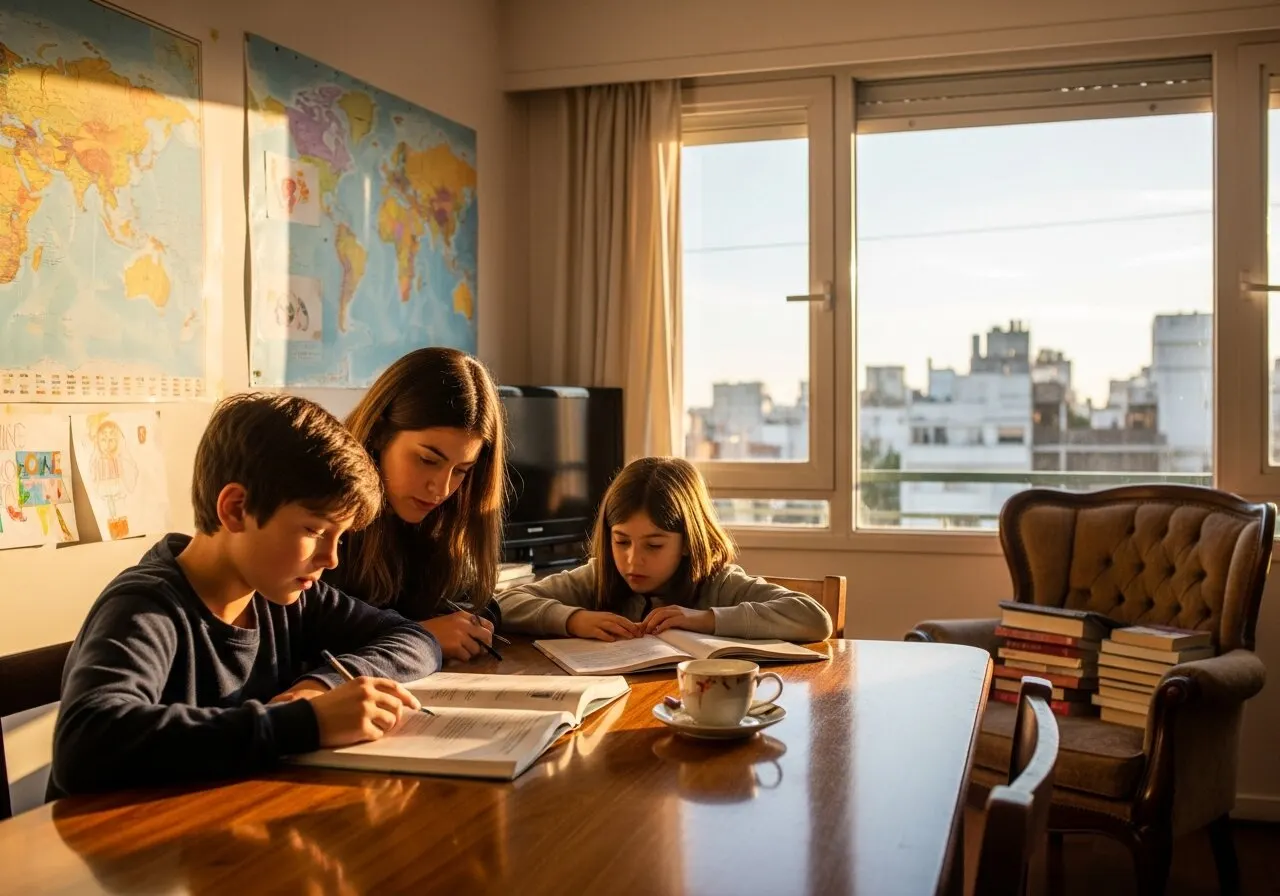
Homeschooling in Buenos Aires: Options for British Families Outside the School System
If the British school fees do not fit your budget or the commute does not fit your life, homeschooling in Buenos Aires is a viable and increasingly popular option.
Raising Teenagers in Buenos Aires: School, Social Life, and the Argentine Vibe
Teenagers in Buenos Aires typically go through a difficult first few months and then become the most enthusiastic ambassadors for the city you've ever met.

Having a Baby in Buenos Aires as a British Expat: The Real Experience
I had both my children in Buenos Aires. The medical care was excellent. The C-section pressure was real. The admin afterward was an adventure.