Updated 2026-10-15 · 7 min read
LGBT Buenos Aires: a British guide to community and daily life
Queer life in Buenos Aires reaches beyond clubs: Palermo and Villa Crespo have nights out, organisations run events across the city, and Marcha del Orgullo usually takes place in November. Legal protections are substantial, while the experience of any venue or service still depends on the people there.
In short
- Argentina has permitted same-sex marriage since 2010, and its Gender Identity Law dates from 2012.
- Check the Marcha del Orgullo organisers’ current date, route and assembly points.
- Palermo and Villa Crespo have nights out and cultural events; San Telmo is another place for daytime meet-ups.
- Ask the relevant Argentine and UK issuing authorities separately about the evidence needed to align identity records.
- For an immediate emergency in Buenos Aires city, police are on 911, SAME ambulance on 107 and fire on 100.
A British newcomer looking for queer company in Buenos Aires can begin with a night out, but the city's LGBT life is spread across bars, cultural programmes, campaign groups and the Marcha del Orgullo. There is no single Soho-style strip to find. Argentina has permitted same-sex marriage since 2010, and that legal footing coexists with the ordinary need to find people and places where you feel at ease.
A social map that changes by the night
Palermo has bars and mixed-group nights that can make a first outing with friends easy, although the barrio as a whole is not an LGBT district. Villa Crespo offers independent cultural programmes and smaller gatherings. San Telmo lends itself to cafés and weekend wandering with a friend; its antiques market is a daytime attraction rather than a queer event. A specific venue's programme tells you more than the barrio name.
Amerika, the longstanding club at Gascón 1040 in Almagro, is one nightlife option. Its nights, door policy and entry charge can change, as can those of smaller events. Organisers' current websites or Instagram accounts carry the useful details, including bookings and accessible entrances. Dinner at 9 or 10pm is ordinary here, and a club night can continue well past midnight; daytime and early-evening events give another rhythm to social life.
Meeting people beyond a first night out
FALGBT (Federación Argentina LGBT) is an umbrella federation of LGBTQ+ organisations, while 100% Diversidad y Derechos runs campaigns and events. La Fulana is associated with lesbian and queer organising. Their current calendars are a better route to a film discussion, meeting or campaign event than an old directory address: a campaign's contact point may not be a walk-in social space. Some gatherings require registration or operate mainly in Spanish, so the organiser can explain how newcomers take part.
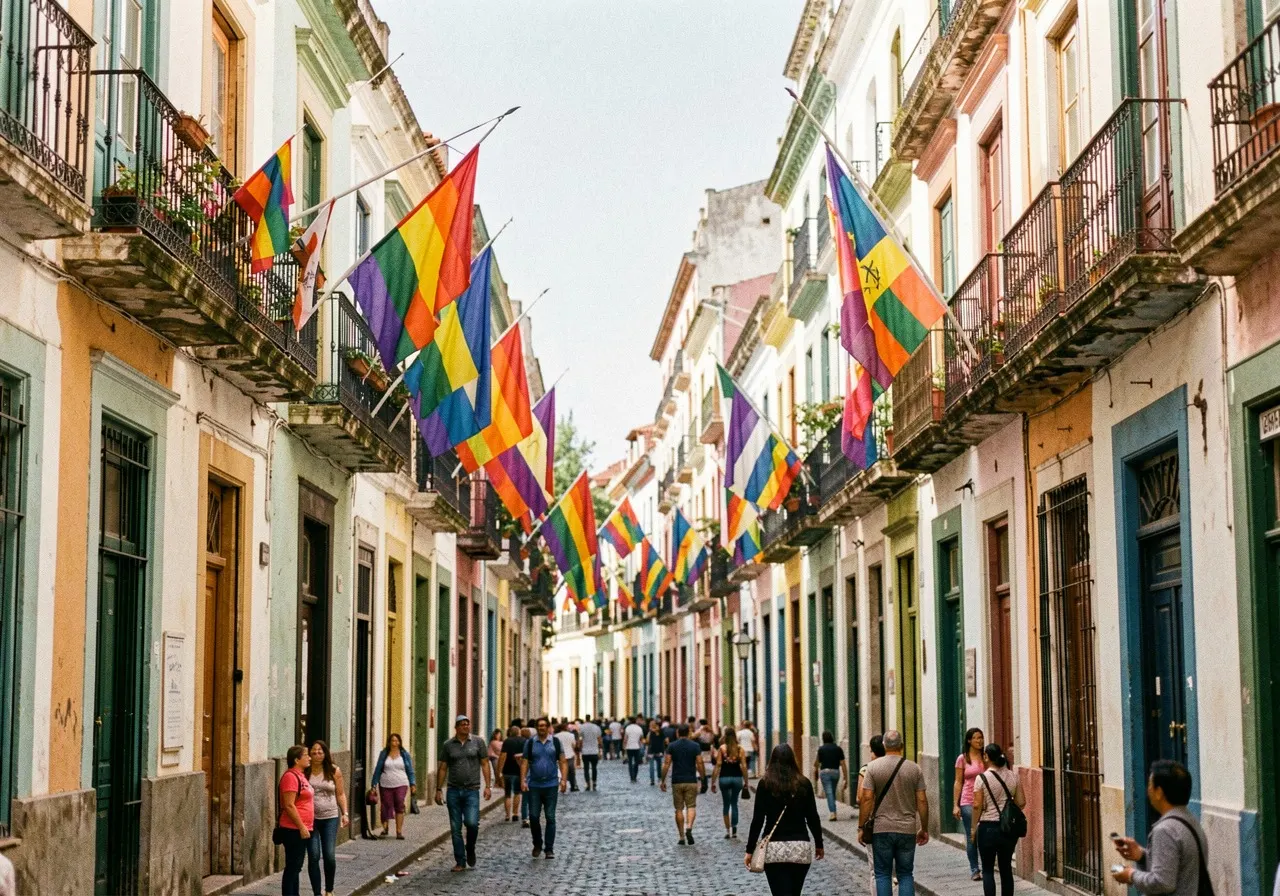
Check the Marcha del Orgullo organisers’ current date and programme. It brings together community organisations, speakers, political demands and celebration. The date, route and meeting points belong to that year's organisers; for someone who finds a large crowd difficult, a smaller screening or group meeting may be a gentler introduction. Ways to make friends in Buenos Aires includes other recurring activities too.
Returning to the same gathering makes faces familiar in a way that four one-off nights may not. An introduction to the organiser and a look at the next month's calendar can lead to another conversation; exchanging contact details is a mutual choice. WhatsApp is widely used for arrangements, but a public group is the wrong place for a home address, ID photographs or a regular travel pattern. People may speak English, though entering a Spanish-speaking event with a little language of your own helps. Pareja means partner, pronombres means pronouns and documento means identity document.
Rights in the paperwork and the consulting room
Argentina's equal marriage law dates from 2010. The 2012 Ley de Identidad de Género (Gender Identity Law) recognises self-perceived gender. The official consolidated text of Article 11 describes adult access to specified surgery and hormonal treatment and states an under-18 prohibition; get advice on the rules applicable to any proposed care. Ask each relevant issuing authority what evidence it needs to align your identity records. Anyone trying to align records needs the requirements of each authority involved.
A UK couple may also need to show their relationship to an Argentine office. The document that office accepts, and whether a translation is required, are practical questions about the service in front of them. A UK civil partnership may be treated differently from a marriage; foreign marriage registration also depends on the office's requirements. None of this is a reason to leave a partner out of an ordinary introduction.
A prepaga, or private medical plan, works through its provider network rather than an NHS-style GP list. The particular clinician's experience with LGBTQ+ patients, the name and pronouns on the medical record, and the plan's coverage of treatment or medicine can shape an appointment. Ask the provider and plan about the treatment, authorisation and costs that apply to you. Healthcare for adults in Buenos Aires explains how people find care locally. Community organisations can provide contacts and events, while urgent medical or legal needs call for the appropriate professional service.
Feeling comfortable on the way home
Same-sex public affection is visible in parts of Buenos Aires. The people present and the hour matter more than a blanket promise about a barrio; a difficult encounter may involve homophobia or transphobia, ordinary theft, or both. A staffed venue offers somewhere to go if someone is harassing you. For an immediate threat in the City of Buenos Aires, police are on 911, SAME ambulance on 107 and fire on 100. A street and cross street in Spanish help identify the location. City safety advice covers wider practical risks.
The return trip deserves thought on a late night, particularly if the last transport departure or an event's opening hours differ from a UK app's assumptions. Agreeing on a meeting point and a shared ride home can make a first club visit easier; the current event listing and menu, rather than an old directory or an assumed fare, settle entry charges and other costs. There is no need to persist with clubs if a recurring cultural event feels more like your place.
Settling into a routine
A first month can hold a quiet café meeting in Palermo, an organisation's open event and one late night if that appeals. The café menu gives the price of the first outing; the organiser can say whether the second requires registration or payment, and the club listing gives the entry charge for the third. Going back to the gathering where conversation started offers a more promising next week than another hunt for a supposedly definitive gay area.
Day-to-day life also brings colleagues and the language of ordinary errands into the picture. The Buenos Aires work-culture guide looks at fitting in at work, and learning Spanish here can help conversations extend beyond an English-speaking circle. The city has room for the partner who loves a late club and the one who would rather meet familiar faces over a film.
Questions
- Where is the gay area of Buenos Aires?
- There is no single Soho-style quarter. Palermo and Villa Crespo have queer nights and cultural gatherings, while San Telmo offers daytime places to meet; the programme of a particular venue is the most useful guide.
- When is Buenos Aires Pride?
- Check the Marcha del Orgullo organisers’ current date, route and assembly points.
- Is Buenos Aires safe for LGBT British people?
- The city has visible queer social life, and comfort varies with the venue, company and hour. For an immediate threat in Buenos Aires city, call 911; a staffed venue can offer somewhere to go if you are being harassed.
- Does Argentina recognise a UK same-sex marriage?
- Argentina has permitted same-sex marriage since 2010. If an Argentine office needs proof of a UK marriage, its own requirements determine which foreign certificate and translation to provide; a UK civil partnership may be handled differently.
- Are there LGBT groups in Buenos Aires beyond nightlife?
- Yes. FALGBT and 100% Diversidad y Derechos publish activities, and La Fulana is associated with lesbian and queer organising. Their current calendars and organisers can tell newcomers which events are open to them.
Sources
Related guides
- Buenos Aires nightlife: a British guide to bars and clubs
Buenos Aires evenings tend to unfold late: dinner around 9–10pm, drinks after 11pm and a boliche (nightclub) filling up around 2–3am. Palermo makes a straightforward first bar night, while a booked show in San Telmo or Almagro can get you home earlier. The event listing and the journey home matter more than any citywide timetable.
- British clubs and community in Buenos Aires
Find your way into Buenos Aires's Anglo-Argentine community through ABCC events, club cricket, polo and the Anglican cathedral.
- Palermo, Buenos Aires: Rent, Subareas and Daily Life
Palermo's Q1 2026 asking-rent benchmark for a standard 43 m² used flat was ARS 804,543 a month. Check whether expensas are included in a quote; the right block matters as much as the barrio's name.